
Why Is There a Village in Rajasthan Where Houses and Streets Share a Unique Blue Colour?

Seen from above, the old city of Jodhpur looks as though shades of blue have spread across its rooftops. Houses in different tones sit beneath the imposing Mehrangarh Fort, creating a landscape that has earned the Rajasthan city its famous nickname, the Blue City.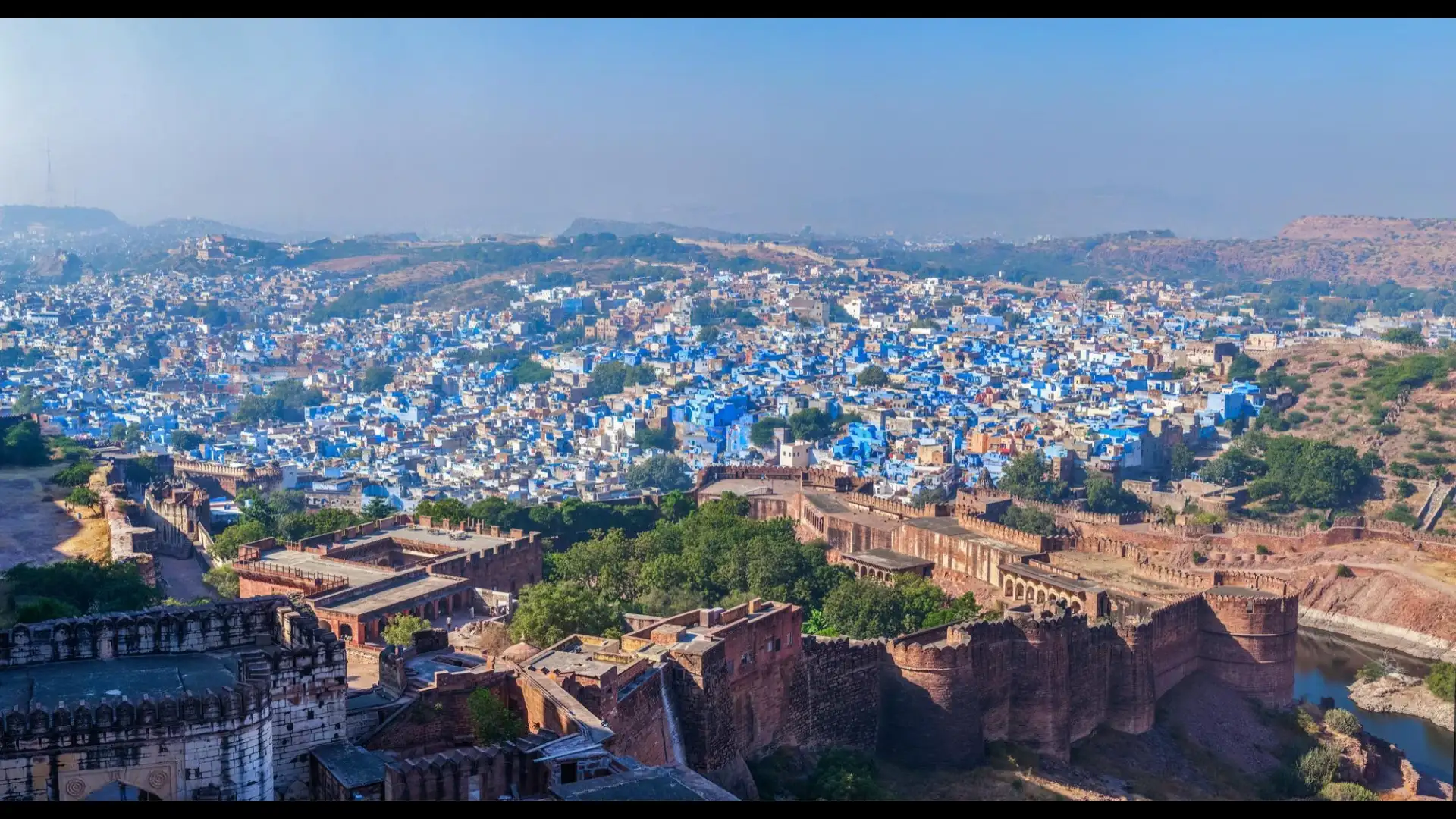
The colour has become a major attraction for travellers, photographers and architecture enthusiasts. Yet the blue houses are more than a visual feature. They reflect the history of the old city, its traditional neighbourhoods and the ways residents have shaped their homes over time.
Over time, some residential areas became known for their blue-painted houses. The colour is particularly associated with parts of the old city, where closely packed buildings create a distinctive appearance when viewed from higher ground.
The nickname does not mean every building in Jodhpur is blue. The colour is concentrated in certain neighbourhoods, and houses vary in their shades, finishes and architectural details.
One commonly repeated tradition connects blue paint with Brahmin households, which historically used blue tones on their homes. This association is part of the city's popular history, but it should not be treated as a complete explanation for the colour across all neighbourhoods.
Another explanation concerns the practical qualities of traditional lime-based finishes. Some residents and local accounts associate blue coatings with cooling interiors or discouraging insects. However, the precise benefits depend on the materials used, the construction of the house and local conditions.
It is therefore more accurate to understand Jodhpur's blue houses as a tradition shaped by several influences rather than the result of one universal rule.
From elevated viewpoints, the rooftops form a patchwork of colours that makes the old city instantly recognisable. At street level, the experience is different: narrow lanes, carved doorways, small shops and residential courtyards reveal the details hidden within the wider view.
The colour has also become part of Jodhpur's tourism identity, appearing in photographs, travel features and guides to Rajasthan.
It is worth remembering that these are living residential areas, not simply photographic backdrops. Travellers should respect private property, ask before photographing people and avoid entering homes without permission.
Jodhpur's blue houses continue to attract attention because they combine beauty with a sense of place. Their colour tells a story about how a city has developed its own identity, one neighbourhood and one painted wall at a time.
The colour has become a major attraction for travellers, photographers and architecture enthusiasts. Yet the blue houses are more than a visual feature. They reflect the history of the old city, its traditional neighbourhoods and the ways residents have shaped their homes over time.
How Jodhpur became the Blue City
Jodhpur was founded in 1459 by Rao Jodha, the ruler after whom the city is named. Its historic centre developed around Mehrangarh Fort, with neighbourhoods growing below the fort's towering walls.Over time, some residential areas became known for their blue-painted houses. The colour is particularly associated with parts of the old city, where closely packed buildings create a distinctive appearance when viewed from higher ground.
The nickname does not mean every building in Jodhpur is blue. The colour is concentrated in certain neighbourhoods, and houses vary in their shades, finishes and architectural details.
Why were the houses painted blue?
Several explanations are associated with Jodhpur's blue houses, although no single explanation accounts for every building.One commonly repeated tradition connects blue paint with Brahmin households, which historically used blue tones on their homes. This association is part of the city's popular history, but it should not be treated as a complete explanation for the colour across all neighbourhoods.
Another explanation concerns the practical qualities of traditional lime-based finishes. Some residents and local accounts associate blue coatings with cooling interiors or discouraging insects. However, the precise benefits depend on the materials used, the construction of the house and local conditions.
It is therefore more accurate to understand Jodhpur's blue houses as a tradition shaped by several influences rather than the result of one universal rule.
You may also like
- Gu to Ru: The Guru Who Turns Darkness Into Light
- Vijayadashami 2026: Be sure to perform these astrological remedies on Dussehra for happiness and prosperity in your life..
- Eating Instant Noodles Too Often? 5 Health Risks You Should Know Before Your Next Meal
- Sneezing Every Morning After Waking Up? Know the Common Causes and 5 Simple Ways to Get Relief
- Dussehra falls on an auspicious day today; learn the auspicious timing for the burning of Ravana's effigy and effective remedies..
How the colour shapes the city's identity
The blue buildings create a striking contrast with the warm tones of Rajasthan's landscape, the stone walls of Mehrangarh Fort and the earthy colours of surrounding architecture.From elevated viewpoints, the rooftops form a patchwork of colours that makes the old city instantly recognisable. At street level, the experience is different: narrow lanes, carved doorways, small shops and residential courtyards reveal the details hidden within the wider view.
The colour has also become part of Jodhpur's tourism identity, appearing in photographs, travel features and guides to Rajasthan.
Exploring the Blue City respectfully
Visitors often explore the old city on foot, taking time to observe its architecture and local markets. Mehrangarh Fort offers elevated views of the surrounding settlement, although the appearance of the blue neighbourhoods changes with the light and viewpoint.It is worth remembering that these are living residential areas, not simply photographic backdrops. Travellers should respect private property, ask before photographing people and avoid entering homes without permission.
Jodhpur's blue houses continue to attract attention because they combine beauty with a sense of place. Their colour tells a story about how a city has developed its own identity, one neighbourhood and one painted wall at a time.






Loving Newspoint? Download the app now
