
Why Is Meghalaya Home to Bridges That Grow From Living Tree Roots?

In the green hills of Meghalaya, some bridges are not built from steel, concrete or timber. They grow.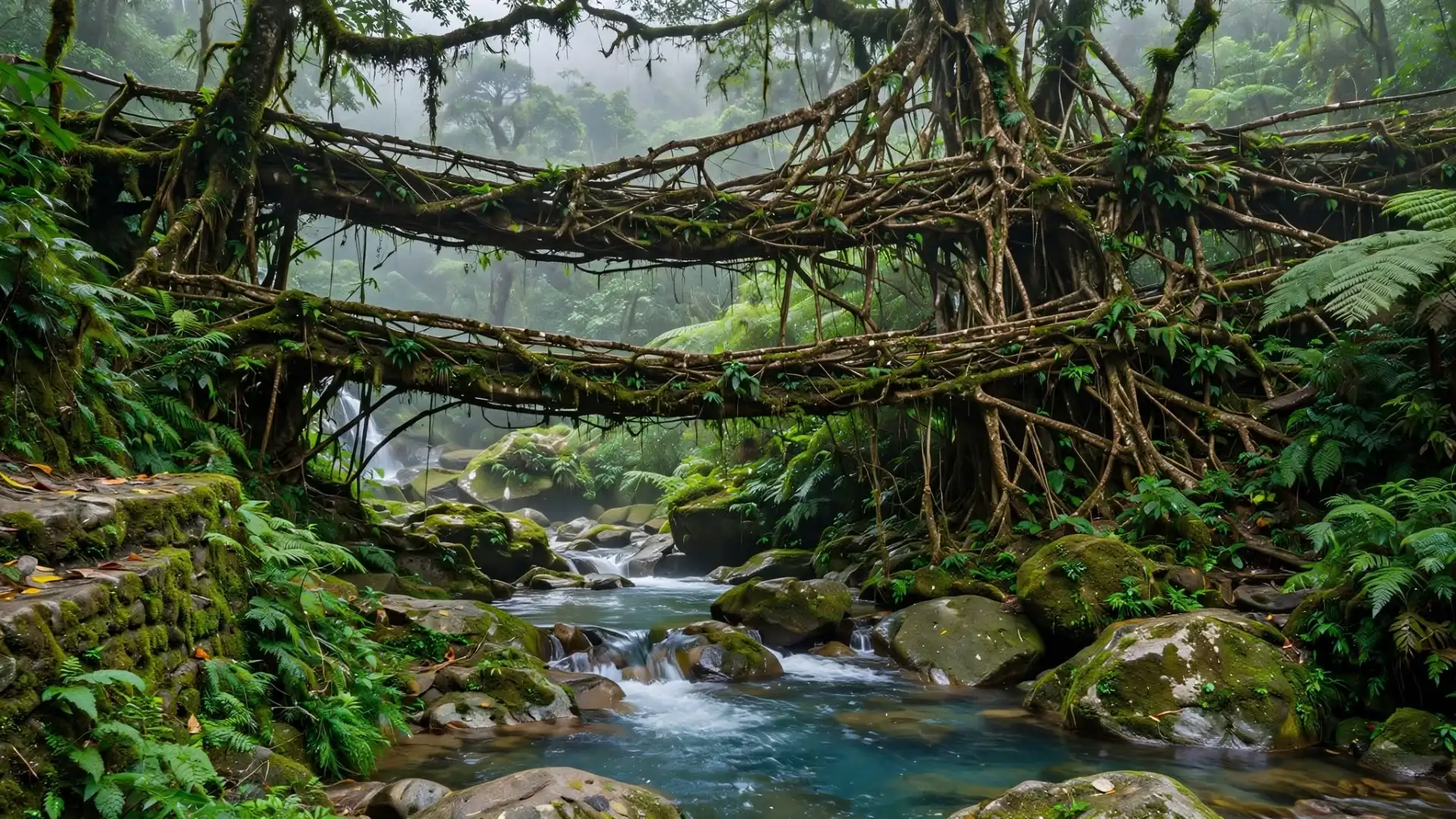
Known as living root bridges, these unusual structures are formed by guiding the aerial roots of rubber fig trees across streams and gaps in the landscape. Over time, the roots grow, intertwine and become strong enough to create natural walkways.
The bridges are associated particularly with Khasi communities in Meghalaya, where generations have developed ways of working with the region's forests, rainfall and challenging terrain.
As the roots grow, local people direct them towards the opposite bank. The roots may be passed through hollowed-out areca palm trunks or guided using other traditional techniques, depending on the location and method.
Eventually, the roots reach the other side and establish themselves. Additional roots can be encouraged to grow together, creating a denser network that gradually forms a usable crossing.
Unlike a conventional bridge assembled over a short construction period, a living root bridge develops over years. Some take many years or even decades to become established, depending on the conditions and the desired structure.
A living root bridge offers a way to connect communities across such terrain. Once established, the living roots can continue growing, potentially strengthening the structure over time when they are well maintained.
The local climate supports the growth of rubber fig trees, while the terrain creates a practical need for reliable crossings.
However, these bridges are not maintenance-free. Communities must monitor the roots, support healthy growth and look after the surrounding structure to keep the crossings usable.
This requires an understanding of plant growth, local conditions and long-term maintenance. Knowledge is passed through generations, allowing communities to continue caring for bridges that may serve them for decades.
The bridges also attract travellers interested in nature, traditional craftsmanship and sustainable design. Nongriat, near Cherrapunji, is particularly well known for its living root bridges, including the famous double-decker structure.
They also challenge the idea that engineering must always involve concrete, steel or complex machinery. A living structure can require considerable skill and planning, even when its raw materials come from trees.
For visitors, the bridges offer a memorable experience. For the communities that grow and maintain them, they are part of a living tradition.
Perhaps their most extraordinary quality is the patience they require. These bridges cannot be manufactured, delivered or assembled overnight. Instead, they must be carefully nurtured, shaped and sustained, allowing each root to grow and strengthen over time.
Known as living root bridges, these unusual structures are formed by guiding the aerial roots of rubber fig trees across streams and gaps in the landscape. Over time, the roots grow, intertwine and become strong enough to create natural walkways.
The bridges are associated particularly with Khasi communities in Meghalaya, where generations have developed ways of working with the region's forests, rainfall and challenging terrain.
How a tree becomes a bridge
The process begins with a rubber fig tree, scientifically known as Ficus elastica. Its aerial roots can be guided towards a suitable crossing, often using bamboo or other temporary supports.As the roots grow, local people direct them towards the opposite bank. The roots may be passed through hollowed-out areca palm trunks or guided using other traditional techniques, depending on the location and method.
Eventually, the roots reach the other side and establish themselves. Additional roots can be encouraged to grow together, creating a denser network that gradually forms a usable crossing.
Unlike a conventional bridge assembled over a short construction period, a living root bridge develops over years. Some take many years or even decades to become established, depending on the conditions and the desired structure.
Why Meghalaya is suited to these bridges
Meghalaya receives substantial rainfall in many areas, and its landscape contains steep slopes, streams and deep ravines. During wet periods, water levels can rise and crossings become difficult.A living root bridge offers a way to connect communities across such terrain. Once established, the living roots can continue growing, potentially strengthening the structure over time when they are well maintained.
You may also like
- Gu to Ru: The Guru Who Turns Darkness Into Light
- Vijayadashami 2026: Be sure to perform these astrological remedies on Dussehra for happiness and prosperity in your life..
- Eating Instant Noodles Too Often? 5 Health Risks You Should Know Before Your Next Meal
- Sneezing Every Morning After Waking Up? Know the Common Causes and 5 Simple Ways to Get Relief
- Dussehra falls on an auspicious day today; learn the auspicious timing for the burning of Ravana's effigy and effective remedies..
The local climate supports the growth of rubber fig trees, while the terrain creates a practical need for reliable crossings.
However, these bridges are not maintenance-free. Communities must monitor the roots, support healthy growth and look after the surrounding structure to keep the crossings usable.
A lesson in traditional engineering
Living root bridges demonstrate a different approach to construction. Rather than manufacturing every component separately, people guide a living organism to develop into a useful structure.This requires an understanding of plant growth, local conditions and long-term maintenance. Knowledge is passed through generations, allowing communities to continue caring for bridges that may serve them for decades.
The bridges also attract travellers interested in nature, traditional craftsmanship and sustainable design. Nongriat, near Cherrapunji, is particularly well known for its living root bridges, including the famous double-decker structure.
Why these bridges matter today
Living root bridges are more than unusual tourist attractions. They represent a relationship between local communities and their environment, showing how practical solutions can emerge from close observation of nature.They also challenge the idea that engineering must always involve concrete, steel or complex machinery. A living structure can require considerable skill and planning, even when its raw materials come from trees.
For visitors, the bridges offer a memorable experience. For the communities that grow and maintain them, they are part of a living tradition.
Perhaps their most extraordinary quality is the patience they require. These bridges cannot be manufactured, delivered or assembled overnight. Instead, they must be carefully nurtured, shaped and sustained, allowing each root to grow and strengthen over time.






Loving Newspoint? Download the app now
