
Why Some Beaches Have Black, Red or Golden Sand Instead of White Sand

Beach sand may look simple, but every grain carries a geological story. The pale sand of one beach can sit only a few kilometres from darker material, while another shoreline may appear reddish, golden or almost black. The colour depends largely on what the sand is made from and where those minerals came from. Quartz, volcanic rock, iron-rich minerals, shells and heavy mineral deposits can all influence the appearance of a beach. India's coastline provides several striking examples, including red cliffs at Varkala and mineral-rich coastal sands in parts of southern India. The colour of a beach can therefore be read almost like a geological fingerprint.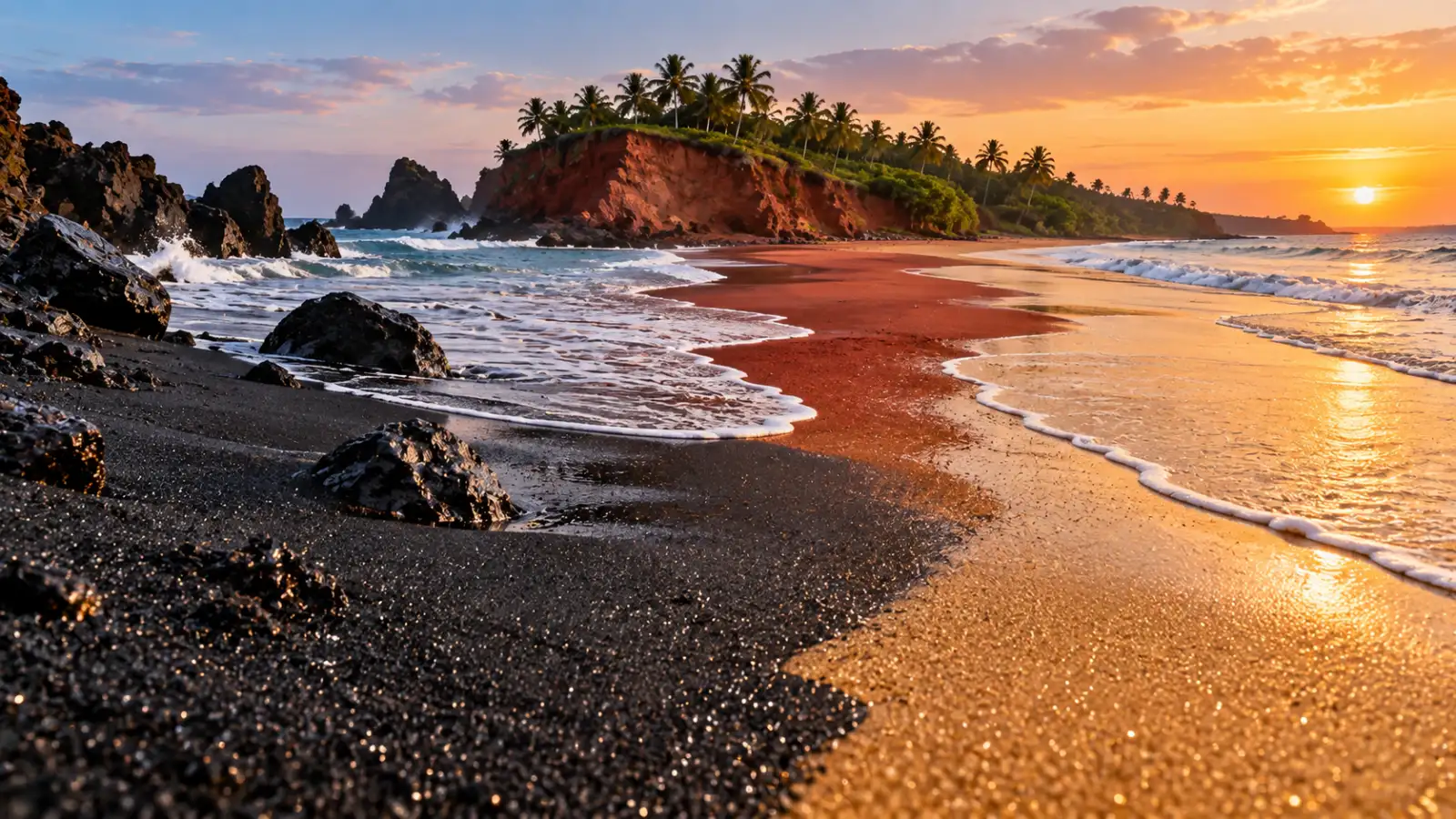
Sunlight can also make sand appear warmer or brighter than it actually is.
The colour can change depending on whether the grains are wet or dry. Wet sand often looks darker because water changes the way light interacts with the surface.
India is not dominated by young volcanic coastlines in the way places such as Hawaii are, so genuinely black volcanic beaches are less common.
Dark coastal sand can also result from concentrations of heavy minerals rather than volcanic material.
Varkala in Kerala is famous for its red laterite cliffs. The Kerala Tourism Department notes that the Varkala Formation is a distinctive geological feature and has been recognised as a national geological monument.
Elsewhere, mineral-rich sands can produce striking colours.
These minerals can become concentrated because waves and currents repeatedly move lighter particles while heavier grains remain behind.
This is why a beach can sometimes contain a visibly darker layer of mineral-rich sand.
Rocks weather inland, rivers transport sediments towards the coast, waves redistribute them and currents sort the particles according to size and density.
That means beach colour is not merely an aesthetic feature. It can reveal something about the rocks, rivers and geological processes connected to that coastline.
The next time a beach looks unusually red, dark or golden, it is worth looking down. The sand beneath your feet may be carrying a geological history millions of years in the making.
Golden Sand Often Contains Ordinary Minerals
The familiar golden appearance of many beaches usually comes from a mixture of minerals, particularly quartz and feldspar, combined with rock fragments and organic material.Sunlight can also make sand appear warmer or brighter than it actually is.
The colour can change depending on whether the grains are wet or dry. Wet sand often looks darker because water changes the way light interacts with the surface.
Black Sand Can Have a Volcanic Connection
Some of the world's famous black beaches owe their colour to volcanic rocks rich in dark minerals.India is not dominated by young volcanic coastlines in the way places such as Hawaii are, so genuinely black volcanic beaches are less common.
Dark coastal sand can also result from concentrations of heavy minerals rather than volcanic material.
Red Sand Has a Different Story
Red and orange shades are often associated with iron-bearing minerals or weathered geological material.Varkala in Kerala is famous for its red laterite cliffs. The Kerala Tourism Department notes that the Varkala Formation is a distinctive geological feature and has been recognised as a national geological monument.
You may also like
- Crores of ESIC beneficiaries will not receive benefits without Aadhaar linking! Strict order from the Ministry of Labour; know the process..
- Was Vibhishana A Traitor? Ramayana's Shocking Question
- “I was crying at the middle of the road”: He lost his ₹2 lakh MacBook on a rainy Bengaluru road, then an e-rickshaw driver restored his faith in karma
- PCOS vs PCOD: Understanding the Crucial Differences Every Woman Must Know for Better Hormonal Health
- Waking Up Suddenly in the Middle of the Night? Experts Warn It Could Be a Sign of Insomnia or Sleep Apnea
Elsewhere, mineral-rich sands can produce striking colours.
India's Coast Contains Valuable Heavy Minerals
The Atomic Minerals Directorate has documented deposits containing minerals such as ilmenite, garnet, zircon, rutile, monazite and sillimanite along several Indian coastal stretches.These minerals can become concentrated because waves and currents repeatedly move lighter particles while heavier grains remain behind.
This is why a beach can sometimes contain a visibly darker layer of mineral-rich sand.
The Beach Is a Record of the Landscape
Every grain ultimately comes from somewhere.Rocks weather inland, rivers transport sediments towards the coast, waves redistribute them and currents sort the particles according to size and density.
That means beach colour is not merely an aesthetic feature. It can reveal something about the rocks, rivers and geological processes connected to that coastline.
The next time a beach looks unusually red, dark or golden, it is worth looking down. The sand beneath your feet may be carrying a geological history millions of years in the making.






Loving Newspoint? Download the app now
