
Why Do Some Fish Have Transparent Bodies? The Science Behind Their Invisible Appearance

The underwater world contains some remarkable creatures, including fish whose bodies are so transparent that their internal organs can sometimes be seen. Unlike brightly coloured fish that rely on patterns to blend into reefs or rocky habitats, these species use a different approach to avoiding attention. Their see-through appearance can make it difficult for predators to distinguish them from the surrounding water. However, transparency is not simply a matter of having pale skin. It involves specialised tissues, the way light travels through the body and adaptations to particular aquatic environments. Understanding these features reveals how some fish have evolved unusual ways to survive.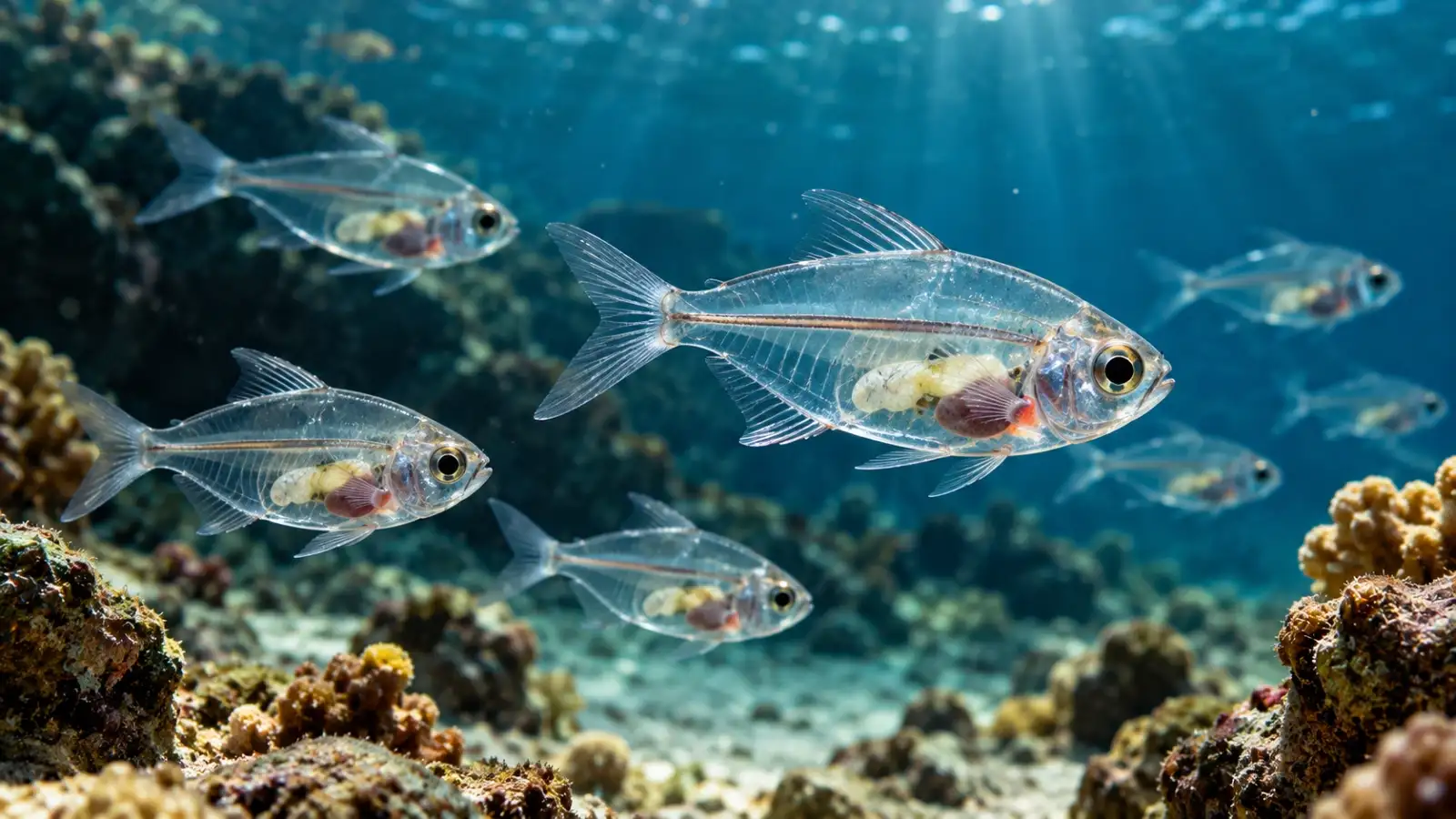
Predators often identify prey by spotting its shape, movement or contrast against the background. Transparent fish can reduce some of these visual clues, especially when viewed from certain angles or under suitable lighting conditions.
This adaptation is particularly useful for small fish living in open water, where hiding among rocks, plants or coral may not be possible. However, transparency does not make a fish completely invisible. Shadows, movement and reflections can still reveal its presence.
Many opaque tissues contain cells and structures that scatter light, making the body visible. In transparent animals, certain tissues have fewer structures that strongly scatter light, helping them blend with the surrounding water.
Some transparent fish also have very little pigment in parts of their skin. Their scales, muscles and other tissues may have properties that reduce their visibility, although the precise mechanisms differ between species.
Transparency is therefore not a single biological feature. It results from a combination of tissue structure, pigmentation and the way light interacts with the body.
Glassfish, a name used for several groups of fish, can have bodies that allow parts of their internal anatomy to be seen. Some species live in freshwater habitats, while others inhabit marine environments.
Larval and juvenile fish can also be remarkably transparent. Their small size and relatively undeveloped pigmentation may help them remain less conspicuous while drifting or swimming through open water.
Not every species called a glassfish is transparent to the same degree. Some have visible pigments or coloured markings, showing that transparency can exist alongside other forms of camouflage.
Transparency occurs in some deep-sea organisms, including certain fish and their early life stages. In dim surroundings, a transparent body may reduce the silhouette an animal creates against the limited available light.
However, transparency is not the only camouflage strategy used in deep water. Some fish are darkly pigmented, while others use reflective surfaces or bioluminescence. The most effective adaptation depends on the animal's habitat and the kind of light present.
It is also important to distinguish fish that are naturally transparent from those that merely look pale because of their lighting or the angle from which they are observed.
The eyes are especially difficult to make completely transparent because they need to absorb and process light to support vision. As a result, they can create visible dark spots or outlines.
Some transparent fish have body shapes or tissue arrangements that reduce these visual contrasts, but the results vary between species. Their goal is not necessarily to become invisible from every direction. Even a partial reduction in visibility can provide a survival advantage.
In habitats with dense vegetation or colourful coral, other camouflage strategies may work better. A fish may benefit more from matching the colours and patterns of its surroundings than from having a transparent body.
Transparency can also come with trade-offs. The body must still perform essential functions, including movement, digestion and protection of internal organs. Evolution shapes these features according to the demands of each species' environment rather than producing one perfect camouflage method.
Studying these species also helps scientists understand how light interacts with living tissues. Research into biological transparency can inform work in optics, imaging and the study of how organisms develop their body structures.
These fish are a reminder that survival in aquatic environments depends on more than speed or strength. Sometimes, being difficult to notice can be just as valuable.
Some fish have transparent bodies because reduced visibility can help them avoid predators in particular aquatic environments. Their appearance depends on tissue structure, pigmentation and how light passes through their bodies. Although transparency cannot make them completely invisible, it can reduce the visual clues that might otherwise reveal their presence. From glassfish to transparent juvenile fish, these animals demonstrate how evolution produces different solutions to the challenge of survival. Their unusual appearance offers a fascinating example of the relationship between light, anatomy and life underwater.
1. Transparency Helps Fish Avoid Predators
One major advantage of a transparent body is camouflage. In clear water, an animal with few visible markings may be harder to detect because it does not create the strong outline that an opaque body would produce.Predators often identify prey by spotting its shape, movement or contrast against the background. Transparent fish can reduce some of these visual clues, especially when viewed from certain angles or under suitable lighting conditions.
This adaptation is particularly useful for small fish living in open water, where hiding among rocks, plants or coral may not be possible. However, transparency does not make a fish completely invisible. Shadows, movement and reflections can still reveal its presence.
2. How Do Fish Develop Transparent Bodies?
For an animal to appear transparent, light must pass through much of its body without being scattered or absorbed too strongly.Many opaque tissues contain cells and structures that scatter light, making the body visible. In transparent animals, certain tissues have fewer structures that strongly scatter light, helping them blend with the surrounding water.
Some transparent fish also have very little pigment in parts of their skin. Their scales, muscles and other tissues may have properties that reduce their visibility, although the precise mechanisms differ between species.
Transparency is therefore not a single biological feature. It results from a combination of tissue structure, pigmentation and the way light interacts with the body.
3. Glassfish and Other See-Through Species
Several fish species display striking levels of transparency, particularly during certain stages of their lives.Glassfish, a name used for several groups of fish, can have bodies that allow parts of their internal anatomy to be seen. Some species live in freshwater habitats, while others inhabit marine environments.
Larval and juvenile fish can also be remarkably transparent. Their small size and relatively undeveloped pigmentation may help them remain less conspicuous while drifting or swimming through open water.
Not every species called a glassfish is transparent to the same degree. Some have visible pigments or coloured markings, showing that transparency can exist alongside other forms of camouflage.
4. Why Are Some Deep-Sea Fish Transparent?
The deep sea presents unusual challenges because sunlight becomes extremely limited with depth. Many animals in this environment have evolved specialised ways to avoid predators or detect prey.Transparency occurs in some deep-sea organisms, including certain fish and their early life stages. In dim surroundings, a transparent body may reduce the silhouette an animal creates against the limited available light.
However, transparency is not the only camouflage strategy used in deep water. Some fish are darkly pigmented, while others use reflective surfaces or bioluminescence. The most effective adaptation depends on the animal's habitat and the kind of light present.
It is also important to distinguish fish that are naturally transparent from those that merely look pale because of their lighting or the angle from which they are observed.
5. Why Are Their Eyes and Organs Still Visible?
Even when much of a fish's body is transparent, certain structures remain easy to see. Eyes, the digestive tract and other organs may contain pigments or tissues that interact with light differently from the surrounding body.The eyes are especially difficult to make completely transparent because they need to absorb and process light to support vision. As a result, they can create visible dark spots or outlines.
Some transparent fish have body shapes or tissue arrangements that reduce these visual contrasts, but the results vary between species. Their goal is not necessarily to become invisible from every direction. Even a partial reduction in visibility can provide a survival advantage.
You may also like
- 'Quick tasks' before clock-out? Employee says the boss keeps extending workdays without overtime pay, sparking debates over burnout, boundaries and the pressure to always say yes
- Paytm AU Bank Credit Card: Get this new card with zero fees and enjoy significant savings on UPI payments..
- The wait for the 24th installment is over! Find out which farmers will have ₹2,000 transferred into their accounts this week..
- The Significance of Sixteen Adornments on Karva Chauth: A Blend of Beauty and Tradition
- Egyptian Sphinx: Fossils Near Reveal Ancient Gharial Crocodile
6. Is Transparency Useful in Every Environment?
Transparency can be effective in clear water, but its value depends on the environment. Suspended particles, changing light levels and dark backgrounds can affect how easily a transparent fish is seen.In habitats with dense vegetation or colourful coral, other camouflage strategies may work better. A fish may benefit more from matching the colours and patterns of its surroundings than from having a transparent body.
Transparency can also come with trade-offs. The body must still perform essential functions, including movement, digestion and protection of internal organs. Evolution shapes these features according to the demands of each species' environment rather than producing one perfect camouflage method.
7. What Transparent Fish Teach Us About Evolution
Transparent fish demonstrate how natural selection can favour unusual physical adaptations. When reduced visibility improves an animal's chances of surviving and reproducing, traits that contribute to transparency may become more common over generations.Studying these species also helps scientists understand how light interacts with living tissues. Research into biological transparency can inform work in optics, imaging and the study of how organisms develop their body structures.
These fish are a reminder that survival in aquatic environments depends on more than speed or strength. Sometimes, being difficult to notice can be just as valuable.
Some fish have transparent bodies because reduced visibility can help them avoid predators in particular aquatic environments. Their appearance depends on tissue structure, pigmentation and how light passes through their bodies. Although transparency cannot make them completely invisible, it can reduce the visual clues that might otherwise reveal their presence. From glassfish to transparent juvenile fish, these animals demonstrate how evolution produces different solutions to the challenge of survival. Their unusual appearance offers a fascinating example of the relationship between light, anatomy and life underwater.






Loving Newspoint? Download the app now
