
Why Is There a Village in Himachal Pradesh Where Houses Stay Locked for Months?

Imagine arriving in a mountain village and finding several houses locked, narrow lanes unusually quiet and familiar neighbours nowhere to be seen. In some parts of the Himalayas, such scenes become more common during the coldest months of the year.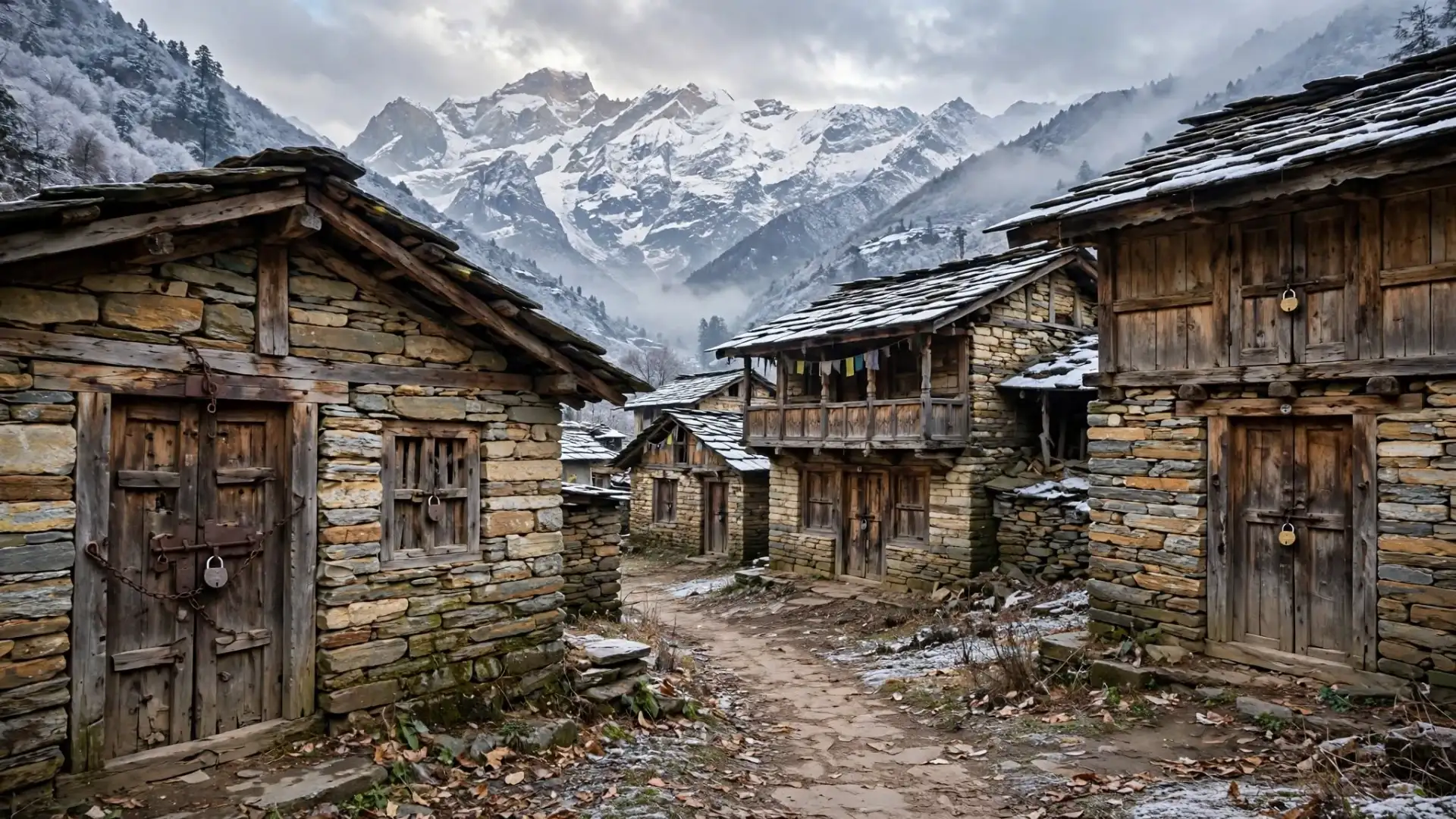
The reasons are closely connected to geography, weather and seasonal migration. However, there is no single village-wide rule that explains every locked house in Himachal Pradesh. Patterns vary between districts, elevations and individual households.
Understanding why some homes remain empty for weeks or months offers a glimpse into the realities of life in remote mountain communities.
For households living at high elevations, these conditions can make ordinary tasks more complicated. Getting supplies, travelling to work or taking children to school may require considerably more planning.
Some families therefore choose to spend part of the winter in lower-altitude settlements or towns where roads remain accessible and everyday services are easier to reach.
This is not a universal practice. Many residents remain in their villages throughout winter, adapting to local conditions and relying on established community networks.
In some mountain regions, seasonal migration is linked to agricultural work and traditional livelihoods. In others, it reflects modern pressures, including access to schooling and employment opportunities.
A house may remain locked because its occupants are staying with relatives, working elsewhere or using another home during the winter months.
The exact reasons differ from one family to another, which is why a quiet village should not automatically be described as permanently abandoned.
Homes may be adapted to retain heat, while residents keep track of road conditions and weather warnings. Community relationships can be particularly important when travel becomes difficult.
The challenges are not limited to snow. Heavy rain, landslides and other disruptions can affect mountain roads at different times of the year.
Before visiting remote areas, it is sensible to check road access, local weather, accommodation availability and transport arrangements. Some routes may close temporarily, and services can be limited outside the main tourist season.
It is also important to respect private homes and local residents. Locked houses are not attractions to explore, and an apparently quiet settlement may still be someone's permanent home.
The story behind these houses is ultimately about adaptation. In the Himalayas, weather can influence where people live, how they work and when they travel. A locked door may not signal the end of village life, but simply a household adjusting to another season.
The reasons are closely connected to geography, weather and seasonal migration. However, there is no single village-wide rule that explains every locked house in Himachal Pradesh. Patterns vary between districts, elevations and individual households.
Understanding why some homes remain empty for weeks or months offers a glimpse into the realities of life in remote mountain communities.
When winter changes everyday life
Winter in the higher reaches of Himachal Pradesh can bring heavy snowfall, freezing temperatures and difficult travel conditions. Roads may become blocked, while access to shops, healthcare and other essential services can become less reliable.For households living at high elevations, these conditions can make ordinary tasks more complicated. Getting supplies, travelling to work or taking children to school may require considerably more planning.
Some families therefore choose to spend part of the winter in lower-altitude settlements or towns where roads remain accessible and everyday services are easier to reach.
This is not a universal practice. Many residents remain in their villages throughout winter, adapting to local conditions and relying on established community networks.
Seasonal migration has practical reasons
Moving temporarily does not necessarily mean abandoning a home. Families may relocate for employment, education, healthcare or the simple convenience of living somewhere with more reliable transport.In some mountain regions, seasonal migration is linked to agricultural work and traditional livelihoods. In others, it reflects modern pressures, including access to schooling and employment opportunities.
You may also like
- Gu to Ru: The Guru Who Turns Darkness Into Light
- Vijayadashami 2026: Be sure to perform these astrological remedies on Dussehra for happiness and prosperity in your life..
- Eating Instant Noodles Too Often? 5 Health Risks You Should Know Before Your Next Meal
- Sneezing Every Morning After Waking Up? Know the Common Causes and 5 Simple Ways to Get Relief
- Dussehra falls on an auspicious day today; learn the auspicious timing for the burning of Ravana's effigy and effective remedies..
A house may remain locked because its occupants are staying with relatives, working elsewhere or using another home during the winter months.
The exact reasons differ from one family to another, which is why a quiet village should not automatically be described as permanently abandoned.
How remote communities prepare
People who remain in high-altitude villages often plan carefully for winter. Depending on local conditions, preparations can include storing food, fuel and essential supplies before severe weather arrives.Homes may be adapted to retain heat, while residents keep track of road conditions and weather warnings. Community relationships can be particularly important when travel becomes difficult.
The challenges are not limited to snow. Heavy rain, landslides and other disruptions can affect mountain roads at different times of the year.
What travellers should understand
For travellers, the seasonal rhythm of Himalayan villages is an important consideration. A settlement that feels lively in summer may offer a very different experience in winter.Before visiting remote areas, it is sensible to check road access, local weather, accommodation availability and transport arrangements. Some routes may close temporarily, and services can be limited outside the main tourist season.
It is also important to respect private homes and local residents. Locked houses are not attractions to explore, and an apparently quiet settlement may still be someone's permanent home.
The story behind these houses is ultimately about adaptation. In the Himalayas, weather can influence where people live, how they work and when they travel. A locked door may not signal the end of village life, but simply a household adjusting to another season.






Loving Newspoint? Download the app now
