
Why Some Indian Communities Ferment Almost Everything, From Rice to Bamboo Shoots

Long before probiotics became a supermarket buzzword, Indian communities were already relying on living microorganisms to transform food. Across the Northeast, South India and tribal regions, fermentation has traditionally been used for everything from rice and lentils to bamboo shoots, fish, vegetables and beverages. What looks like a simple kitchen practice is actually an old form of food technology, developed around climate, crops and the need to make seasonal ingredients last. India is believed to have hundreds of traditional fermented foods and beverages, with different communities developing their own methods over generations.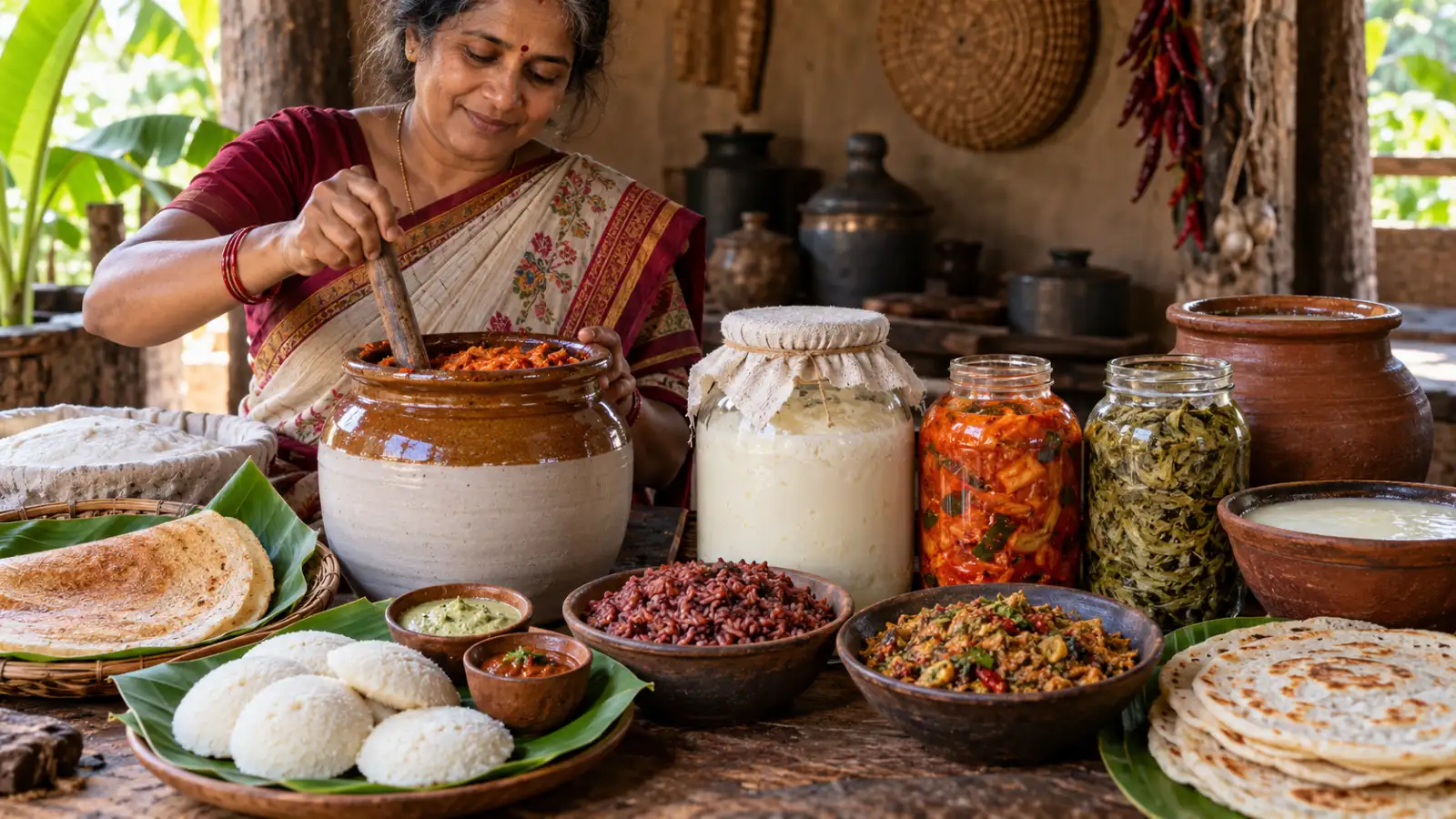
This is why fermentation developed independently in so many parts of India. It was not simply about taste. It was closely connected to food security, seasonal agriculture and local availability.
Rice-based fermented drinks, for instance, became important in several Northeast Indian communities, while fermented cereal and pulse batters became central to foods such as idli, dosa and dhokla.
Recent research on Tripura's tribal communities highlights how traditional fermented foods are closely connected with indigenous knowledge and local food systems.
Fermentation also became part of social life. Rice-based beverages such as apong, zutho and judima are associated with festivals, hospitality and community traditions in different parts of the region.
Temperature, moisture, timing and ingredients could all influence the final product. A family might know exactly when a rice mixture had reached the right stage simply from its smell, texture or appearance.
Modern science is now examining these foods more closely because fermentation can influence digestibility, flavour and the availability of certain nutrients. However, traditional fermented foods should not automatically be treated as medical products. Their nutritional value varies considerably depending on ingredients and preparation.
India's traditional repertoire is considerably broader than many people realise. Academic research has documented hundreds of fermented foods and beverages across the country.
The bigger lesson is that India's fermentation traditions represent more than unusual recipes. They are examples of communities turning local crops, climate and microorganisms into practical food technology.
As modern diets become increasingly dependent on refrigeration and industrial processing, these old techniques may offer fresh ideas for creating diverse, locally rooted and less energy-intensive foods.
Fermentation Was Practical Before It Was Trendy
For communities living without refrigeration, fermentation offered an inexpensive way to preserve food while changing its flavour and texture. Naturally occurring bacteria, yeasts and other microorganisms break down parts of the food, producing acids, gases or alcohol that can help slow the growth of unwanted microbes.This is why fermentation developed independently in so many parts of India. It was not simply about taste. It was closely connected to food security, seasonal agriculture and local availability.
Rice-based fermented drinks, for instance, became important in several Northeast Indian communities, while fermented cereal and pulse batters became central to foods such as idli, dosa and dhokla.
Northeast India Has an Extraordinary Fermentation Culture
The Northeast offers some of the country's most striking examples. Communities have traditionally fermented rice, bamboo shoots, fish, soybean and meat, often using techniques adapted to humid climates and mountainous environments.You may also like
- Crores of ESIC beneficiaries will not receive benefits without Aadhaar linking! Strict order from the Ministry of Labour; know the process..
- Was Vibhishana A Traitor? Ramayana's Shocking Question
- “I was crying at the middle of the road”: He lost his ₹2 lakh MacBook on a rainy Bengaluru road, then an e-rickshaw driver restored his faith in karma
- PCOS vs PCOD: Understanding the Crucial Differences Every Woman Must Know for Better Hormonal Health
- Waking Up Suddenly in the Middle of the Night? Experts Warn It Could Be a Sign of Insomnia or Sleep Apnea
Recent research on Tripura's tribal communities highlights how traditional fermented foods are closely connected with indigenous knowledge and local food systems.
Fermentation also became part of social life. Rice-based beverages such as apong, zutho and judima are associated with festivals, hospitality and community traditions in different parts of the region.
Why Fermentation Works So Well
The fascinating part is that traditional cooks did not need to understand microbiology to master fermentation. Knowledge was passed through observation.Temperature, moisture, timing and ingredients could all influence the final product. A family might know exactly when a rice mixture had reached the right stage simply from its smell, texture or appearance.
Modern science is now examining these foods more closely because fermentation can influence digestibility, flavour and the availability of certain nutrients. However, traditional fermented foods should not automatically be treated as medical products. Their nutritional value varies considerably depending on ingredients and preparation.
An Old Technology With a Modern Future
Today, fermentation is enjoying a global revival. Restaurants, food companies and home cooks are rediscovering kimchi, sourdough, kombucha and other fermented products.India's traditional repertoire is considerably broader than many people realise. Academic research has documented hundreds of fermented foods and beverages across the country.
The bigger lesson is that India's fermentation traditions represent more than unusual recipes. They are examples of communities turning local crops, climate and microorganisms into practical food technology.
As modern diets become increasingly dependent on refrigeration and industrial processing, these old techniques may offer fresh ideas for creating diverse, locally rooted and less energy-intensive foods.






Loving Newspoint? Download the app now
