
Why the World’s Largest Bird Doesn’t Need Wings to Live and Thrive

The world’s largest bird, the ostrich, is one of nature’s most surprising creations. While most birds depend on wings to survive, this giant ground-dweller has thrived without ever needing to fly. Living mainly in the dry grasslands and savannahs of Africa, the ostrich has evolved into a powerful runner, built for speed, strength, and endurance. Instead of soaring through the sky, it dominates the land in a completely different way - proving that survival in nature is not always about flight.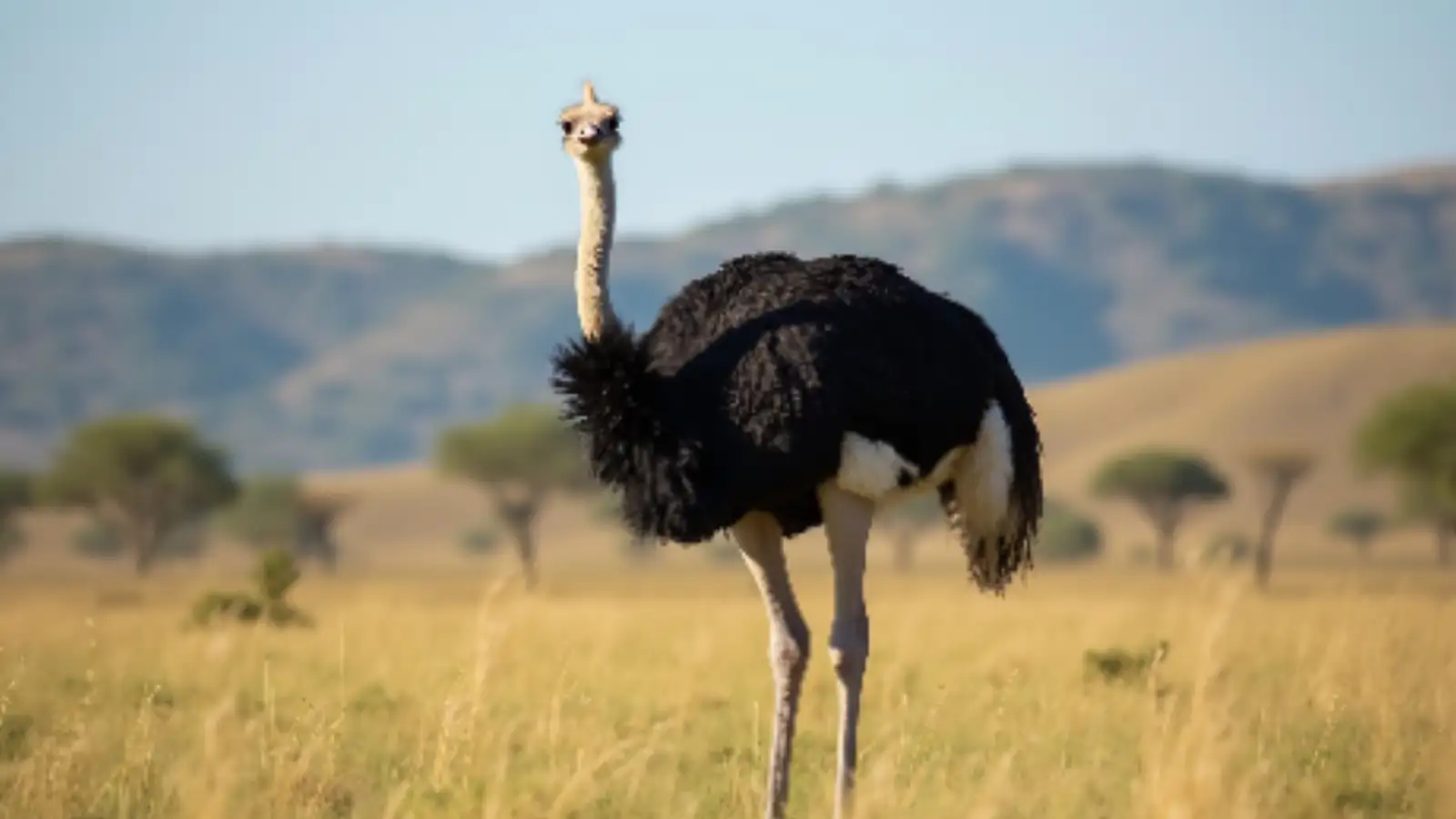
A Giant Built for the Ground, Not the Sky
The ostrich is the tallest and heaviest living bird on Earth. A fully grown adult can reach up to 9 feet in height and weigh around 150 kilograms.
Despite having wings, its massive body is simply too heavy for flight. Over thousands of years of evolution, it slowly adapted to life on land instead of the air. This shift did not weaken it - in fact, it made the bird even more powerful in its own environment.
Its long, muscular legs became its greatest asset, allowing it to travel long distances across open landscapes with ease. While other birds escape danger by flying away, the ostrich survives by outpacing it.
Speed Over Flight: Nature’s Fastest Survival Strategy
One of the most incredible traits of the ostrich is its speed. This giant bird can run at speeds of up to 70 km/h, making it one of the fastest land animals in the world.
Ostrich uses its powerful legs like springs, helping it sprint across the savannah with surprising agility. This speed is its primary defence against predators such as lions and hyenas.
Instead of relying on wings, ostriches depend on:
In the wild, their movement replaces flight entirely—turning the ground into their survival zone.
The World’s Largest Bird Eggs: Nature’s Giant Creation
The ostrich is not just famous for its size; its eggs are equally extraordinary. Each egg can weigh over 1.5 kilograms - roughly equal to 20–24 chicken eggs combined.
These massive eggs are usually laid in shared nests, carefully guarded by both males and females. Interestingly, males often take night duty because their darker feathers help them blend into the darkness, offering better protection.
Since predators frequently target nests, every egg has a high survival value, making protection a critical part of their reproductive strategy.
A Powerful Kick That Can Stop Predators
Even though ostriches prefer to avoid conflict, they are far from defenseless. If threatened, they can deliver extremely powerful kicks using their strong legs.
Their legs are not just built for running - they are also weapons. A single kick can seriously injure predators, and their sharp claws add even more impact.
This defence mechanism ensures that even large predators think twice before attacking an adult ostrich. In the open savannah, strength and reaction time often matter more than flight.
Why Scientists Are Still Fascinated by Ostriches
Scientists continue to study ostriches because their survival strategy is so unique compared to other birds.
Some of their remarkable adaptations include:
Every feature of the ostrich reflects a perfect balance of adaptation and survival. Instead of evolving toward flight like most birds, it evolved toward strength, speed, and endurance.
A Bird That Rewrote the Rules of Nature
The ostrich proves that evolution does not follow a single path. While most birds took to the skies, this remarkable species chose the ground - and mastered it completely.
As the world’s largest bird (ostrich), it stands as a powerful example of how survival is not about fitting in, but about adapting in the smartest way possible.
A Giant Built for the Ground, Not the Sky
The ostrich is the tallest and heaviest living bird on Earth. A fully grown adult can reach up to 9 feet in height and weigh around 150 kilograms.
Despite having wings, its massive body is simply too heavy for flight. Over thousands of years of evolution, it slowly adapted to life on land instead of the air. This shift did not weaken it - in fact, it made the bird even more powerful in its own environment.
Its long, muscular legs became its greatest asset, allowing it to travel long distances across open landscapes with ease. While other birds escape danger by flying away, the ostrich survives by outpacing it.
Speed Over Flight: Nature’s Fastest Survival Strategy
One of the most incredible traits of the ostrich is its speed. This giant bird can run at speeds of up to 70 km/h, making it one of the fastest land animals in the world.
Ostrich uses its powerful legs like springs, helping it sprint across the savannah with surprising agility. This speed is its primary defence against predators such as lions and hyenas.
Instead of relying on wings, ostriches depend on:
- Long-distance stamina
- Explosive sprint speed
- Sharp eyesight to detect danger early
In the wild, their movement replaces flight entirely—turning the ground into their survival zone.
The World’s Largest Bird Eggs: Nature’s Giant Creation
The ostrich is not just famous for its size; its eggs are equally extraordinary. Each egg can weigh over 1.5 kilograms - roughly equal to 20–24 chicken eggs combined.
These massive eggs are usually laid in shared nests, carefully guarded by both males and females. Interestingly, males often take night duty because their darker feathers help them blend into the darkness, offering better protection.
Since predators frequently target nests, every egg has a high survival value, making protection a critical part of their reproductive strategy.
A Powerful Kick That Can Stop Predators
Even though ostriches prefer to avoid conflict, they are far from defenseless. If threatened, they can deliver extremely powerful kicks using their strong legs.
Their legs are not just built for running - they are also weapons. A single kick can seriously injure predators, and their sharp claws add even more impact.
This defence mechanism ensures that even large predators think twice before attacking an adult ostrich. In the open savannah, strength and reaction time often matter more than flight.
Why Scientists Are Still Fascinated by Ostriches
Scientists continue to study ostriches because their survival strategy is so unique compared to other birds.
Some of their remarkable adaptations include:
- Ability to survive without drinking water for long periods
- Moisture absorption from plants and food
- Extremely sharp vision to detect danger from far away
- A strong digestive system that handles tough vegetation
Every feature of the ostrich reflects a perfect balance of adaptation and survival. Instead of evolving toward flight like most birds, it evolved toward strength, speed, and endurance.
A Bird That Rewrote the Rules of Nature
The ostrich proves that evolution does not follow a single path. While most birds took to the skies, this remarkable species chose the ground - and mastered it completely.
As the world’s largest bird (ostrich), it stands as a powerful example of how survival is not about fitting in, but about adapting in the smartest way possible.
Next Story