
Why We Keep Buying Things for Our Future Selves and How to Stop

Have you ever bought a set of running shoes that spent two years sitting in your wardrobe untouched? Or perhaps you purchased a set of delicate baking tins because you pictured yourself hosting Sunday tea parties every single weekend. Many of us have cupboards full of unworn clothes in sizes we hope to fit into next year, cookbooks with pristine increased spines, and expensive craft materials for hobbies we have never actually started. This common pattern comes down to a clear psychological mechanism. We are not just buying physical items for our current lives. We are constantly buying things for an imaginary version of ourselves that exists only in our minds.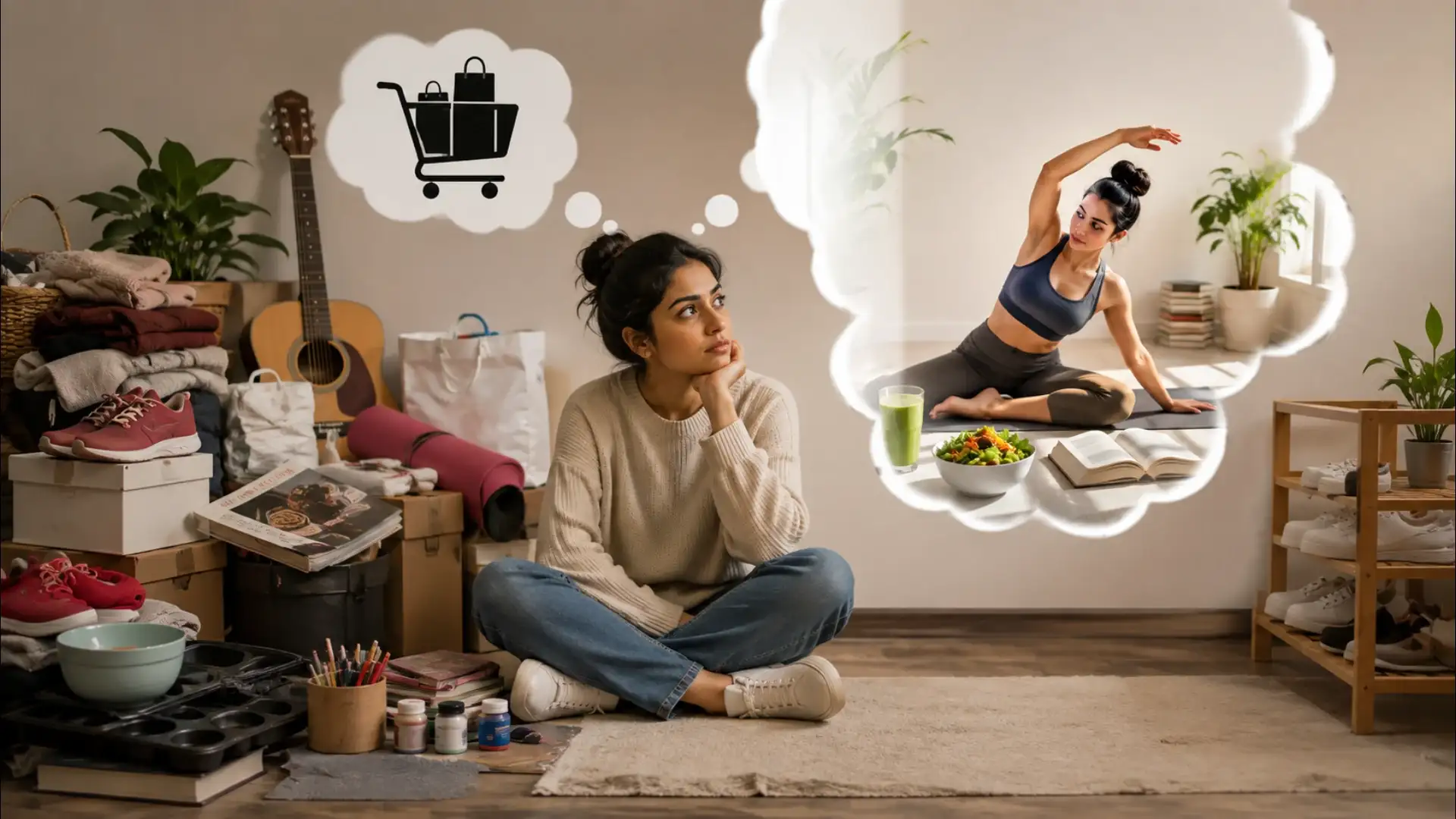
To break this expensive cycle, we need to bring our consumer behaviour back to reality. Practice mindfulness in shopping whenever you feel the urge to pull out your wallet. Before tapping your card, pause and ask yourself if you genuinely have the time and desire to use the item this week. Focus on loving and supporting the person you are right now rather than worshipping a fictional future self. When you accept your actual daily habits, you save money, declutter your home, and free yourself from unnecessary emotional stress.
The Contrast Between Who We Are and Who We Want to Be
Psychologists often refer to this persona as our ideal future self . Our current self is grounded in daily reality. This is the person who feels tired after a long day at work, chooses takeaway pizza over chopping vegetables, and prefers scrolling on a phone to going for an evening run. On the other hand, our future version is a completely perfect individual. This imaginary person wakes up at six in the morning, drinks fresh green smoothies, reads deep literature before bed, and keeps a perfectly neat house. When we stand in a shop or browse an online store, we are frequently shopping for that ideal person rather than the actual human living in our shoes today.How Retail Therapy and Brain Chemistry Trick Us
Retail therapy plays heavily on these romantic projections. Purchasing an item gives us an instant rush of brain chemicals related to reward and happiness. When you purchase a gym membership or a set of expensive paints, your brain feels as though you have already taken a meaningful step towards self improvement spending . You feel good right in that moment, even though you have not actually spent a single minute exercising or painting. The simple act of spending money tricks your mind into believing that personal transformation has already begun, reinforcing our worst impulse buying habits without requiring any real effort.The Illusion of Time and Energy
Another reason we fall into this trap is our tendency to view time with endless optimism. We like to believe that our future days will somehow contain more hours than our present days. We tell ourselves that next month will be less busy, next year will bring unlimited energy, and next summer will be the time we finally slow down. In reality, life rarely clears up on its own. The future version of you will face the same fatigue, busy schedules, and daily distractions that you face today. Buying more objects does not magically create more time or energy to use them.Overcoming Consumer Behaviour and Clutter and Guilt
This shopping style also creates a heavy emotional burden over time. Every unused object in your house becomes a quiet reminder of an unmet expectation. That unused guitar in the corner whispers that you failed to learn music. Those unworn sports clothes make you feel guilty about skipping workouts. Instead of inspiring positive change, these objects generate clutter and guilt that weigh down our mental space.To break this expensive cycle, we need to bring our consumer behaviour back to reality. Practice mindfulness in shopping whenever you feel the urge to pull out your wallet. Before tapping your card, pause and ask yourself if you genuinely have the time and desire to use the item this week. Focus on loving and supporting the person you are right now rather than worshipping a fictional future self. When you accept your actual daily habits, you save money, declutter your home, and free yourself from unnecessary emotional stress.






Loving Newspoint? Download the app now
