
5 Bhagavad Gita Shlokas That Reflect the Spirit of Purushottam Maas

In Hindu tradition , Purushottam Maas is considered a deeply spiritual month - a sacred period dedicated to devotion, reflection, and self-discipline . It is believed to be closely associated with Lord Krishna in his form as ‘Purushottam’, meaning the Supreme Being. During this holy month, devotees turn to the teachings of the Bhagavad Gita for timeless wisdom that reflect the essence of this sacred time, offering guidance on life, duty, and spiritual growth . Let’s explore five shlokas from the Bhagavad Gita to understand the deeper meaning of Purushottam Maas.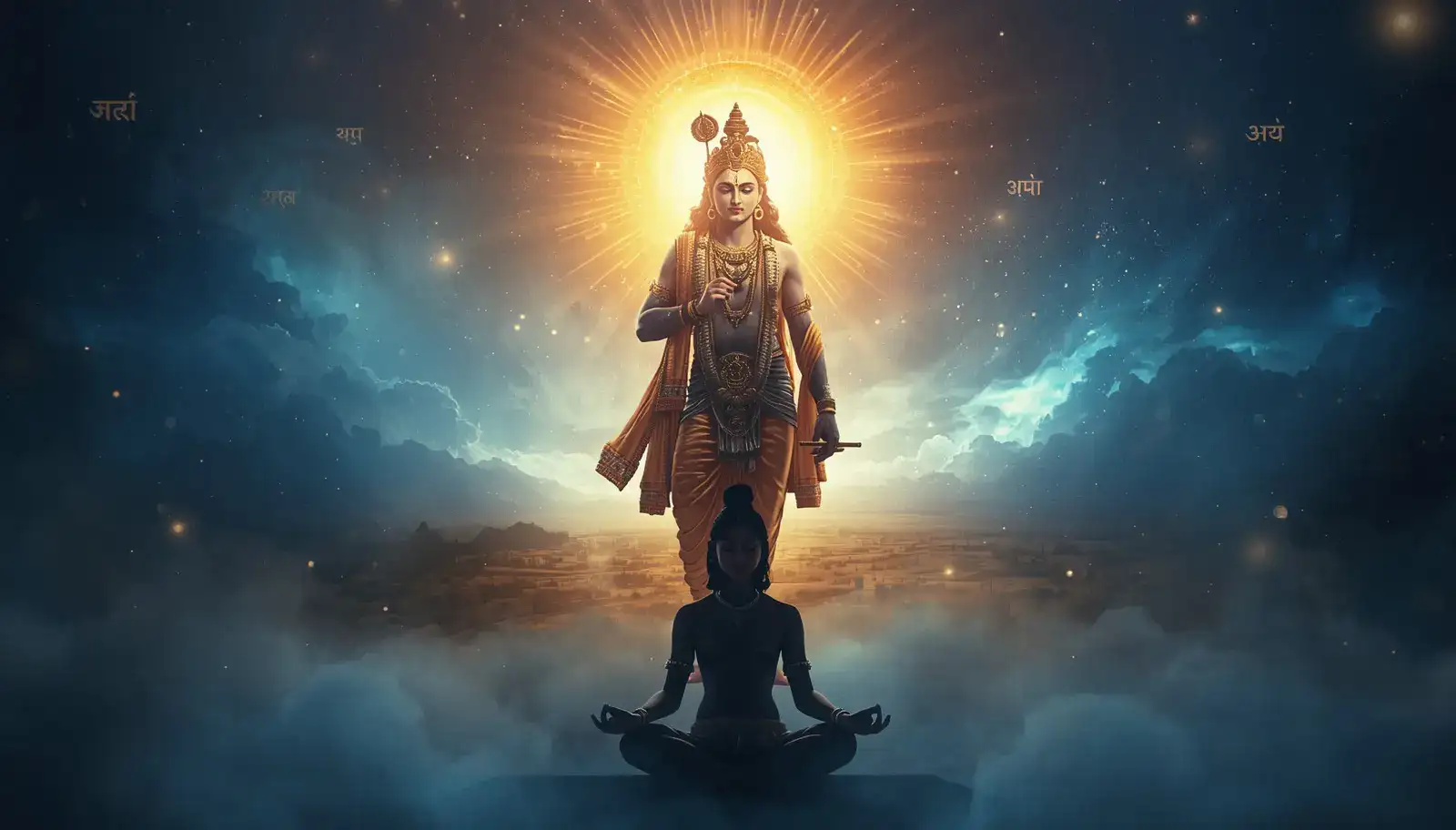
In this verse of the Bhagavad Gita, Shri Krishna is described as being beyond both the material world and the eternal soul . According to the Vedas and Smritis, he is recognised as the Supreme Divine Being, Purushottam, who exists above all forms of creation and consciousness. Here the word ‘Purusha’ refers to a person, consciousness, or divine being, while ‘Uttama’ means highest, supreme, or transcendental. Purushottam Maas symbolises a spiritual pause in the cycle of life, gently guiding individuals away from the constant pursuit of material goals and toward inner reflection.
2. BG 15.7: The embodied souls in this material world are My eternal fragmental parts. But bound by material nature, they are struggling with the six senses including the mind.
Through this verse of Bhagavad Gita, Shri Krishna explains that all the living beings in this material world are His eternal fragmental parts. However, being bound by the material world, they become entangled in desires and constantly struggle through the six senses, including the mind. This verse specifically reflects upon the inner conflicts that every human experiences in daily life. The mind and senses pull people in different directions, making it difficult to stay focused on a higher purpose and self-realisation. The verse teaches individuals to gradually move away from material distractions and realign their thoughts with spiritual values and inner discipline.
3. BG 15.15: I am seated in the hearts of all living beings, and from Me come memory, knowledge, as well as forgetfulness. I alone am to be known by all the Vedas, am the author of the Vedant, and the knower of the meaning of the Vedas.
In this Bhagavad Gita verse, Lord Krishna explains that He resides in the hearts of all living beings and is the source of memory, knowledge, and even forgetfulness. He further states that He is the ultimate goal of all Vedic knowledge, as well as the true author and knower of the Vedanta. This shloka highlights the idea that all mental abilities and spiritual understanding ultimately originate from the Divine itself. This verse also suggests that human consciousness is not entirely independent but guided by a higher divine force. What we remember, understand, or even forget is ultimately influenced by the Supreme. When people realise their connection with the Divine, their anger reduces, ego softens, fear weakens and gratitude grows.
4. BG 15.1: The Supreme Divine Personality said: They speak of an eternal aśhvatth tree with its roots above and branches below. Its leaves are the Vedic hymns, and one who knows the secret of this tree is the knower of the Vedas.
In this verse of Bhagavad Gita, Lord Krishna describes the material world as an eternal Ashvattha tree, with its roots above the branches extending downward. The leaves of this cosmic tree are said to represent the Vedic hymns, symbolising sacred knowledge. He further explains that one who understands the true nature and mystery of this inverted tree is considered a knower of the Vedas.
This shloka introduces the material world as a complex yet temporary reality that must be understood in order to attain spiritual truth. It also explains that when consciousness becomes disconnected from its divine source, a sense of inner dissatisfaction naturally arises
5. BG 15.16: There are two kinds of beings in creation, the kṣhar (perishable) and the akṣhar (imperishable). The perishable are all beings in the material realm. The imperishable are the liberated beings.
In this teaching from the Bhagavad Gita, Shri Krisna the mentions that there are two types of beings in creation, the perishable (kṣhar) and the imperishable (akṣhar). Perishable beings are those who live in the material world and are subject to change and destruction. On the other hand, imperishable beings are liberated from material bondage and remain eternal. This verse explains that life is not uniform in nature.
Everything in this material world changes with time like the body ages, circumstances shift, relationships evolve, and success comes and goes. It reminds us that everything material is temporary and meant to be destroyed while the soul remains eternal. Understanding this verse gives life a deeper meaning, and makes human existence about more than just survival.
1. BG 15.18: I am transcendental to the perishable world of matter, and even to the imperishable soul; hence I am celebrated, both in the Vedas and the Smṛitis, as the Supreme Divine Personality.
In this verse of the Bhagavad Gita, Shri Krishna is described as being beyond both the material world and the eternal soul . According to the Vedas and Smritis, he is recognised as the Supreme Divine Being, Purushottam, who exists above all forms of creation and consciousness. Here the word ‘Purusha’ refers to a person, consciousness, or divine being, while ‘Uttama’ means highest, supreme, or transcendental. Purushottam Maas symbolises a spiritual pause in the cycle of life, gently guiding individuals away from the constant pursuit of material goals and toward inner reflection.
2. BG 15.7: The embodied souls in this material world are My eternal fragmental parts. But bound by material nature, they are struggling with the six senses including the mind.
Through this verse of Bhagavad Gita, Shri Krishna explains that all the living beings in this material world are His eternal fragmental parts. However, being bound by the material world, they become entangled in desires and constantly struggle through the six senses, including the mind. This verse specifically reflects upon the inner conflicts that every human experiences in daily life. The mind and senses pull people in different directions, making it difficult to stay focused on a higher purpose and self-realisation. The verse teaches individuals to gradually move away from material distractions and realign their thoughts with spiritual values and inner discipline.
3. BG 15.15: I am seated in the hearts of all living beings, and from Me come memory, knowledge, as well as forgetfulness. I alone am to be known by all the Vedas, am the author of the Vedant, and the knower of the meaning of the Vedas.
In this Bhagavad Gita verse, Lord Krishna explains that He resides in the hearts of all living beings and is the source of memory, knowledge, and even forgetfulness. He further states that He is the ultimate goal of all Vedic knowledge, as well as the true author and knower of the Vedanta. This shloka highlights the idea that all mental abilities and spiritual understanding ultimately originate from the Divine itself. This verse also suggests that human consciousness is not entirely independent but guided by a higher divine force. What we remember, understand, or even forget is ultimately influenced by the Supreme. When people realise their connection with the Divine, their anger reduces, ego softens, fear weakens and gratitude grows.
4. BG 15.1: The Supreme Divine Personality said: They speak of an eternal aśhvatth tree with its roots above and branches below. Its leaves are the Vedic hymns, and one who knows the secret of this tree is the knower of the Vedas.
In this verse of Bhagavad Gita, Lord Krishna describes the material world as an eternal Ashvattha tree, with its roots above the branches extending downward. The leaves of this cosmic tree are said to represent the Vedic hymns, symbolising sacred knowledge. He further explains that one who understands the true nature and mystery of this inverted tree is considered a knower of the Vedas.
This shloka introduces the material world as a complex yet temporary reality that must be understood in order to attain spiritual truth. It also explains that when consciousness becomes disconnected from its divine source, a sense of inner dissatisfaction naturally arises
5. BG 15.16: There are two kinds of beings in creation, the kṣhar (perishable) and the akṣhar (imperishable). The perishable are all beings in the material realm. The imperishable are the liberated beings.
In this teaching from the Bhagavad Gita, Shri Krisna the mentions that there are two types of beings in creation, the perishable (kṣhar) and the imperishable (akṣhar). Perishable beings are those who live in the material world and are subject to change and destruction. On the other hand, imperishable beings are liberated from material bondage and remain eternal. This verse explains that life is not uniform in nature.
Everything in this material world changes with time like the body ages, circumstances shift, relationships evolve, and success comes and goes. It reminds us that everything material is temporary and meant to be destroyed while the soul remains eternal. Understanding this verse gives life a deeper meaning, and makes human existence about more than just survival.
Next Story