
What Bright Screens at Bedtime Do to Your Body Clock

The body does not run on willpower. It runs on light. Your body's internal clock, also known as the circadian rhythm, relies on light signals to regulate sleep, wakefulness and other essential functions. However, excessive screen time before bed can interfere with this natural process. The blue light emitted by smartphones, laptops and televisions can affect melatonin production, making it harder to fall asleep at the right time. But how exactly do bright screens at bedtime affect your body clock?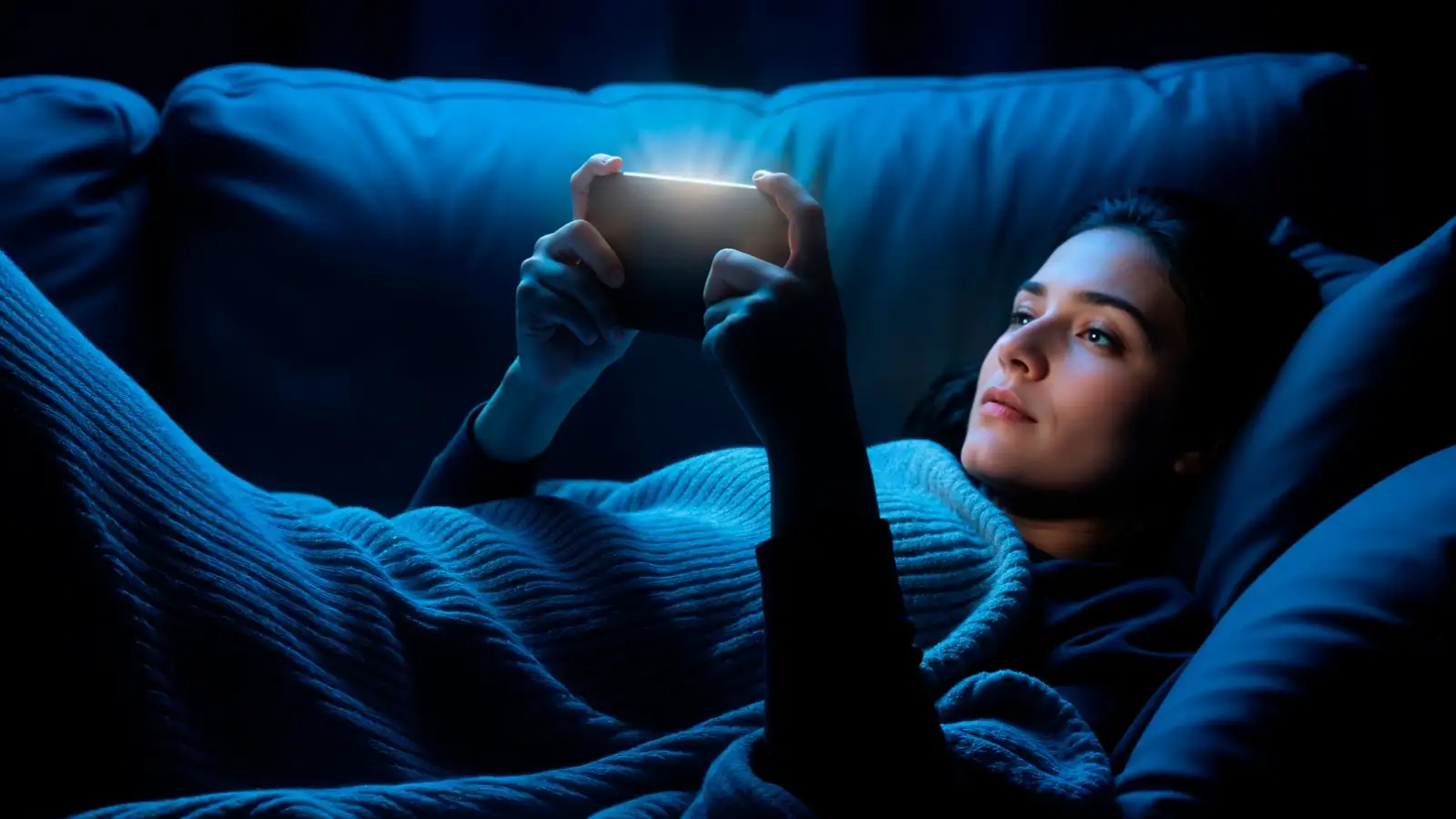
LED and OLED screens, phones, tablets, laptops, televisions, emit light that is heavily weighted toward the short-wavelength, blue end of the visible spectrum. The eye contains a third type of photoreceptor beyond the rods and cones used for vision. These are called intrinsically photosensitive retinal ganglion cells, and they are most sensitive to wavelengths around 480 nanometres, exactly the blue-white light that modern screens produce in abundance. When these cells fire, they send a direct signal to the suprachiasmatic nucleus: it is still daytime. Melatonin release is suppressed.
Ghrelin, the hormone that drives hunger, and leptin, the hormone that signals fullness, are both regulated by the circadian system. A clock running late tends to shift appetite toward the later hours, and toward calorie-dense foods. This is not a choice or a lack of discipline. It is a hormone following a delayed schedule.
Cortisol, which should peak sharply in the early morning to prepare the body for the day, follows a similar pattern. A shifted clock produces a flatter, later cortisol curve. The result is the familiar feeling of needing several hours before functioning properly, even after what looks like a full night's sleep on paper.
The distance also matters. Holding a phone 30 centimetres from the face delivers significantly more light to the retina than the same screen across the room. Reading in bed, phone close, room dark, is the combination that produces the strongest suppression signal.
What they do not do is eliminate the effect. A warm-filtered screen is still a light source in a dark room. It still activates the retinal photoreceptors to some degree. And brightness matters as much as colour temperature, a very bright warm screen can suppress melatonin more than a dim standard screen. Turning brightness down alongside enabling the warm filter produces a meaningfully different result than either alone.
The other variable night mode cannot fix is cognitive arousal. The content on the screen, a conversation, a news feed, a video, keeps the brain in a state of alertness that is separate from the light signal. The nervous system does not wind down for sleep while actively processing social information or emotionally engaging content. Light and arousal are two distinct mechanisms, and night mode addresses only one.
In the hour before sleep, the most effective change is not a filter or an app setting. It is reducing total light in the environment, dimming room lights, switching off overhead lighting in favour of a lamp placed low, and reducing screen brightness to its lowest comfortable level. The body reads the environment as a whole, not one screen in isolation.
The clock is not broken by one late night with a phone. It is a system built for gradual signals, and it responds to gradual changes in either direction. The same consistency that drifted it later can pull it back earlier, one morning at a time.
Every habit around screens and sleep is ultimately a negotiation with a system that evolved over hundreds of thousands of years to read one signal: where the sun is. The screen is new. The clock is not. Understanding which one is running the show makes the negotiation a little more honest.
The Hormone That Tracks Darkness
As the sky darkens, the pineal gland begins releasing melatonin into the bloodstream. Melatonin does not make you sleep directly. It is a signal: a chemical message that tells every organ in your body that night has arrived and it is time to prepare. Body temperature begins to drop. Digestion slows. The brain starts consolidating the day's learning into long-term memory. The whole system runs on the assumption that darkness means night.LED and OLED screens, phones, tablets, laptops, televisions, emit light that is heavily weighted toward the short-wavelength, blue end of the visible spectrum. The eye contains a third type of photoreceptor beyond the rods and cones used for vision. These are called intrinsically photosensitive retinal ganglion cells, and they are most sensitive to wavelengths around 480 nanometres, exactly the blue-white light that modern screens produce in abundance. When these cells fire, they send a direct signal to the suprachiasmatic nucleus: it is still daytime. Melatonin release is suppressed.
What Suppressed Melatonin Actually Costs
A delayed melatonin signal does not simply push sleep back by an hour. It shifts the entire circadian phase. The body's internal clock drifts later. Sleep onset moves. But morning alarms do not move with it, so total sleep time compresses. Over days, this compounds. The body's temperature rhythm, cortisol rhythm, and appetite hormone rhythms all run off the same master clock. When the clock drifts, they drift with it.Ghrelin, the hormone that drives hunger, and leptin, the hormone that signals fullness, are both regulated by the circadian system. A clock running late tends to shift appetite toward the later hours, and toward calorie-dense foods. This is not a choice or a lack of discipline. It is a hormone following a delayed schedule.
Cortisol, which should peak sharply in the early morning to prepare the body for the day, follows a similar pattern. A shifted clock produces a flatter, later cortisol curve. The result is the familiar feeling of needing several hours before functioning properly, even after what looks like a full night's sleep on paper.
The Dark Room Makes It Worse
The effect of a screen is not constant across all conditions. It is relative to the surrounding light level. In a bright office, a phone screen adds little to an already bright environment. In a dark bedroom, the same screen becomes the dominant light source the eye is processing, and the contrast effect on those photoreceptors is much stronger. This is why the same phone used for the same duration causes more circadian disruption at midnight in a dark room than at noon in sunlight.The distance also matters. Holding a phone 30 centimetres from the face delivers significantly more light to the retina than the same screen across the room. Reading in bed, phone close, room dark, is the combination that produces the strongest suppression signal.
Night Mode and Warm Filters, What They Do and Do Not Do
Most devices now offer a night mode or warm display filter that shifts the screen's colour balance away from blue and toward amber. These filters reduce the blue-wavelength output and, in controlled conditions, reduce the melatonin suppression effect compared with a standard screen at the same brightness. They are genuinely useful, not a placebo.You may also like
- Larry Ellison on AI killing software companies: AI may do some of their job, but not all as companies across sectors will still need software firms to build their …
- Vodafone Idea launches 'Vi Intelligence' AI initiative, joins hands with PwC India to build agentic enterprise solutions
- Tempt launches Juggler ClockBeat Bluetooth speaker with alarm clock, FM radio and phone holder at Rs 1,599
- Excitel launches 'Diwali Dhamaka' offer with up to 3 months of free internet and plan
- Ayushman Card Alert 2026: UP Government Warns Against Fraud, Check Eligibility Before Applying
What they do not do is eliminate the effect. A warm-filtered screen is still a light source in a dark room. It still activates the retinal photoreceptors to some degree. And brightness matters as much as colour temperature, a very bright warm screen can suppress melatonin more than a dim standard screen. Turning brightness down alongside enabling the warm filter produces a meaningfully different result than either alone.
The other variable night mode cannot fix is cognitive arousal. The content on the screen, a conversation, a news feed, a video, keeps the brain in a state of alertness that is separate from the light signal. The nervous system does not wind down for sleep while actively processing social information or emotionally engaging content. Light and arousal are two distinct mechanisms, and night mode addresses only one.
What the Body Actually Needs
The suprachiasmatic nucleus learns from consistent signals. A regular pattern of light exposure, bright light in the morning, dimming light in the evening, trains the clock and makes it more robust. Morning sunlight, even through a window, is the strongest resetting signal available. It does not need to be direct or intense; outdoor light on a cloudy morning is still many times brighter than indoor lighting.In the hour before sleep, the most effective change is not a filter or an app setting. It is reducing total light in the environment, dimming room lights, switching off overhead lighting in favour of a lamp placed low, and reducing screen brightness to its lowest comfortable level. The body reads the environment as a whole, not one screen in isolation.
The clock is not broken by one late night with a phone. It is a system built for gradual signals, and it responds to gradual changes in either direction. The same consistency that drifted it later can pull it back earlier, one morning at a time.
Every habit around screens and sleep is ultimately a negotiation with a system that evolved over hundreds of thousands of years to read one signal: where the sun is. The screen is new. The clock is not. Understanding which one is running the show makes the negotiation a little more honest.






Loving Newspoint? Download the app now
