
Self-Driving Cars in India: What the Technology Actually Requires

A self-driving car is not a car with a clever camera. It is a system that must read its environment thousands of times per second, predict what every object around it will do next, and act faster than any human reflex. That system was trained, tested, and refined on roads that follow consistent lane markings, obey traffic signals reliably, and carry a relatively predictable mix of vehicles. Indian roads are a different problem entirely.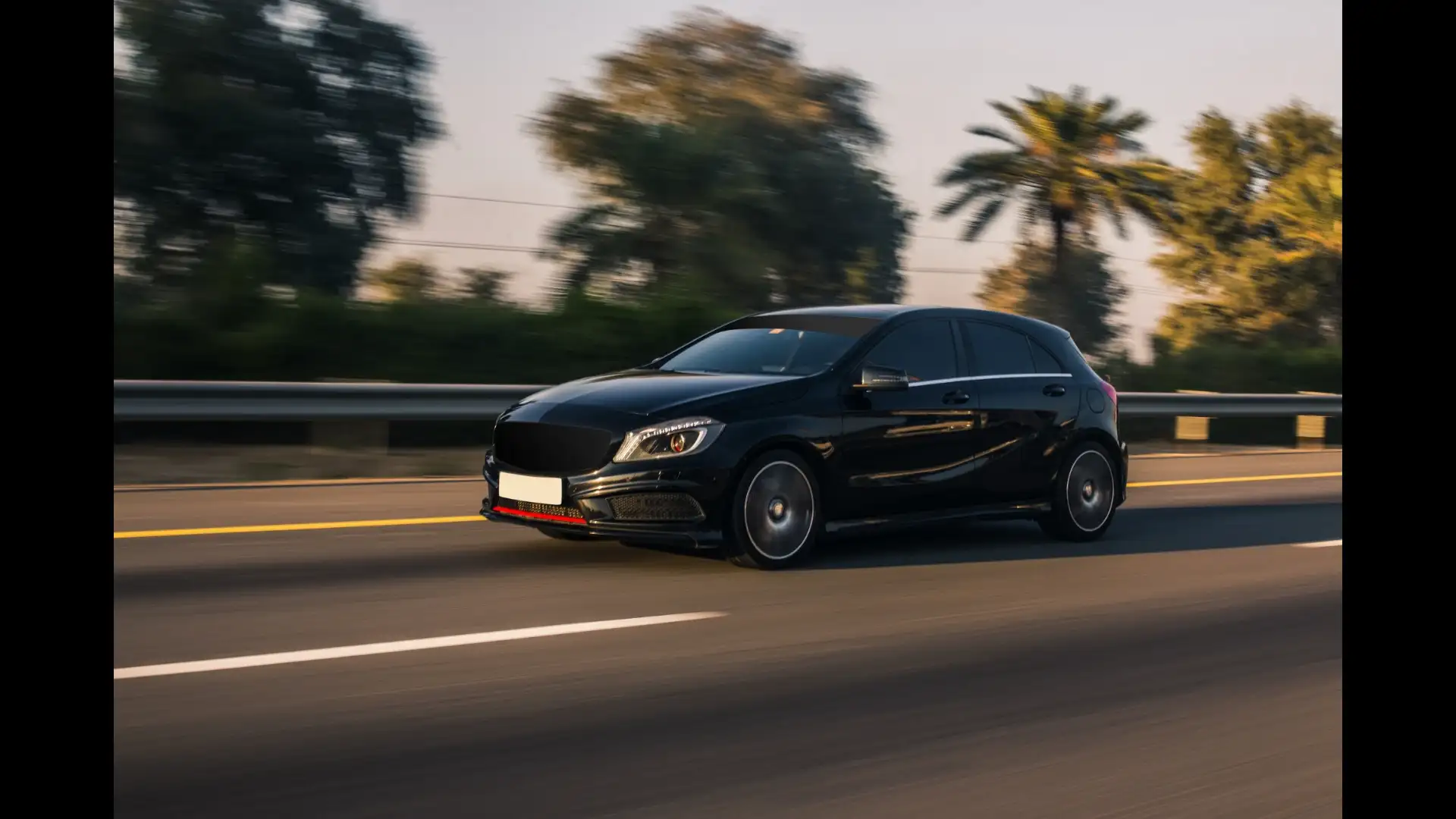
The decision model is where geography matters most. These systems learn from the data they are trained on. A model trained overwhelmingly on American and European roads has seen relatively few auto-rickshaws cutting across lanes without signalling, few cattle standing in the road at dusk, few unmarked speed breakers, and almost no roads where lane markings simply do not exist. What the model has not seen, it handles poorly.
Mixed traffic is the second. A highway in Germany carries cars and trucks moving at similar speeds in predictable patterns. A road in Bengaluru or Patna carries cars, two-wheelers weaving between them, cycle-rickshaws, pedestrians, animals, and hand-pulled carts, all moving at wildly different speeds and with very different behavioural patterns. Predicting the next move of a two-wheeler filtering through a gap requires a model trained on exactly that behaviour.
Road surface variation is the third. Lidar and radar handle smooth tarmac well. Broken surfaces, sudden potholes, unmarked speed breakers, and flooded sections create sensor noise and demand a different set of responses. A system that has learned to trust road-surface consistency will make worse decisions when that consistency disappears.
Finally, infrastructure dependency. Many advanced autonomous features assume the existence of HD mapping, reliable GPS in urban canyons, and eventually vehicle-to-infrastructure communication, signals and road sensors that talk to the car. None of this exists at scale in India, and building it is a separate, long-term project.
Level 3, where the car drives itself in defined conditions and the human can genuinely look away, has been approved for limited use in Germany and Japan under strict conditions. Level 4, where the car operates without a human in a defined geographic area, exists in robotaxi trials in a handful of cities. Level 5 has no commercial deployment anywhere.
For India, Level 2 features, adaptive cruise control, lane-keeping assist, automatic emergency braking, are already available in several vehicles sold here. Their reliability on Indian roads varies, and most require the driver to be engaged far more actively than the marketing language implies. Level 3 and above require both the technology and the regulatory framework to exist simultaneously, and India's Motor Vehicles Act has not yet been amended to assign legal liability for an autonomous driving decision.
Beyond liability, type approval, the process by which a vehicle is certified safe for Indian roads, has no existing pathway for a vehicle that controls its own steering and braking.
Infrastructure investment is the longer horizon. Consistent lane markings, functioning traffic signals, and eventually smart-road sensors are prerequisites for higher autonomy levels. These are civil engineering and municipal governance projects as much as technology projects, and their timelines are measured in decades, not product cycles.
The technology itself is advancing quickly, and the gap between what is possible in controlled conditions and what is deployable on real roads is narrowing. But the specific conditions of Indian roads, the traffic mix, the infrastructure baseline, the regulatory environment, mean that the timeline for meaningful autonomous driving here runs well behind the timelines being discussed for markets where the technology was built. The interesting question is not whether it will arrive, but which part of the problem gets solved first: the software that can handle a cow in the road, or the road that makes the software's job easier.
How Autonomous Driving Systems Actually Work
The core of any autonomous vehicle is a stack of sensors working together. Cameras read lane lines, signals, and signs. Radar tracks the speed and distance of nearby objects in low visibility. Lidar, a spinning laser array, builds a three-dimensional map of everything within roughly 100 to 200 metres, updated many times per second. A central computer fuses all three feeds and runs them through a decision model trained on hundreds of millions of kilometres of driving data.The decision model is where geography matters most. These systems learn from the data they are trained on. A model trained overwhelmingly on American and European roads has seen relatively few auto-rickshaws cutting across lanes without signalling, few cattle standing in the road at dusk, few unmarked speed breakers, and almost no roads where lane markings simply do not exist. What the model has not seen, it handles poorly.
Where Indian Road Conditions Create Specific Technical Problems
Lane discipline is the first challenge. Autonomous systems rely on lane boundaries as a basic coordinate system. On a large share of Indian roads, including many urban arterials, lanes are advisory at best. The system must navigate by object-avoidance alone, which is computationally harder and produces more cautious, hesitant behaviour that can itself create hazards in dense traffic.Mixed traffic is the second. A highway in Germany carries cars and trucks moving at similar speeds in predictable patterns. A road in Bengaluru or Patna carries cars, two-wheelers weaving between them, cycle-rickshaws, pedestrians, animals, and hand-pulled carts, all moving at wildly different speeds and with very different behavioural patterns. Predicting the next move of a two-wheeler filtering through a gap requires a model trained on exactly that behaviour.
You may also like
- Nuuk Serv Max multi-cook kettle review: More than just a kettle
- Roblox accused of scraping 145GB of 3D files for AI training, adult content included; 3D modelling site says: As far as our logs show, nobody…
- Airtel ₹3,599 Recharge Plan: 365-Day Validity, 2GB Daily Data and Extra Benefits
- Google just announced Genie 4: Here's what it can do, from building walk-through worlds out of a sentence to filling them with sound and speech, and when you might get to try it
- BSNL ₹2,799 Annual Recharge Plan: 3GB Daily Data, Unlimited Calls and 365-Day Validity
Road surface variation is the third. Lidar and radar handle smooth tarmac well. Broken surfaces, sudden potholes, unmarked speed breakers, and flooded sections create sensor noise and demand a different set of responses. A system that has learned to trust road-surface consistency will make worse decisions when that consistency disappears.
Finally, infrastructure dependency. Many advanced autonomous features assume the existence of HD mapping, reliable GPS in urban canyons, and eventually vehicle-to-infrastructure communication, signals and road sensors that talk to the car. None of this exists at scale in India, and building it is a separate, long-term project.
What Level of Autonomy Is Realistic, and When
Autonomy is defined in six levels, from Level 0, no automation, to Level 5, where the car handles everything in all conditions with no human available to take over. Most vehicles sold anywhere in the world today sit at Level 2: the car can steer and adjust speed on its own, but a human must remain attentive and ready to intervene at any moment. Tesla's Autopilot and Full Self-Driving systems, which attract the most public attention, are Level 2 systems with aspirations toward Level 3. They are not self-driving in the everyday sense of the phrase.Level 3, where the car drives itself in defined conditions and the human can genuinely look away, has been approved for limited use in Germany and Japan under strict conditions. Level 4, where the car operates without a human in a defined geographic area, exists in robotaxi trials in a handful of cities. Level 5 has no commercial deployment anywhere.
For India, Level 2 features, adaptive cruise control, lane-keeping assist, automatic emergency braking, are already available in several vehicles sold here. Their reliability on Indian roads varies, and most require the driver to be engaged far more actively than the marketing language implies. Level 3 and above require both the technology and the regulatory framework to exist simultaneously, and India's Motor Vehicles Act has not yet been amended to assign legal liability for an autonomous driving decision.
The Regulatory and Infrastructure Gap
Technology readiness and regulatory readiness are separate problems that must be solved together. An autonomous vehicle operating on a public road raises questions that existing traffic law does not answer: if the system makes a decision that causes an accident, who is liable, the owner, the manufacturer, or the software developer? Without a clear answer, insurers cannot price the risk and manufacturers cannot deploy.Beyond liability, type approval, the process by which a vehicle is certified safe for Indian roads, has no existing pathway for a vehicle that controls its own steering and braking.
Infrastructure investment is the longer horizon. Consistent lane markings, functioning traffic signals, and eventually smart-road sensors are prerequisites for higher autonomy levels. These are civil engineering and municipal governance projects as much as technology projects, and their timelines are measured in decades, not product cycles.
The technology itself is advancing quickly, and the gap between what is possible in controlled conditions and what is deployable on real roads is narrowing. But the specific conditions of Indian roads, the traffic mix, the infrastructure baseline, the regulatory environment, mean that the timeline for meaningful autonomous driving here runs well behind the timelines being discussed for markets where the technology was built. The interesting question is not whether it will arrive, but which part of the problem gets solved first: the software that can handle a cow in the road, or the road that makes the software's job easier.






Loving Newspoint? Download the app now
