
The Curious Story of Why Airplane Mode Exists

Almost everyone has activated airplane mode before a flight without thinking much about it. The feature became such a normal part of travel that many passengers treat it as routine background behaviour.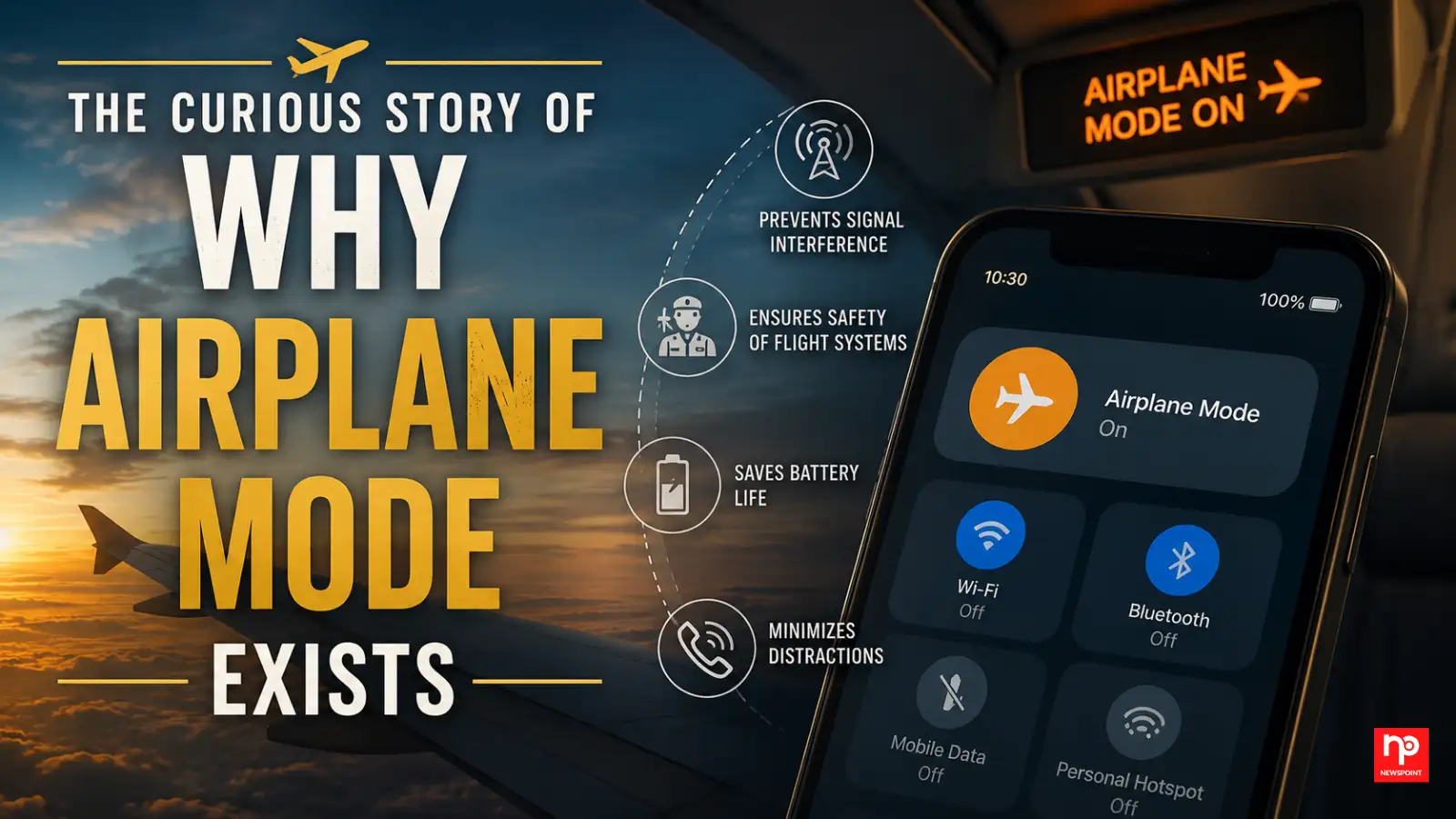
But the history behind airplane mode is more interesting than most people realise.
The feature emerged from early concerns about how electronic devices might interfere with aircraft systems.
Although evidence of serious interference remained limited, aviation authorities preferred caution due to the high safety stakes involved.
As mobile devices multiplied rapidly, airlines needed a practical way to reduce unnecessary signal transmission during flights.
The setting disables wireless communication features such as mobile networks, Bluetooth, and Wi Fi while allowing passengers to continue using offline functions like music, games, or downloaded videos.
Over time, regulations relaxed in many countries as aircraft technology improved and better research became available.
Today, some airlines even allow controlled Wi Fi and Bluetooth usage during flights.
Many users now activate it intentionally to charge phones faster, reduce distractions, or preserve battery life in areas with weak signal coverage.
When devices constantly search for mobile networks, battery consumption increases significantly. Airplane mode stops that background activity almost entirely.
There was once a time when flights naturally disconnected passengers from communication entirely. Today, many travellers feel uneasy even during short periods without internet access.
Airlines increasingly market onboard connectivity as an essential service because digital access has become psychologically important for modern passengers.
It also highlights how quickly society adapted to carrying powerful wireless communication devices everywhere.
What started as a precautionary aviation feature quietly became one of the most universally recognised smartphone functions in the world.
But the history behind airplane mode is more interesting than most people realise.
The feature emerged from early concerns about how electronic devices might interfere with aircraft systems.
Early Aviation Safety Concerns
When mobile phones first became popular, airlines worried that radio signals from passenger devices could potentially affect navigation or communication equipment onboard aircraft.Although evidence of serious interference remained limited, aviation authorities preferred caution due to the high safety stakes involved.
As mobile devices multiplied rapidly, airlines needed a practical way to reduce unnecessary signal transmission during flights.
Why Airplane Mode Became Standard
Manufacturers introduced airplane mode as a simple solution.The setting disables wireless communication features such as mobile networks, Bluetooth, and Wi Fi while allowing passengers to continue using offline functions like music, games, or downloaded videos.
Over time, regulations relaxed in many countries as aircraft technology improved and better research became available.
You may also like
- Watch out Ray-Ban, a smart new rival is launching very soon
- Google AI CEO Demis Hassabis: AI-driven layoffs are 'dumb', if engineers are three to four times more productive, companies should…
- Microsoft finally fixes long-term Windows 11 issues
- Former Twitter CEO Parag Agrawal launches Index to compensate creators in AI agent era
- Amazon confirms huge Kindle change today with full list of models affected
Today, some airlines even allow controlled Wi Fi and Bluetooth usage during flights.
The Feature Still Saves Battery Life
Interestingly, airplane mode became useful far beyond aviation itself.Many users now activate it intentionally to charge phones faster, reduce distractions, or preserve battery life in areas with weak signal coverage.
When devices constantly search for mobile networks, battery consumption increases significantly. Airplane mode stops that background activity almost entirely.
Smartphones Changed Travel Behaviour
The existence of airplane mode also reflects how deeply connected mobile devices became to daily routines.There was once a time when flights naturally disconnected passengers from communication entirely. Today, many travellers feel uneasy even during short periods without internet access.
Airlines increasingly market onboard connectivity as an essential service because digital access has become psychologically important for modern passengers.
A Small Feature With an Interesting Legacy
Airplane mode may seem like a minor smartphone setting, but it represents an interesting intersection between technology, regulation, and public behaviour.It also highlights how quickly society adapted to carrying powerful wireless communication devices everywhere.
What started as a precautionary aviation feature quietly became one of the most universally recognised smartphone functions in the world.






More from our partners


Loving Newspoint? Download the app now
