
Explained: How GPS Works on Your Smartphone to Give Location Data

Whether you are booking a taxi, following directions, ordering food or sharing your live location with friends, your smartphone seems to know exactly where you are. It often feels almost magical, especially when maps update your position within seconds. Yet the technology behind this everyday convenience is the result of decades of scientific innovation involving satellites orbiting thousands of kilometres above Earth. Modern GPS has transformed the way people travel, work and communicate, but many users still do not understand how it actually functions. The process is surprisingly clever and relies on far more than satellites alone.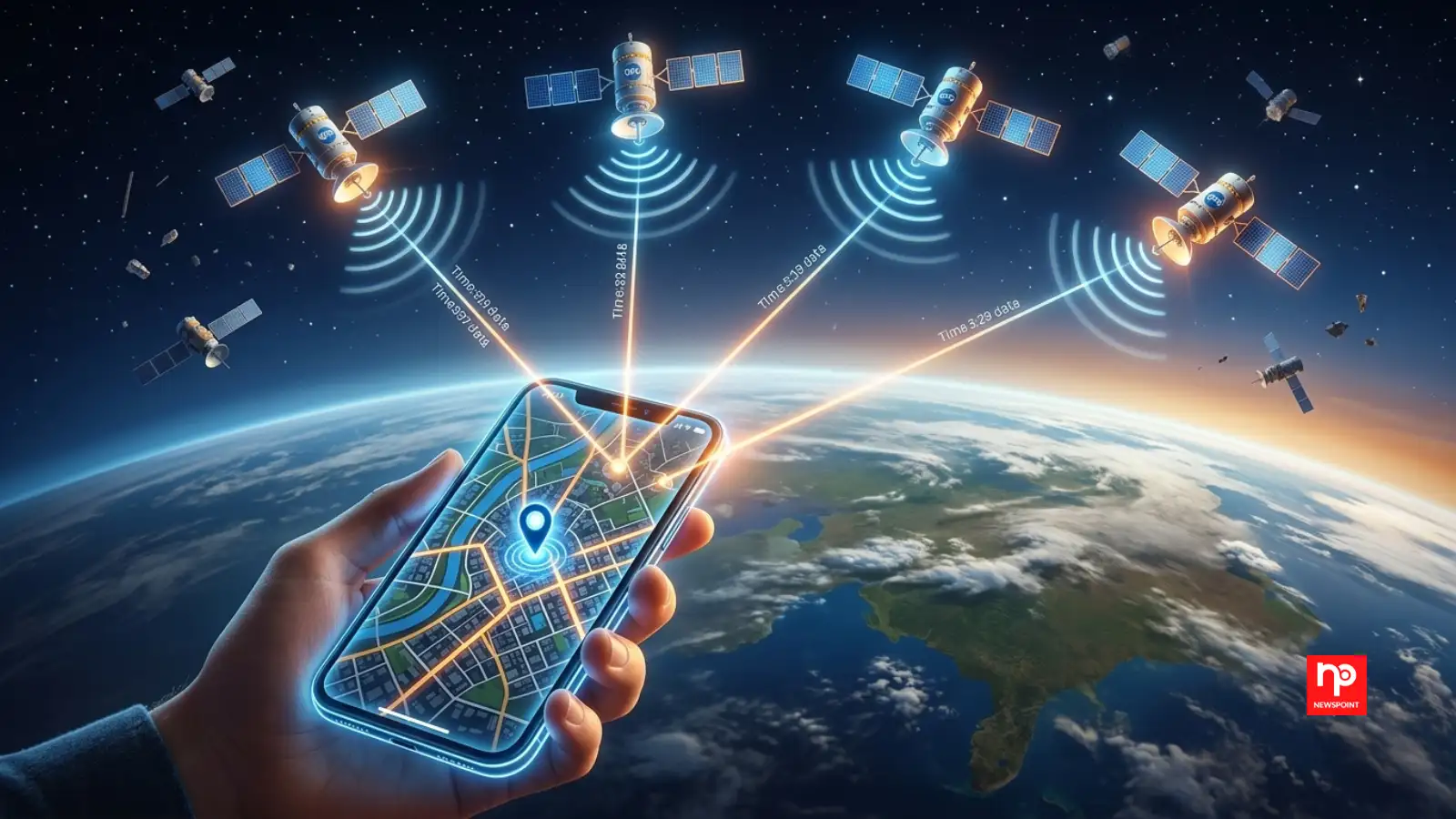
More than 30 GPS satellites continuously orbit Earth, each carrying highly accurate atomic clocks. These satellites constantly broadcast signals containing their location and the exact time the signal was transmitted.
Your smartphone receives signals from several satellites simultaneously. By measuring how long each signal takes to arrive, the phone calculates its distance from each satellite. Using a process called trilateration, it identifies your precise location on Earth's surface.
Normally, at least four satellites are required for the most accurate position.
When you are indoors or surrounded by tall buildings, GPS signals may become weaker. To improve accuracy, phones also use nearby Wi-Fi networks, mobile phone towers and Bluetooth beacons. This combination helps location services respond faster and remain reliable even where satellite signals struggle to reach.
This is why your location often appears almost instantly when opening a maps application.
Another factor is movement. If you are travelling in a fast-moving vehicle, your phone constantly recalculates its position using fresh satellite information. Small delays or signal reflections may briefly reduce accuracy before correcting themselves.
Keeping your phone's software updated and allowing access to high-accuracy location settings can improve overall performance.
Interestingly, GPS itself does not collect personal information or track users. The satellites simply broadcast signals. It is your phone and the apps you use that process this information and, if permission is granted, may store or share your location.
Understanding how GPS works helps people appreciate both its convenience and the importance of managing location permissions wisely. Every time your smartphone pinpoints where you are, it is quietly performing an extraordinary calculation involving satellites, wireless networks and advanced computing, all within a few seconds. It is one of the most remarkable technologies that millions of people rely on every single day.
How GPS Finds Your Location
The Global Positioning System, commonly known as GPS, is a satellite-based navigation system originally developed by the United States for military purposes before becoming available for civilian use.More than 30 GPS satellites continuously orbit Earth, each carrying highly accurate atomic clocks. These satellites constantly broadcast signals containing their location and the exact time the signal was transmitted.
Your smartphone receives signals from several satellites simultaneously. By measuring how long each signal takes to arrive, the phone calculates its distance from each satellite. Using a process called trilateration, it identifies your precise location on Earth's surface.
Normally, at least four satellites are required for the most accurate position.
GPS Is Only Part of the Story
Many people believe GPS alone determines every location on their phone, but modern smartphones use several technologies together.When you are indoors or surrounded by tall buildings, GPS signals may become weaker. To improve accuracy, phones also use nearby Wi-Fi networks, mobile phone towers and Bluetooth beacons. This combination helps location services respond faster and remain reliable even where satellite signals struggle to reach.
This is why your location often appears almost instantly when opening a maps application.
Why GPS Sometimes Seems Inaccurate
No location technology is perfect. Heavy cloud cover has very little effect on GPS, but dense forests, tunnels, underground stations and city skyscrapers can block or reflect satellite signals.You may also like
- LG unveils 2026 AI TV lineup, launches 25 ultra-large AI models in India
- Sam Altman's OpenAI in open letter to Apple on 'theft' charges: You are getting it all wrong
- Hack of the day: Check CBSE affiliation before paying admission fees
- After OpenAI, Anthropic said their AI models hacked companies; Meta, Google and others called to White House
- Anthropic CEO does not want to be part of the 'million dollar-salary race' that Mark Zuckerberg started
Another factor is movement. If you are travelling in a fast-moving vehicle, your phone constantly recalculates its position using fresh satellite information. Small delays or signal reflections may briefly reduce accuracy before correcting themselves.
Keeping your phone's software updated and allowing access to high-accuracy location settings can improve overall performance.
Surprising Facts About Smartphone GPS
GPS satellites travel at around 14,000 kilometres per hour while orbiting Earth twice every day. Despite this incredible speed, the timing of their signals is so precise that even tiny errors measured in billionths of a second could place your location hundreds of metres away.Interestingly, GPS itself does not collect personal information or track users. The satellites simply broadcast signals. It is your phone and the apps you use that process this information and, if permission is granted, may store or share your location.
Why GPS Matters More Than Ever
Location technology now supports much more than navigation. Emergency services, weather alerts, delivery apps, fitness tracking, ride-sharing, digital payments and even wildlife research depend on accurate positioning.Understanding how GPS works helps people appreciate both its convenience and the importance of managing location permissions wisely. Every time your smartphone pinpoints where you are, it is quietly performing an extraordinary calculation involving satellites, wireless networks and advanced computing, all within a few seconds. It is one of the most remarkable technologies that millions of people rely on every single day.






Loving Newspoint? Download the app now
