
Why the WhatsApp Username Debate Is Really About Protecting Your Privacy

The ongoing debate around WhatsApp's proposed username feature is about much more than convenience. At its core, it raises a fundamental question about digital privacy: Why should every message reveal your personal phone number when it isn't always necessary?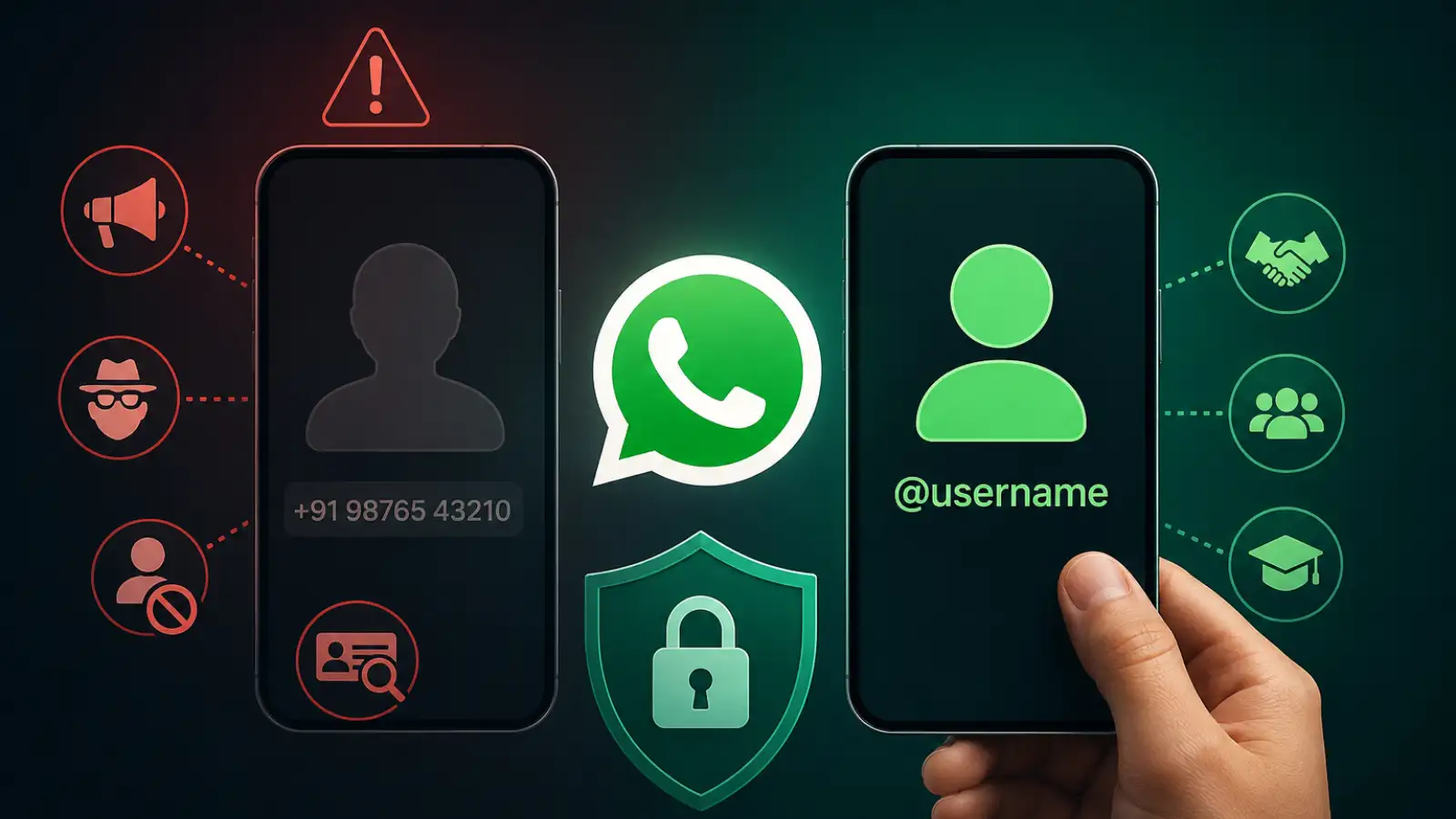
For years, WhatsApp has relied on mobile numbers as the primary identity for every user. While this simplified account creation and contact discovery, it also meant that anyone you interacted with—whether a delivery partner, a marketplace buyer, a temporary work contact, or someone in a community group—could see your phone number.
As conversations around digital privacy gain momentum, many experts argue that the introduction of usernames is less about adding a new feature and more about embracing a broader principle known as data minimisation .
Sharing it unnecessarily increases the risk of Spam calls and promotional messages, Phishing and fraud attempts, Identity profiling, Unwanted contact or harassment, Cross-platform tracking
Unlike usernames, phone numbers are difficult to change. Once widely shared, they often remain part of multiple databases indefinitely.
Privacy advocates argue that users should have greater control over when and with whom they disclose such sensitive information.
Applying this concept to messaging apps raises an obvious question: if two people simply want to exchange messages, is sharing a permanent phone number essential every time?
In many cases, the answer is no.
Platforms such as Telegram, Signal (through usernames under development), Discord, and several workplace communication tools already provide alternative identifiers that reduce the need to expose personal contact information.
This would be particularly useful for Buying and selling through online marketplaces, Joining public communities, Networking professionally, Interacting with customer support, Participating in educational or volunteer groups
Users would still retain the option to share their phone numbers when necessary, but the default experience would become significantly more privacy-friendly.
The broader challenge is how digital services collect, store, and share personal information. Every application should regularly evaluate whether the data it requests is genuinely required for its core functionality.
This approach aligns with modern privacy regulations around the world, which increasingly encourage companies to limit data collection and provide users with greater transparency and control.
Reducing unnecessary exposure of personal identifiers also strengthens cybersecurity by shrinking the amount of information available to scammers and malicious actors.
Instead of asking whether usernames are a useful new feature, the more important question is whether users should be required to reveal permanent personal identifiers for every digital interaction.
As digital communication becomes an inseparable part of everyday life, privacy by design and data minimisation should become the norm rather than the exception. Giving people more control over what they share and with whom it is not merely a product improvement; it is an important step toward building a safer and more privacy-conscious digital ecosystem.
By shifting the conversation beyond WhatsApp and towards responsible data practices across all digital platforms, the debate can help shape a future where convenience and privacy coexist rather than compete.
For years, WhatsApp has relied on mobile numbers as the primary identity for every user. While this simplified account creation and contact discovery, it also meant that anyone you interacted with—whether a delivery partner, a marketplace buyer, a temporary work contact, or someone in a community group—could see your phone number.
As conversations around digital privacy gain momentum, many experts argue that the introduction of usernames is less about adding a new feature and more about embracing a broader principle known as data minimisation .
Why Phone Numbers Have Become a Privacy Concern
A mobile number is no longer just a contact detail. It has become a digital identifier linked to banking services, government records, social media accounts, and countless online platforms.Sharing it unnecessarily increases the risk of Spam calls and promotional messages, Phishing and fraud attempts, Identity profiling, Unwanted contact or harassment, Cross-platform tracking
Unlike usernames, phone numbers are difficult to change. Once widely shared, they often remain part of multiple databases indefinitely.
Privacy advocates argue that users should have greater control over when and with whom they disclose such sensitive information.
Understanding Data Minimisation
Data minimisation is a globally recognised privacy principle that encourages organisations to collect and share only the information that is strictly necessary for a particular service.Applying this concept to messaging apps raises an obvious question: if two people simply want to exchange messages, is sharing a permanent phone number essential every time?
In many cases, the answer is no.
Platforms such as Telegram, Signal (through usernames under development), Discord, and several workplace communication tools already provide alternative identifiers that reduce the need to expose personal contact information.
How Usernames Could Improve Privacy
If implemented effectively, usernames could allow users to communicate without immediately revealing their phone numbers.This would be particularly useful for Buying and selling through online marketplaces, Joining public communities, Networking professionally, Interacting with customer support, Participating in educational or volunteer groups
Users would still retain the option to share their phone numbers when necessary, but the default experience would become significantly more privacy-friendly.
You may also like
- Cellecor's Ravi Agarwal outlines future of affordable tech in India, says consumer expectations continue to evolve
- Customs duty relief for electronic goods inputs to deepen domestic value addition: Industry
- World's largest Particle Accelerator that has been the center of many conspiracies is getting ready for CERN's Long Shutdown as...
- Centre clarifies on misleading reports on 1600 and 140 series phone numbers
- Palo Alto Networks CEO Nikesh Arora has a message for Sam Altman CEO who said that OpenAI's GPT-5.6 Sol model is 54% more token efficient on agentic coding tasks; says: It is a good start, but over the next 12 months ...
Privacy Should Extend Beyond One Feature
The discussion, however, should not stop with usernames alone.The broader challenge is how digital services collect, store, and share personal information. Every application should regularly evaluate whether the data it requests is genuinely required for its core functionality.
This approach aligns with modern privacy regulations around the world, which increasingly encourage companies to limit data collection and provide users with greater transparency and control.
Reducing unnecessary exposure of personal identifiers also strengthens cybersecurity by shrinking the amount of information available to scammers and malicious actors.
The Road Ahead
The WhatsApp username debate offers an opportunity to rethink long-standing assumptions about online identity.Instead of asking whether usernames are a useful new feature, the more important question is whether users should be required to reveal permanent personal identifiers for every digital interaction.
As digital communication becomes an inseparable part of everyday life, privacy by design and data minimisation should become the norm rather than the exception. Giving people more control over what they share and with whom it is not merely a product improvement; it is an important step toward building a safer and more privacy-conscious digital ecosystem.
By shifting the conversation beyond WhatsApp and towards responsible data practices across all digital platforms, the debate can help shape a future where convenience and privacy coexist rather than compete.






Loving Newspoint? Download the app now
