
5 Fascinating Facts About Norway's Polar Nights

Stand in Tromsø in late November and the sky never fully brightens. The sun dips below the horizon and stays there, not for a night, but for weeks. This is polar night, and it is one of the more quietly astonishing phenomena on Earth. It is also widely misunderstood.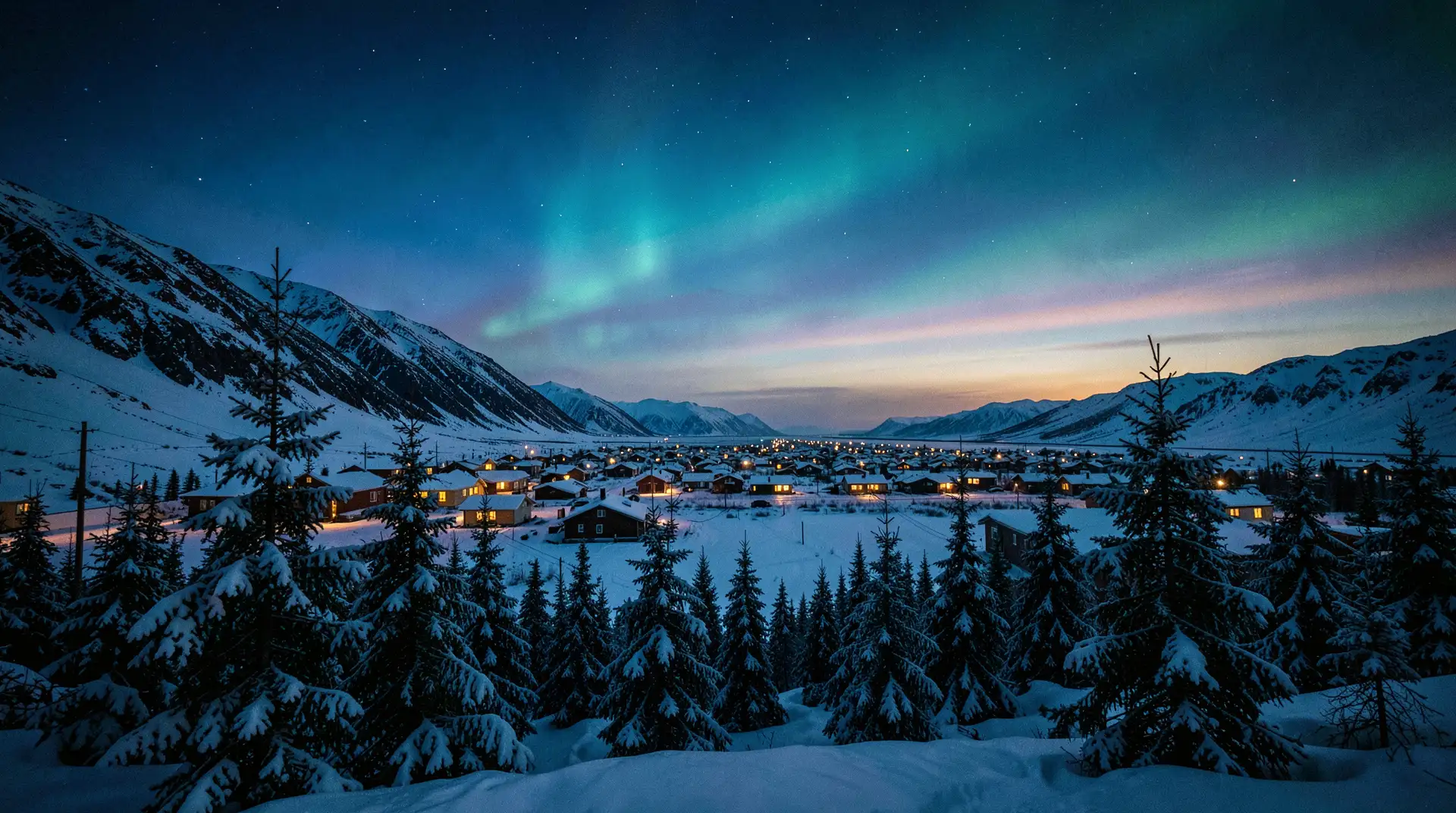
Norwegians call this the blue hour, and in places like Tromsø it lasts long enough to read by. True astronomical polar night, where even this twilight vanishes, only occurs at latitudes above roughly 84 degrees north, far beyond where most Norwegians live. What most Arctic towns experience is something softer and more painterly than pure darkness.
At the Arctic Circle, polar night lasts a single day at the solstice. At Nordkapp, Norway's northernmost point accessible by road, it lasts about two months. At the geographic North Pole, the sun sets once in autumn and does not rise again for six months. The same tilt that creates polar night creates the midnight sun six months later, the two are the same phenomenon, seen from opposite ends of the year.
Long-term residents of Arctic Norway often report adapting over years, and some describe polar night as a season they actively look forward to: slower, quieter, more interior. The Sami people, who have lived at these latitudes for thousands of years, have cultural frameworks for the dark season that treat it as a time of rest and storytelling rather than deprivation.
The Norwegian word for the polar night period, mørketid, translates literally as the murky time or the dark time, and it carries connotations of both difficulty and intimacy. Towns like Tromsø hold festivals during polar night, deliberately filling the dark weeks with music, art, and northern lights tourism. The aurora borealis, which requires a dark sky to be visible, is most reliably seen during this period, so the same darkness that removes the sun delivers one of the most spectacular light shows on Earth.
The Arctic Circle crosses Norway at roughly the latitude of the town of Mo i Rana. Above that line, polar night begins, but its length varies enormously. Bodø, just above the circle, has polar night for about four weeks. Tromsø, further north, experiences it for roughly two months. Longyearbyen on the Svalbard archipelago, far out in the Arctic Ocean, goes without a sunrise for about four months.
The experience of living through polar night is shaped as much by community, architecture, and expectation as by latitude. A town that has prepared for it, with good lighting, cultural events, and a shared language for the season, experiences it differently from one that has not.
The Sun Does Not Simply Disappear
Polar night does not mean total blackness around the clock. At its edges, the weeks just before and after the sun drops below the horizon for good, the sky passes through a long, slow twilight each day. For an hour or two around midday, the horizon glows in deep blues, purples, and a thin band of orange.Norwegians call this the blue hour, and in places like Tromsø it lasts long enough to read by. True astronomical polar night, where even this twilight vanishes, only occurs at latitudes above roughly 84 degrees north, far beyond where most Norwegians live. What most Arctic towns experience is something softer and more painterly than pure darkness.
Earth's Axial Tilt Is the Only Cause
Polar night happens because Earth orbits the sun on a tilted axis, roughly 23.5 degrees off vertical. In the months around the winter solstice, the North Pole leans away from the sun so steeply that the sun's arc never climbs above the horizon at high latitudes. The further north you go, the longer this lasts.At the Arctic Circle, polar night lasts a single day at the solstice. At Nordkapp, Norway's northernmost point accessible by road, it lasts about two months. At the geographic North Pole, the sun sets once in autumn and does not rise again for six months. The same tilt that creates polar night creates the midnight sun six months later, the two are the same phenomenon, seen from opposite ends of the year.
You may also like
- Need to build a navy that can fight, sustain without any constraints, we' need to invest more in R&D: Admiral Swaminathan
- India and Israel Stand Alone at UN, Vote Against Pakistan-Belarus Resolution
- Indian Navy & IAF Strike: MARCOS Airdropped from C-17 Foil Somali Pirates
- A Tennessee couple said nearly 30 years of mowing, gardening and holding yard sales gave them ownership of a strip next to their home; on October 29, an appeals court ruled that the developer owned the disputed land
- Arnold Schwarzenegger's October charity night raised a record $9.75 million for After-School All-Stars, which provides free programmes for nearly 150,000 students across the United States
The Body Responds in Measurable Ways
Human biology is keyed to light. The eye detects the blue wavelengths of daylight and suppresses melatonin, the hormone that signals the body to sleep. When daylight disappears for weeks, this system loses its anchor. Some people in polar regions report disrupted sleep, low energy, and a flattening of mood, a pattern researchers have studied under the name seasonal affective disorder. But the response is not uniform.Long-term residents of Arctic Norway often report adapting over years, and some describe polar night as a season they actively look forward to: slower, quieter, more interior. The Sami people, who have lived at these latitudes for thousands of years, have cultural frameworks for the dark season that treat it as a time of rest and storytelling rather than deprivation.
Norwegians Have Built a Culture Around the Dark
The Norwegian concept of koselig, a warmth and coziness created deliberately against cold and darkness, is not a marketing idea. It is a practical response to an environment. Candles are lit in enormous quantities. Families gather indoors.The Norwegian word for the polar night period, mørketid, translates literally as the murky time or the dark time, and it carries connotations of both difficulty and intimacy. Towns like Tromsø hold festivals during polar night, deliberately filling the dark weeks with music, art, and northern lights tourism. The aurora borealis, which requires a dark sky to be visible, is most reliably seen during this period, so the same darkness that removes the sun delivers one of the most spectacular light shows on Earth.
Not All of Norway Experiences It the Same Way
Norway is a long country. Oslo, the capital, sits well below the Arctic Circle and never experiences polar night at all, it simply has very short winter days, with the sun rising late and setting early.The Arctic Circle crosses Norway at roughly the latitude of the town of Mo i Rana. Above that line, polar night begins, but its length varies enormously. Bodø, just above the circle, has polar night for about four weeks. Tromsø, further north, experiences it for roughly two months. Longyearbyen on the Svalbard archipelago, far out in the Arctic Ocean, goes without a sunrise for about four months.
The experience of living through polar night is shaped as much by community, architecture, and expectation as by latitude. A town that has prepared for it, with good lighting, cultural events, and a shared language for the season, experiences it differently from one that has not.






Loving Newspoint? Download the app now
