
Discover Whittier: Alaska's Unique Town in a Single Building

Whittier sits at the end of a fjord in southcentral Alaska, hemmed in on three sides by mountains and on the fourth by the sea. The town receives over four metres of rain and snow each year, and wind regularly tears through the pass at speeds that make outdoor life genuinely difficult for months at a stretch. For most of the year, Whittier is not a place you wander around in. That physical reality explains why nearly all of the town's residents, a few hundred people at most, live inside a single structure called Begich Towers. The building has apartments, a small medical clinic, a church, a post office, a laundromat, and a convenience store. Children walk to school through a tunnel. Most daily errands happen without stepping outside.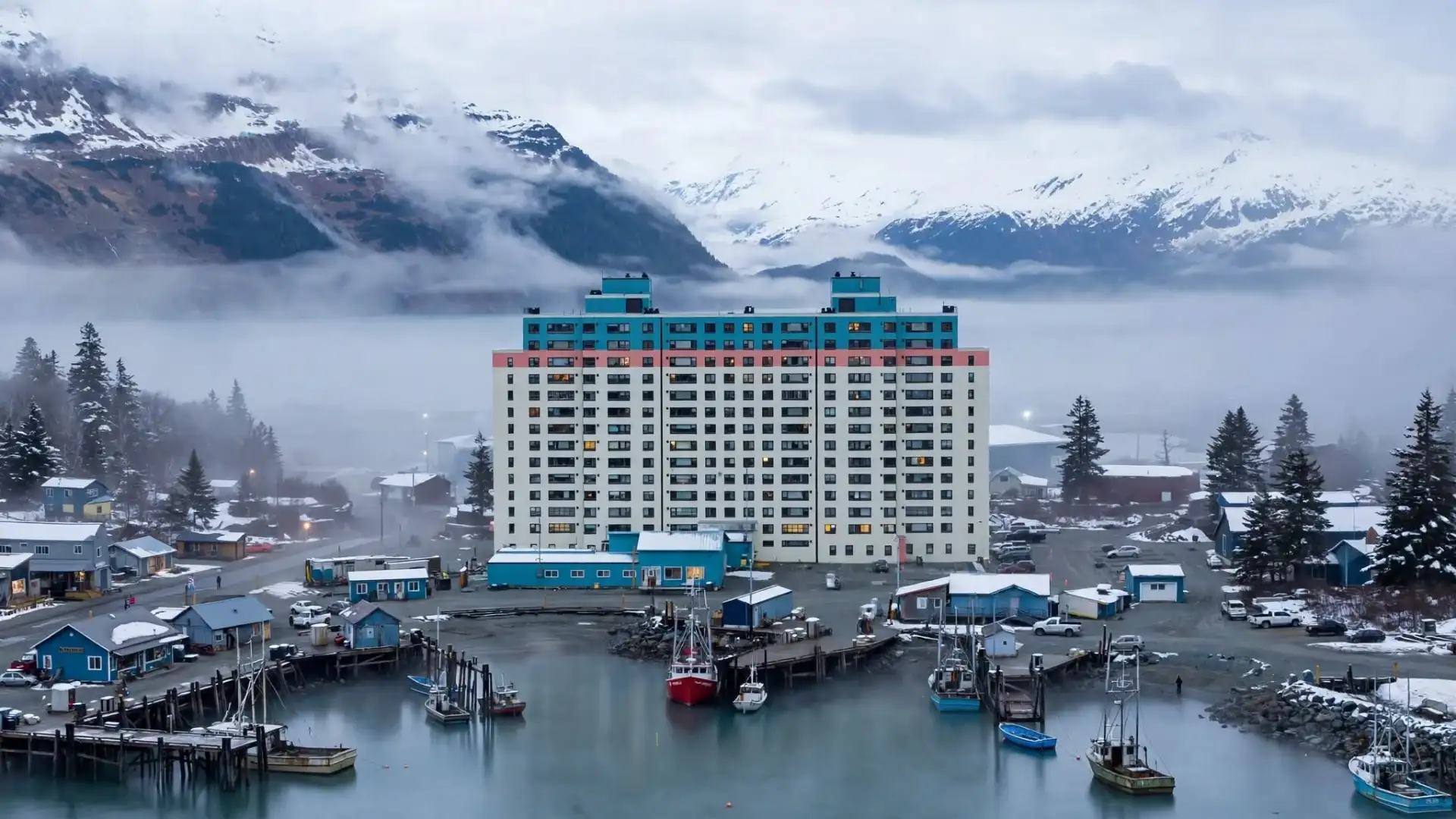
You may also like
- Heirs of Jewish banker have sued Sotheby's over £1.2m painting sale, claiming artwork was looted by Nazis during World War II; a Parisian court to soon give ruling
- California Halloween store shooting leaves one dead, six injured; suspect on loose
- Trumpiana: Duck duck, trick or treat? Quack quack!
- Did Vivek Ramaswamy donate $38,000 to Red Baron Pizza worker Walt Z, who was harassed by a prankster?
- Pakistan's mineral wealth promises to US ring hollow amid internal security crisis
Built for War, Inherited by Civilians
Whittier did not begin as a civilian settlement. The United States Army built it during the Second World War as a strategic port, chosen because its deep harbour stayed largely ice-free and because the surrounding mountains made it difficult to spot from the air or sea. The Army needed a place to move supplies to and from Alaska without exposure, and Whittier's geography made it ideal. The military constructed several large buildings to house thousands of soldiers in a compact, connected campus. The largest of these, originally called Hodge Building and later renamed Begich Towers after a Alaskan congressman who died in a plane crash, rose fourteen storeys and was designed so personnel could move between facilities without going outdoors. When the Army left in the 1960s, it handed the buildings over, and civilians gradually moved in. They kept the indoor arrangement because the weather had not changed.What Life Inside the Tower Actually Looks Like
Residents describe the building less like an apartment block and more like a small village with a roof over it. Neighbours know each other the way people in a small town do. The hallways serve the social function that a main street might elsewhere, a place to run into someone, pass a few words, notice who has not been seen in a while.The school sits in a separate building nearby, connected by a covered tunnel so children do not need to brave the elements on the walk. The tunnel system links several points in town, a practical inheritance from the military era that residents have simply continued to use. The post office, the clinic, and the small shop mean that for stretches of bad weather, which can last weeks, a resident can meet most basic needs without once opening an exterior door. This is not chosen isolation. It is a sensible response to a place that would otherwise be very hard to live in.The Geography That Makes It Necessary
Whittier is accessible by one road, which passes through a tunnel shared with a railway line, for many years the only road tunnel in North America to carry both vehicles and trains. The tunnel operates on a schedule: cars wait, the train goes through, then cars follow. The arrangement means Whittier is genuinely cut off in a way that few inhabited places in the developed world are. If the tunnel closes, the town's land connection to the rest of Alaska closes with it. The mountains that shelter the harbour also trap weather. Storms pile up against the peaks and dump their load directly on the town. The combination of precipitation, wind, and limited daylight in winter makes outdoor infrastructure, shops, schools, clinics spread across a normal street grid, impractical to maintain and difficult to reach.A Few People Live Outside the Tower
Not everyone in Whittier lives in Begich Towers. A small number of residents occupy a second building nearby, and a handful of seasonal workers stay in other structures during the summer months when the town sees tourists arriving by cruise ship and ferry. Summer transforms Whittier briefly into a transit point, with visitors passing through to kayak the fjord or board boats into Prince William Sound.But the permanent winter population is small, and for most of them, Begich Towers is home in the fullest sense, not just a place to sleep but the physical boundary of daily life for months at a time. The tower is not a curiosity its residents find strange. It is simply the shape that living in that particular place, in that particular climate, has taken. The military left the infrastructure; the weather made sure people kept using it.





Loving Newspoint? Download the app now
