
India-Australia Uranium Deal: How the Landmark Pact Will Power India's 100 GW Nuclear Energy Goal

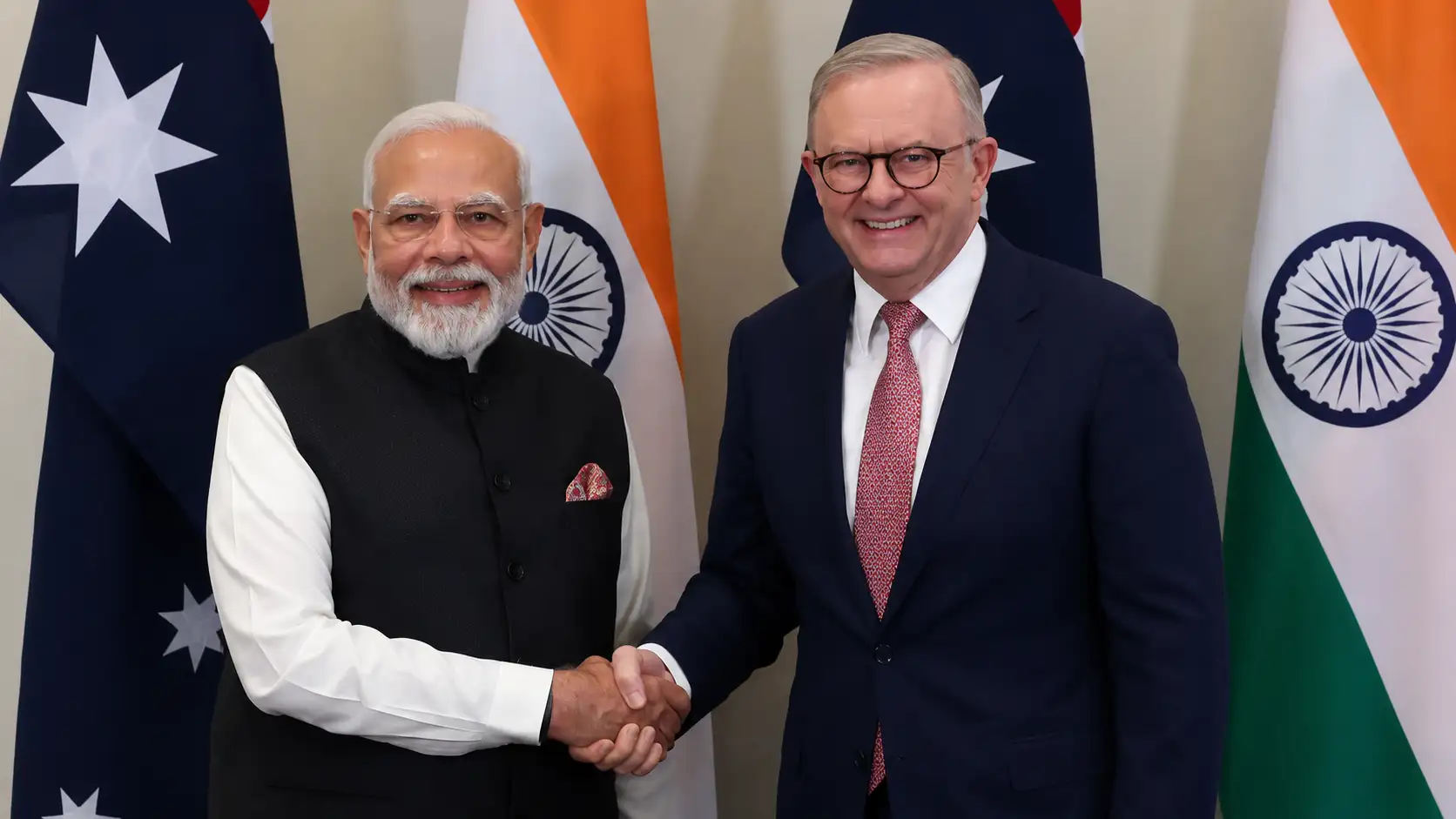
During Prime Minister Narendra Modi’s state visit to Melbourne, India and Australia finalised a landmark administrative arrangement enabling the long-term export of Australian uranium to India. Signed alongside Australian Prime Minister Anthony Albanese, this historic breakthrough transitions a decade-old framework into an operational supply pipeline. For New Delhi, securing access to Australia’s vast uranium resources marks a significant step toward its ambitious climate goals and its target to achieve 100 GW of nuclear energy capacity by 2047.
At present, India generates around 7.7 GW to 8.8 GW of electricity from its operational commercial reactors. The short-term goal is to aggressively scale this to 22 GW by 2032 by completing eight reactors currently under-construction and building an additional 18 nuclear reactors. However, India’s domestic uranium reserves are low-grade and sparse, historically forcing its reactors to operate beneath peak capability factors. Securing high-quality uranium from Australia - home to nearly one-third of the world's known uranium reserves - would significantly strengthen India's fuel security and support its long-term nuclear expansion.
Despite that treaty, actual trade remained restricted due to stringent compliance debates over tracking nuclear material. The new deal resolves these lingering administrative bottlenecks. Under the agreed terms, the uranium will be imported strictly under International Atomic Energy Agency (IAEA) safeguards, ensuring that every shipment is utilized "exclusively for peaceful purposes" to light up civil infrastructure rather than defense programs. Furthermore, Canberra has publicly renewed its backing for India’s full integration into the NSG.
With the private sector and major global funds now cleared to invest in nuclear infrastructure, having a guaranteed, multi-decade fuel supply chain from a stable partner like Australia makes Indian atomic projects immensely attractive to long-term capital.
Beyond the commercial transactions, the deal cements a deep trust between two primary partners of the Quad alliance. Alongside the nuclear breakthrough, Modi and Albanese unveiled a refreshed Joint Declaration on Security Cooperation and a new Joint Maritime Security Collaboration Roadmap. Ultimately, the uranium bridge translates into strategic resilience—transforming India's energy vulnerability into an engine for economic growth while charting a clear path toward a global net-zero future.
Fueling the 100 GW Roadmap
India’s economy is expanding rapidly, driving higher electricity demand from heavy industry, rapid urbanisation, and power-intensive artificial intelligence data centers. While the country has made significant progress in deploying solar and wind energy, these intermittent renewable sources require a reliable, carbon-free baseload power supply to maintain grid stability. Nuclear energy provides that dependable baseline.At present, India generates around 7.7 GW to 8.8 GW of electricity from its operational commercial reactors. The short-term goal is to aggressively scale this to 22 GW by 2032 by completing eight reactors currently under-construction and building an additional 18 nuclear reactors. However, India’s domestic uranium reserves are low-grade and sparse, historically forcing its reactors to operate beneath peak capability factors. Securing high-quality uranium from Australia - home to nearly one-third of the world's known uranium reserves - would significantly strengthen India's fuel security and support its long-term nuclear expansion.
Overcoming the Fallout of Isolation
The agreement is also a massive diplomatic victory for India's strategic autonomy. Because India is a non-signatory to the Nuclear Non-Proliferation Treaty (NPT), it faced decades of international technology sanctions and fuel import bans following its tests in 1974 and 1998. The ice began to melt after the 2008 Nuclear Suppliers Group (NSG) waiver, followed by a formal civil nuclear treaty signed between India and Australia in 2014–2015.Despite that treaty, actual trade remained restricted due to stringent compliance debates over tracking nuclear material. The new deal resolves these lingering administrative bottlenecks. Under the agreed terms, the uranium will be imported strictly under International Atomic Energy Agency (IAEA) safeguards, ensuring that every shipment is utilized "exclusively for peaceful purposes" to light up civil infrastructure rather than defense programs. Furthermore, Canberra has publicly renewed its backing for India’s full integration into the NSG.
Private Sector Reforms
This supply security aligns perfectly with sweeping internal overhauls inside India’s energy sector. The Indian government recently passed the landmark SHANTI Act (Sustainable Harnessing and Advancement of Nuclear Energy for Transforming India), which dismantled the historical state monopoly on nuclear power. The act permits up to 49% private and foreign equity investment into civilian nuclear projects.You may also like
- Sheikh Hasina says she'll return to Bangladesh in December
- China striking economic deals in Sudan under cover of peace rhetoric: Report
- India, Australia sign Traditional Knowledge Digital Library access pact to strengthen patent examination
- Balochistan 'ablaze', law and order at critical level: Baloch activist
- Seafarers attacked in Strait of Hormuz sue shipping company in Thailand
With the private sector and major global funds now cleared to invest in nuclear infrastructure, having a guaranteed, multi-decade fuel supply chain from a stable partner like Australia makes Indian atomic projects immensely attractive to long-term capital.
A Balanced Indo-Pacific Partnership
For Australia, opening its uranium vaults serves a vital economic objective: diversifying its trade portfolio beyond a heavy reliance on China. It creates a highly lucrative market for the Australian resources sector, particularly in South Australia and potentially other territories currently debating a lift on mining restrictions.Beyond the commercial transactions, the deal cements a deep trust between two primary partners of the Quad alliance. Alongside the nuclear breakthrough, Modi and Albanese unveiled a refreshed Joint Declaration on Security Cooperation and a new Joint Maritime Security Collaboration Roadmap. Ultimately, the uranium bridge translates into strategic resilience—transforming India's energy vulnerability into an engine for economic growth while charting a clear path toward a global net-zero future.






Loving Newspoint? Download the app now
