
India-EU Trade Deal Explained: How The FTA Could Change Goods, Services And Costs

After nearly two decades of negotiations, India and the European Union are finally on the verge of sealing a long-awaited free trade agreement (FTA). A high-level summit in New Delhi is expected to confirm that talks have been wrapped up, pushing the India-EU trade deal into its final approval phase. If cleared, this pact could reshape how goods, services and investments flow between the two economic giants and quietly alter costs for businesses and consumers alike.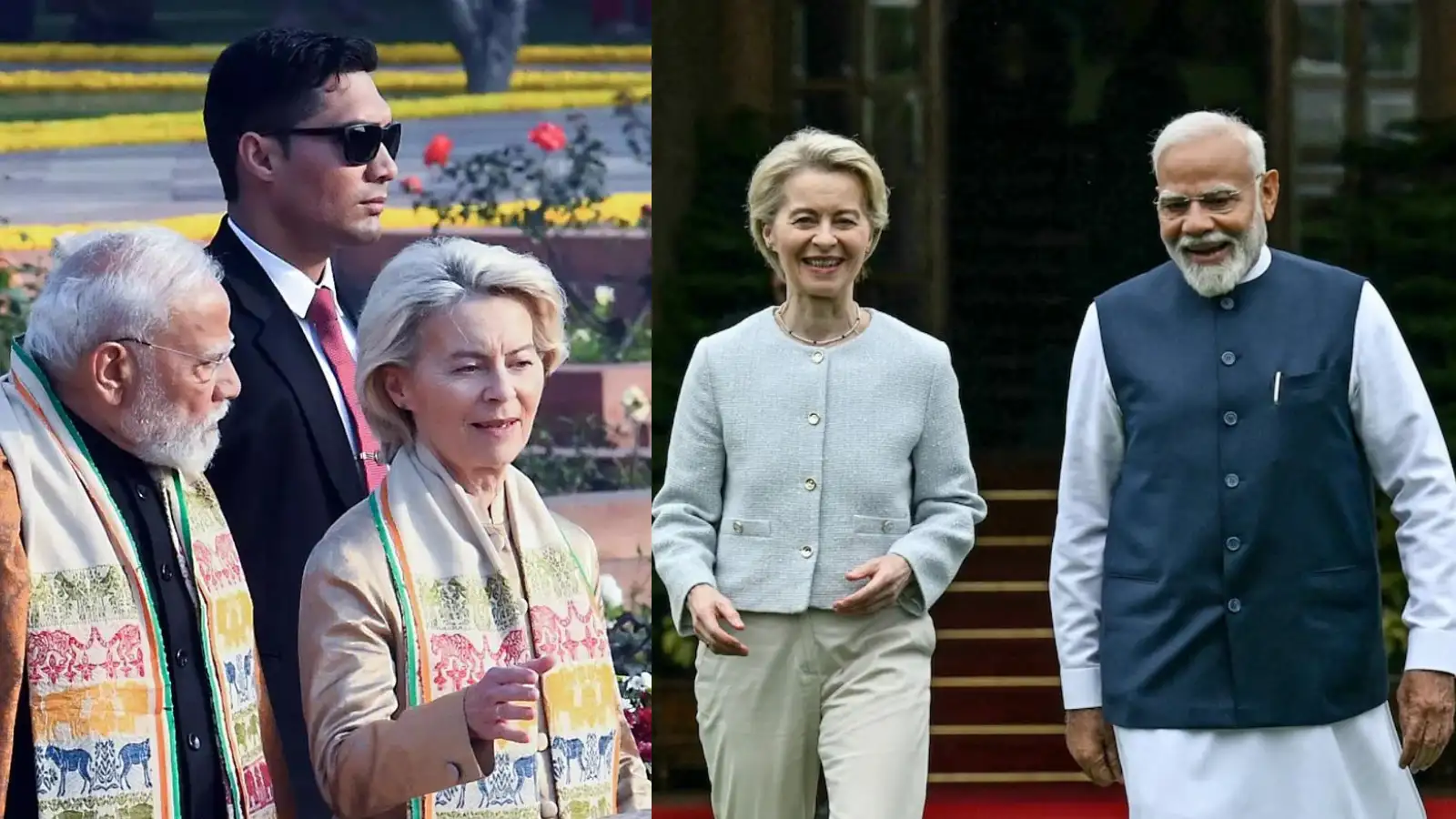
The numbers explain why this agreement matters. In FY 2024–25, India’s goods trade with the EU stood at USD 136.53 billion, with exports worth USD 75.85 billion and imports at USD 60.68 billion. This made the EU India’s largest goods market, while also giving New Delhi a trade surplus of USD 15.17 billion. Services trade added another USD 83.10 billion in 2024, spanning IT, telecom and business services. With nearly 17% of India’s total exports headed to Europe, smoother access under the India-EU FTA could be a game changer.
Cheaper European cars on Indian roads
One of the most closely watched elements of the India-EU trade deal is automobiles. India’s car market has long been among the most protected globally, with import duties on fully built European cars ranging from 70% to 110%.
Under the proposed FTA framework, India has agreed to sharply reduce these tariffs to around 40% initially for a limited number of imported cars priced above roughly USD 17,700 (about Rs 16.3 lakh). Over time, duties could fall further to nearly 10%, aligning India more closely with global norms. This could significantly lower prices for premium European brands such as Volkswagen, Mercedes-Benz, BMW, Renault and Stellantis.
However, fully electric vehicles are likely to be excluded from tariff cuts for at least five years, protecting domestic EV investments by Indian manufacturers such as Tata Motors and Mahindra & Mahindra.
Textiles, electronics and wider market access
Beyond cars, the biggest impact of the India-EU FTA will be felt in goods trade. Indian textiles and garments currently face duties of around 10% in the EU. These are expected to be phased down, helping Indian exporters compete more effectively with rivals such as Bangladesh and Vietnam in Europe’s apparel market.
Electronics and machinery imports from Europe could also become cheaper as tariffs ease, lowering costs for Indian manufacturers dependent on specialised components. At the same time, Indian exporters of machinery and electronics may find it easier to enter the EU as technical barriers are reduced.
For consumers, the benefits will be gradual. For exporters, the FTA opens deeper access to one of the world’s wealthiest markets.
Services and skilled mobility
Services are already a strong pillar of India-EU economic ties. With services trade valued at USD 83.1 billion, the FTA is expected to bring clearer and more predictable rules for Indian professionals in IT, engineering and consulting.
Faster processing timelines and transparent entry norms could improve short-term mobility for skilled workers. Even a modest rise in services exports would boost India’s foreign earnings and expand opportunities for professionals seeking European assignments.
Agriculture remains protected
Agriculture has remained politically sensitive throughout the India-EU FTA talks. Both sides have largely ring-fenced farm and dairy products from broad tariff cuts. EU officials have confirmed that dairy and sugar are excluded, while India has retained high tariffs to protect millions of small farmers.
As a result, consumers are unlikely to see major price changes in core agricultural products. That said, India’s food and beverage exports to the EU worth about USD 4.2 billion in 2024 are growing, led by tea, coffee, spices, fish and fruits.
Carbon rules and industry costs
The EU’s Carbon Border Adjustment Mechanism (CBAM) is another critical factor. Under CBAM, Indian exporters of steel and aluminium must report embedded carbon emissions before eventually paying a carbon-linked levy.
India has pushed for longer transition periods and flexible reporting. Analysts estimate that full compliance could raise steel production costs by 3% to 8%, largely affecting exporters rather than domestic consumers.
Investment, GIs and long-term impact
Spanning 24 chapters, the India-EU trade deal also covers investment protection, intellectual property and geographical indications (GIs). The EU has sought stronger safeguards for its wines and cheeses, while India is pushing for recognition of GIs such as Darjeeling tea, Basmati rice and Banarasi sarees.
Together, these provisions aim to reduce regulatory uncertainty and attract long-term investment. If implemented well, the India-EU FTA could expand India’s export base by tens of billions of dollars over the next decade bringing quieter but meaningful changes to prices, jobs and global competitiveness.
The numbers explain why this agreement matters. In FY 2024–25, India’s goods trade with the EU stood at USD 136.53 billion, with exports worth USD 75.85 billion and imports at USD 60.68 billion. This made the EU India’s largest goods market, while also giving New Delhi a trade surplus of USD 15.17 billion. Services trade added another USD 83.10 billion in 2024, spanning IT, telecom and business services. With nearly 17% of India’s total exports headed to Europe, smoother access under the India-EU FTA could be a game changer.
Cheaper European cars on Indian roads
One of the most closely watched elements of the India-EU trade deal is automobiles. India’s car market has long been among the most protected globally, with import duties on fully built European cars ranging from 70% to 110%.Under the proposed FTA framework, India has agreed to sharply reduce these tariffs to around 40% initially for a limited number of imported cars priced above roughly USD 17,700 (about Rs 16.3 lakh). Over time, duties could fall further to nearly 10%, aligning India more closely with global norms. This could significantly lower prices for premium European brands such as Volkswagen, Mercedes-Benz, BMW, Renault and Stellantis.
However, fully electric vehicles are likely to be excluded from tariff cuts for at least five years, protecting domestic EV investments by Indian manufacturers such as Tata Motors and Mahindra & Mahindra.
Textiles, electronics and wider market access
Beyond cars, the biggest impact of the India-EU FTA will be felt in goods trade. Indian textiles and garments currently face duties of around 10% in the EU. These are expected to be phased down, helping Indian exporters compete more effectively with rivals such as Bangladesh and Vietnam in Europe’s apparel market. Electronics and machinery imports from Europe could also become cheaper as tariffs ease, lowering costs for Indian manufacturers dependent on specialised components. At the same time, Indian exporters of machinery and electronics may find it easier to enter the EU as technical barriers are reduced.
For consumers, the benefits will be gradual. For exporters, the FTA opens deeper access to one of the world’s wealthiest markets.
Services and skilled mobility
Services are already a strong pillar of India-EU economic ties. With services trade valued at USD 83.1 billion, the FTA is expected to bring clearer and more predictable rules for Indian professionals in IT, engineering and consulting.You may also like
- In outreach to Bangladesh PM, India hails his father's 1971 address
- Gen Chauhan, who spearheaded tri-services integration & played key role in Op Sindoor, wraps up 'very satisfying' tenure as CDS
- Indian student drowned at Wisconsin dam as he jumped to save three friends; feet got stuck in fishing wire
- Submarine deal with Germany in a few months with tech transfer; Navy delivered blow to Pak's economy during Op Sindoor: Admiral Tripathi
- JD Vance is not fighting on social media as he used to. 'Real reason' angers White House
Faster processing timelines and transparent entry norms could improve short-term mobility for skilled workers. Even a modest rise in services exports would boost India’s foreign earnings and expand opportunities for professionals seeking European assignments.
Agriculture remains protected
Agriculture has remained politically sensitive throughout the India-EU FTA talks. Both sides have largely ring-fenced farm and dairy products from broad tariff cuts. EU officials have confirmed that dairy and sugar are excluded, while India has retained high tariffs to protect millions of small farmers. As a result, consumers are unlikely to see major price changes in core agricultural products. That said, India’s food and beverage exports to the EU worth about USD 4.2 billion in 2024 are growing, led by tea, coffee, spices, fish and fruits.
Carbon rules and industry costs
The EU’s Carbon Border Adjustment Mechanism (CBAM) is another critical factor. Under CBAM, Indian exporters of steel and aluminium must report embedded carbon emissions before eventually paying a carbon-linked levy. India has pushed for longer transition periods and flexible reporting. Analysts estimate that full compliance could raise steel production costs by 3% to 8%, largely affecting exporters rather than domestic consumers.
Investment, GIs and long-term impact
Spanning 24 chapters, the India-EU trade deal also covers investment protection, intellectual property and geographical indications (GIs). The EU has sought stronger safeguards for its wines and cheeses, while India is pushing for recognition of GIs such as Darjeeling tea, Basmati rice and Banarasi sarees. Together, these provisions aim to reduce regulatory uncertainty and attract long-term investment. If implemented well, the India-EU FTA could expand India’s export base by tens of billions of dollars over the next decade bringing quieter but meaningful changes to prices, jobs and global competitiveness.






More from our partners


Loving Newspoint? Download the app now
