
How Humpback Whales Sing Songs That Slowly Change Over Years

Every breeding season, male humpback whales in the same ocean sing the same song. Not a similar song, the same one, down to the sequence of phrases, the rhythm of each unit, the order of the themes. A whale off the coast of Tonga and another near the Cook Islands will produce sounds so close in structure that researchers can match them phrase by phrase.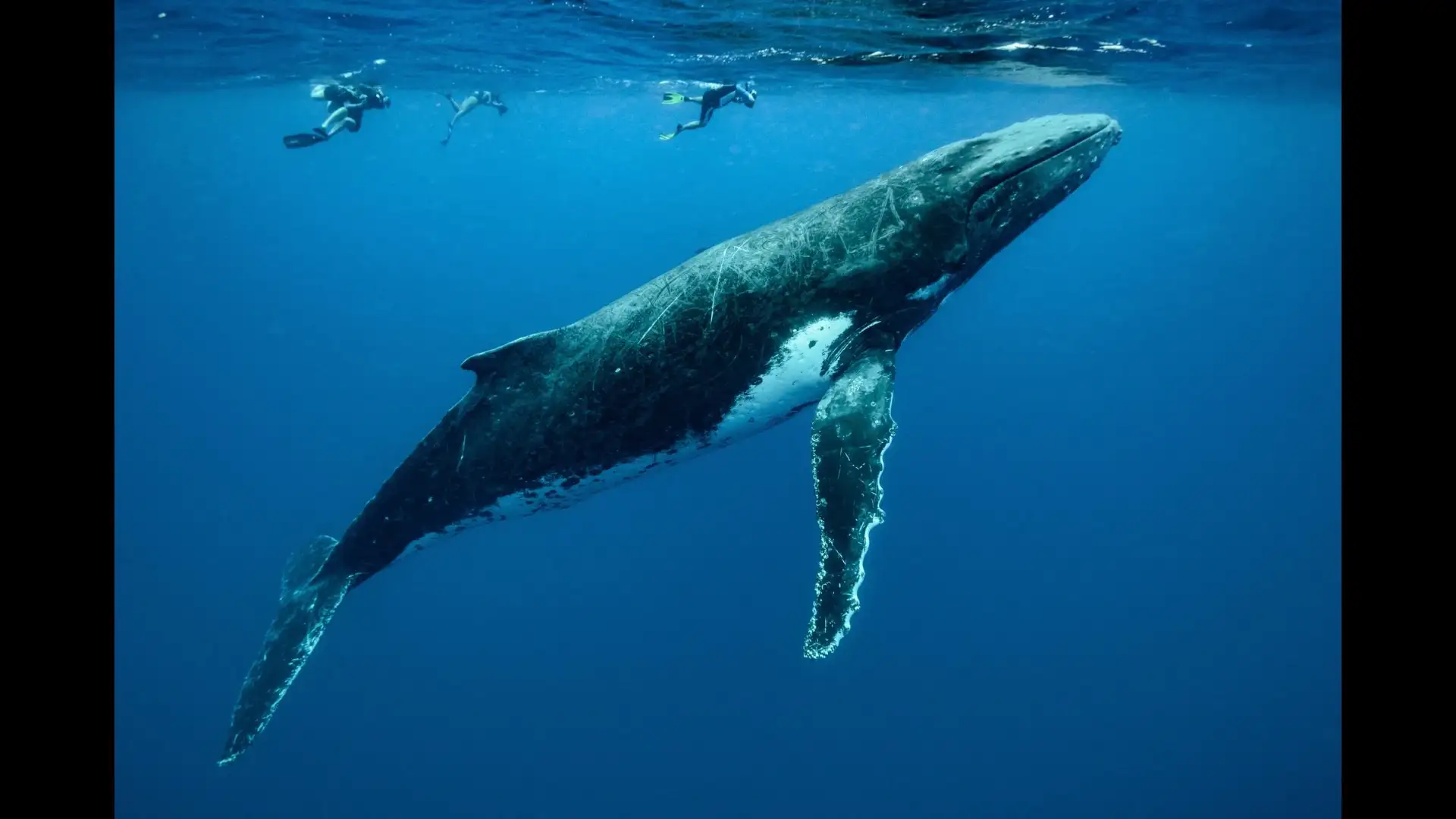
What makes this stranger still is that the song is not fixed. It changes, slowly and continuously, and every whale in the basin changes with it.
Themes played in sequence make a song. A full song can last anywhere from six minutes to over half an hour, and a whale may repeat it continuously for hours without stopping to eat or sleep.
Only males sing, and they sing almost exclusively during the breeding season. The leading explanation is that the song serves mate attraction or male-to-male signalling, though the exact function remains a subject of active study.
What is clear is that every male in a given ocean population sings the same version of the song at the same time. The North Pacific population sings a different song from the South Atlantic population. Within each basin, however, the song is shared.
A new phrase appears, sometimes a slight variation on an existing one, sometimes something more novel, and it spreads. Within a few breeding seasons, the old phrase has been replaced across the entire basin. The original song has shifted, and the shift is permanent. The whales do not cycle back.
Researchers studying populations in the South Pacific found that song changes propagated consistently from west to east. New elements appeared first in populations off Australia, then moved through French Polynesia, then reached populations further east.
This directional spread suggested that whales were learning from each other, specifically, that individuals were picking up new material from whales they encountered and incorporating it into their own singing.
The mechanism is cultural transmission: learning by listening. A whale hears a new phrase from a neighbour, copies it with some fidelity, and introduces it to whales that have not yet heard it. Those whales copy it in turn. Because the copying is imperfect, each individual introduces small errors, the song drifts further with each transmission.
Over years, the accumulation of small changes produces a melody that shares almost nothing with the version sung a decade earlier.
Humpbacks are not a tightly bonded social species. Males do not travel in stable groups. They encounter each other at breeding grounds and during migrations, and those encounters are often brief. Yet a change that begins with a handful of whales on one side of an ocean basin can reach every male across thousands of kilometres within two or three breeding seasons.
One factor is the sheer carrying power of low-frequency sound in water. Whale vocalisations travel enormous distances through the ocean, particularly in the deep sound channel, a layer of water where temperature and pressure combine to trap and carry sound with minimal loss.
A whale does not need to be within visual range, or even within a few kilometres, to hear another whale's song. The ocean is acoustically much smaller than it looks on a map.
A second factor is conformity pressure. When a new phrase begins to spread, whales that have already adopted it outnumber those singing the old version. A whale encountering multiple singers is more likely to hear the new phrase than the old one, which accelerates adoption. The spread is self-reinforcing once it passes a threshold.
The songs are not instinctive templates that each whale fills in independently. They are shared, learned, and collectively maintained, which meets the basic definition of a cultural tradition.
What humpbacks do not appear to have is the ability to innovate deliberately. The new phrases that enter the song are not composed; they seem to arise from copying errors and recombinations of existing material.
The whales adopt them, but there is no evidence that any individual whale sets out to introduce something new. The song changes because copying is imperfect, and because imperfect copies spread. The creativity, if it can be called that, is accidental and collective rather than intentional and individual.
The song of a humpback whale is, in this sense, a record of every transmission error and every adoption decision made across a population over decades. It is an archive of social contact written in sound, and it keeps being rewritten, one phrase at a time, by whales that will never know they are doing it.
What makes this stranger still is that the song is not fixed. It changes, slowly and continuously, and every whale in the basin changes with it.
What a Humpback Song Actually Is
A humpback song is not a simple call. It is a layered, hierarchical structure that researchers describe in terms borrowed from music. The smallest unit is a sound, a moan, a squeal, a rumble. Several sounds strung together make a phrase. A phrase repeated a fixed number of times makes a theme.Themes played in sequence make a song. A full song can last anywhere from six minutes to over half an hour, and a whale may repeat it continuously for hours without stopping to eat or sleep.
Only males sing, and they sing almost exclusively during the breeding season. The leading explanation is that the song serves mate attraction or male-to-male signalling, though the exact function remains a subject of active study.
What is clear is that every male in a given ocean population sings the same version of the song at the same time. The North Pacific population sings a different song from the South Atlantic population. Within each basin, however, the song is shared.
How the Song Changes
The change is not random noise, and it is not each whale improvising independently. It moves in one direction across the population, like a slow wave.A new phrase appears, sometimes a slight variation on an existing one, sometimes something more novel, and it spreads. Within a few breeding seasons, the old phrase has been replaced across the entire basin. The original song has shifted, and the shift is permanent. The whales do not cycle back.
Researchers studying populations in the South Pacific found that song changes propagated consistently from west to east. New elements appeared first in populations off Australia, then moved through French Polynesia, then reached populations further east.
This directional spread suggested that whales were learning from each other, specifically, that individuals were picking up new material from whales they encountered and incorporating it into their own singing.
The mechanism is cultural transmission: learning by listening. A whale hears a new phrase from a neighbour, copies it with some fidelity, and introduces it to whales that have not yet heard it. Those whales copy it in turn. Because the copying is imperfect, each individual introduces small errors, the song drifts further with each transmission.
Over years, the accumulation of small changes produces a melody that shares almost nothing with the version sung a decade earlier.
Why the Whole Basin Changes Together
The puzzle is not that individual whales learn. Many animals learn calls from their social group. The puzzle is the scale and the coordination.Humpbacks are not a tightly bonded social species. Males do not travel in stable groups. They encounter each other at breeding grounds and during migrations, and those encounters are often brief. Yet a change that begins with a handful of whales on one side of an ocean basin can reach every male across thousands of kilometres within two or three breeding seasons.
You may also like
- Kai Cenat and IShowSpeed plan GTA 6 streams before its official US release: Here's what we know
- PM Modi reaffirms India's vision of peaceful, stable, prosperous Indo-Pacific at East Asia Summit
- Turkey raids another opposition tv channel, appoints trustees to take over operations
- India Proposes Comprehensive Agenda for ASEAN Cooperation at Summit in Manila
- India and ASEAN Strengthen Cooperation for Disaster Management
One factor is the sheer carrying power of low-frequency sound in water. Whale vocalisations travel enormous distances through the ocean, particularly in the deep sound channel, a layer of water where temperature and pressure combine to trap and carry sound with minimal loss.
A whale does not need to be within visual range, or even within a few kilometres, to hear another whale's song. The ocean is acoustically much smaller than it looks on a map.
A second factor is conformity pressure. When a new phrase begins to spread, whales that have already adopted it outnumber those singing the old version. A whale encountering multiple singers is more likely to hear the new phrase than the old one, which accelerates adoption. The spread is self-reinforcing once it passes a threshold.
What This Tells Us About Animal Culture
For most of the twentieth century, culture, the transmission of learned behaviour across individuals and generations, was considered a human trait. The discovery that humpback song change is driven by social learning complicated that picture considerably.The songs are not instinctive templates that each whale fills in independently. They are shared, learned, and collectively maintained, which meets the basic definition of a cultural tradition.
What humpbacks do not appear to have is the ability to innovate deliberately. The new phrases that enter the song are not composed; they seem to arise from copying errors and recombinations of existing material.
The whales adopt them, but there is no evidence that any individual whale sets out to introduce something new. The song changes because copying is imperfect, and because imperfect copies spread. The creativity, if it can be called that, is accidental and collective rather than intentional and individual.
The song of a humpback whale is, in this sense, a record of every transmission error and every adoption decision made across a population over decades. It is an archive of social contact written in sound, and it keeps being rewritten, one phrase at a time, by whales that will never know they are doing it.






Loving Newspoint? Download the app now
