
US-Iran War Escalation: Trump Warns of ‘Knock-Out’ Strike as US Bases Face Iranian Attacks

The military conflict in the Middle East has entered a critical and unpredictable phase. US President Donald Trump has issued a severe warning to Iran, threatening to systematically destroy key civilian infrastructure across the country unless its leaders agree to a new peace deal.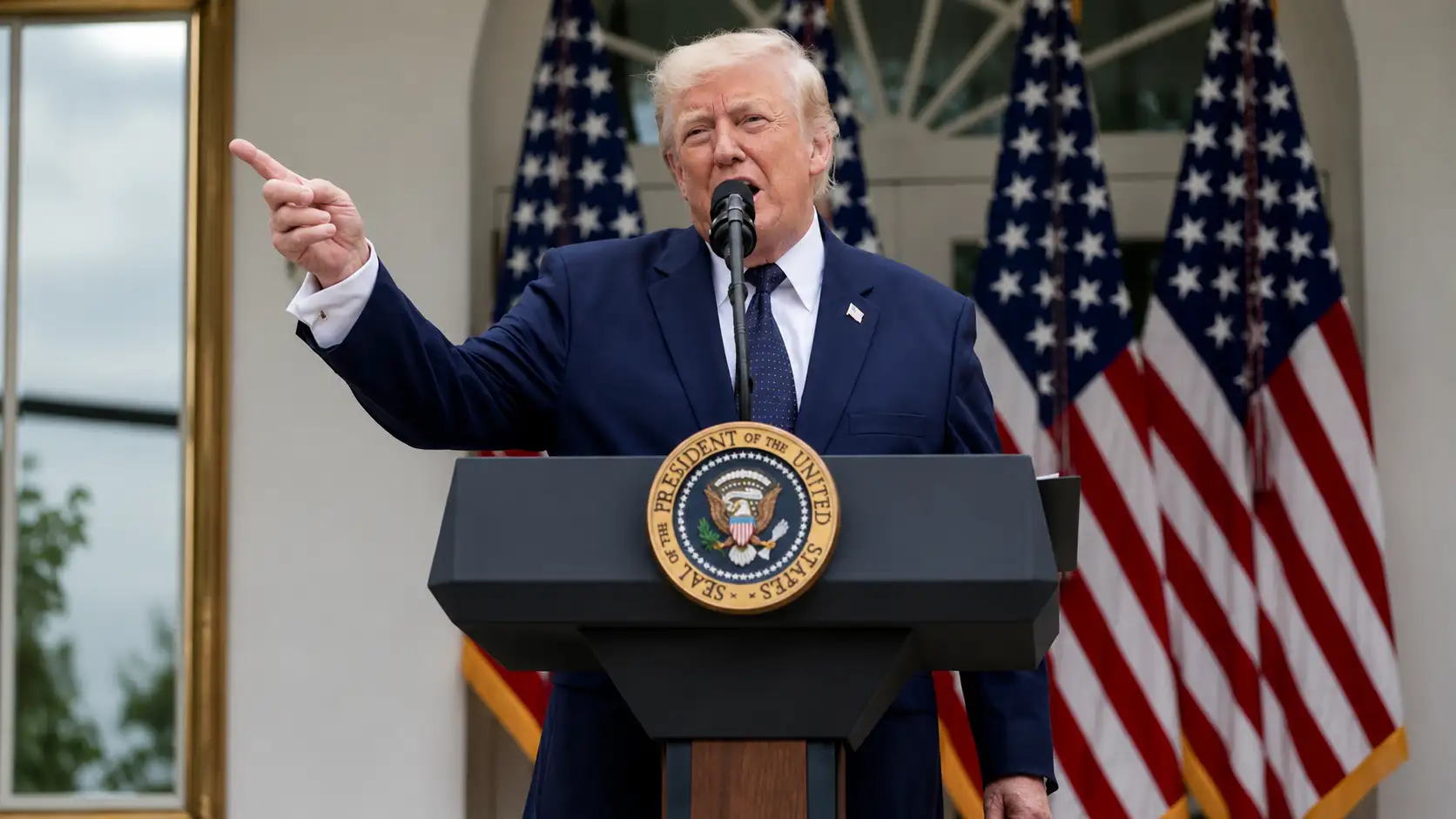
The warning follows a series of highly coordinated missile and drone attacks launched by Iran’s Islamic Revolutionary Guard Corps (IRGC), targeting American military installations across the Persian Gulf region.
As the war escalates, the vital Strait of Hormuz - the narrow waterway through which roughly 20% of the world’s oil flows - remains almost entirely blocked, sending shockwaves through global energy markets and raising fears of a broader global economic crisis.
Trump’s Severe "Knock-Out" Threat
Speaking during a television interview, President Trump adopted an aggressive, uncompromising tone. He warned that Washington is prepared to dramatically expand its air campaign beyond strictly military targets if Tehran continues to resist negotiations.
"Next week it gets really bad for them because next week comes the power plants. Next week comes the bridges," Trump stated. "We're going to knock out all their power plants. We're going to knock out all their bridges unless they get to the table and negotiate."
This ultimatum marks a significant escalation from previous rounds of fighting, which largely aimed at degrading Iran's military capabilities. Humanitarian experts have warned that targeting civilian infrastructure, such as power stations and fresh water plants, would cause severe suffering to millions of innocent people and could violate international humanitarian laws.
US Bases Targeted in the Gulf
Iran responded to the threat with an "eye-for-an-eye" military operation, launching a wave of drones and missiles aimed at US military bases in several Gulf countries. The IRGC claimed it targeted facilities in Bahrain, Kuwait, Qatar, and Oman, as well as striking fuel and ammunition depots at the Prince Hassan Air Base in Jordan.
According to reports, the retaliatory strikes aimed to hit back against a massive wave of US airstrikes. Over the preceding days, American aircraft, warships, and drones had struck more than 100 targets along the southern coast of Iran, aiming to degrade the country’s coastal radar systems, air defence batteries, and missile storage sites.
Despite the heavy American bombardment, the Iranian military has shown that it still possesses the ability to strike deep into neighbouring territories where US forces are stationed.
The Battle for the Strait of Hormuz
The primary flashpoint of this conflict remains the Strait of Hormuz. Iran’s Revolutionary Guards have declared that the strategic waterway will remain closed to international shipping as long as "evil US actions" continue in the region. Tehran has warned that until American forces stop interfering, "not a single drop of oil or gas" will be exported from the Gulf safely.
To bypass Iranian control, the United States has attempted to escort merchant vessels through alternative shipping lanes. However, commercial ship-tracking data indicates that international maritime traffic through the strait has ground to a near-total halt, with shipping companies and airlines steering clear of the combat zone.
With US military bases in the Gulf increasingly exposed to Iranian missile fire, military analysts suggest that Washington may be forced to strategically shift its operations. To protect its troops and assets, the US Central Command is reportedly considering moving some of its military operations to bases in Israel, which offers more advanced air defence systems and a lower risk of direct political fallout.
As both sides refuse to back down, the international community is watching with growing anxiety, hoping that diplomatic channels can be restored before a devastating, full-scale regional war becomes inevitable.
The warning follows a series of highly coordinated missile and drone attacks launched by Iran’s Islamic Revolutionary Guard Corps (IRGC), targeting American military installations across the Persian Gulf region.
As the war escalates, the vital Strait of Hormuz - the narrow waterway through which roughly 20% of the world’s oil flows - remains almost entirely blocked, sending shockwaves through global energy markets and raising fears of a broader global economic crisis.
Trump’s Severe "Knock-Out" Threat
Speaking during a television interview, President Trump adopted an aggressive, uncompromising tone. He warned that Washington is prepared to dramatically expand its air campaign beyond strictly military targets if Tehran continues to resist negotiations.
"Next week it gets really bad for them because next week comes the power plants. Next week comes the bridges," Trump stated. "We're going to knock out all their power plants. We're going to knock out all their bridges unless they get to the table and negotiate."
You may also like
- A new highway nearly killed his town. This 98-year-old 'Angel of Route 66' helped bring America's most famous highway back to life
- In Tokyo's hidden 1,100-year-old shrine, thousands of desperate fans are praying for impossible concert tickets
- Pakistan police arrests 13 Afghan doctors and one medical student in Punjab
- 'For everyone or no one': Iran threatens halting energy exports
- France to vote on assisted dying bill; critics warn of risks - all about Macron-backed end-of-life care
This ultimatum marks a significant escalation from previous rounds of fighting, which largely aimed at degrading Iran's military capabilities. Humanitarian experts have warned that targeting civilian infrastructure, such as power stations and fresh water plants, would cause severe suffering to millions of innocent people and could violate international humanitarian laws.
US Bases Targeted in the Gulf
Iran responded to the threat with an "eye-for-an-eye" military operation, launching a wave of drones and missiles aimed at US military bases in several Gulf countries. The IRGC claimed it targeted facilities in Bahrain, Kuwait, Qatar, and Oman, as well as striking fuel and ammunition depots at the Prince Hassan Air Base in Jordan.
According to reports, the retaliatory strikes aimed to hit back against a massive wave of US airstrikes. Over the preceding days, American aircraft, warships, and drones had struck more than 100 targets along the southern coast of Iran, aiming to degrade the country’s coastal radar systems, air defence batteries, and missile storage sites.
Despite the heavy American bombardment, the Iranian military has shown that it still possesses the ability to strike deep into neighbouring territories where US forces are stationed.
The Battle for the Strait of Hormuz
The primary flashpoint of this conflict remains the Strait of Hormuz. Iran’s Revolutionary Guards have declared that the strategic waterway will remain closed to international shipping as long as "evil US actions" continue in the region. Tehran has warned that until American forces stop interfering, "not a single drop of oil or gas" will be exported from the Gulf safely.
To bypass Iranian control, the United States has attempted to escort merchant vessels through alternative shipping lanes. However, commercial ship-tracking data indicates that international maritime traffic through the strait has ground to a near-total halt, with shipping companies and airlines steering clear of the combat zone.
With US military bases in the Gulf increasingly exposed to Iranian missile fire, military analysts suggest that Washington may be forced to strategically shift its operations. To protect its troops and assets, the US Central Command is reportedly considering moving some of its military operations to bases in Israel, which offers more advanced air defence systems and a lower risk of direct political fallout.
As both sides refuse to back down, the international community is watching with growing anxiety, hoping that diplomatic channels can be restored before a devastating, full-scale regional war becomes inevitable.






Loving Newspoint? Download the app now
