
French Fries or Belgian Fries: Where the Chips Really Came From

The most eaten food on the planet may carry the wrong country's name. Fried potato strips sold from roadside stalls in Brussels, Ghent, and Liège are called simply frites, and Belgians will tell you, with considerable feeling, that the French had almost nothing to do with them.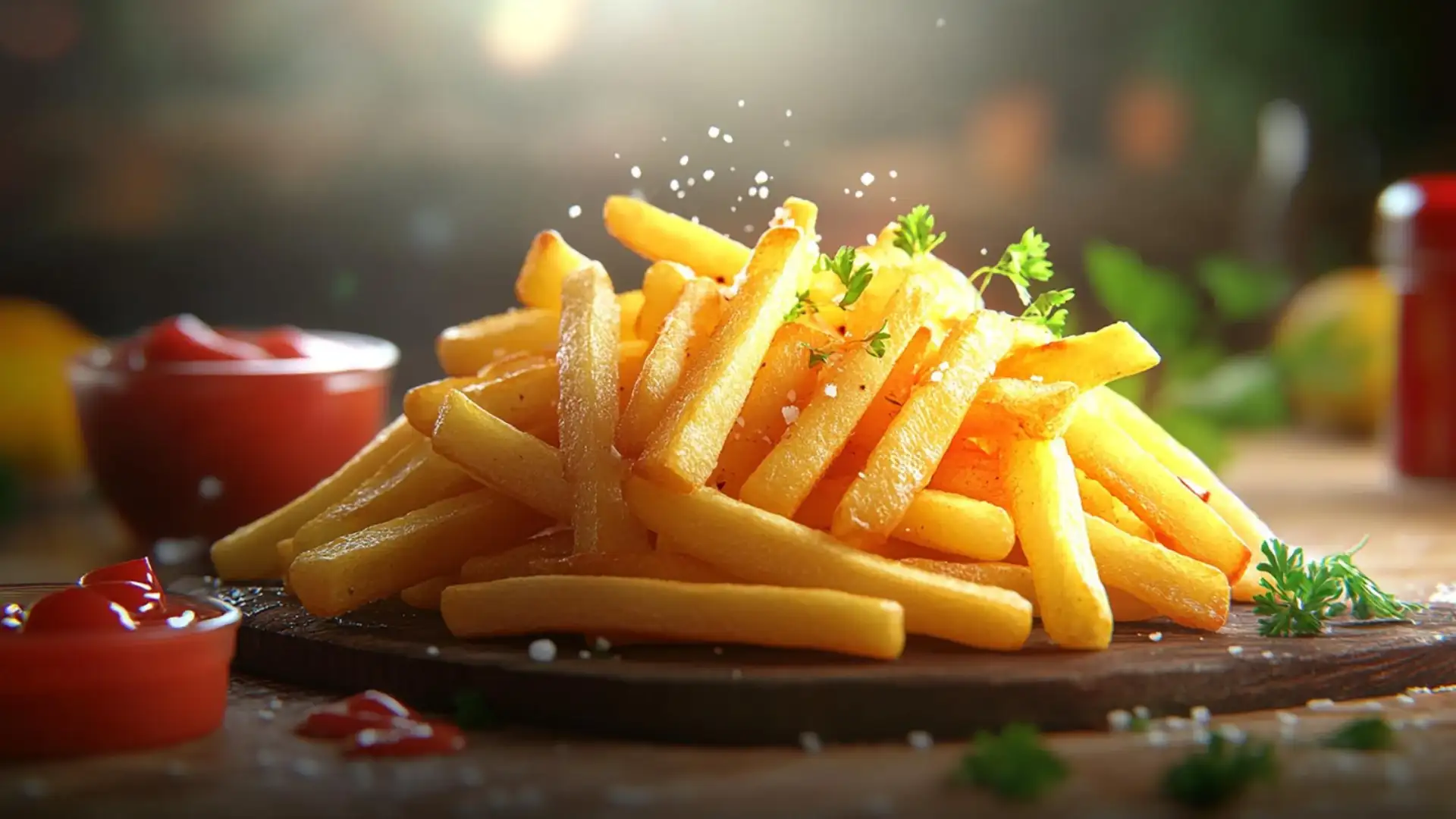
When the river froze hard enough to make fishing impossible, the story goes, they cut potatoes into fish-shaped strips and fried those instead.
Whether this is history or a well-loved legend is genuinely uncertain, no written record from that period confirms it, but Belgian food historians have documented the tradition of frying potatoes in that region well before the practice spread elsewhere in Europe.
They brought the food home and the name home with them: French fries. A language became a nationality, and the association stuck. France, which had its own potato-frying traditions and a far larger share of global cultural influence in the twentieth century, did nothing to correct the record.
The strip is then lifted out, rested, and returned to hotter fat for a second, shorter fry that drives off surface moisture and creates the hard, blistered exterior. The result is a fry that stays crisp longer than one fried once at a single temperature.
This double-fry principle, once understood, explains why frites from a Belgian frituur taste different from most of what gets called a French fry elsewhere in the world.
The frites are served in a paper cone, never a cardboard box, with a wooden fork and a quantity of mayonnaise that would alarm a nutritionist. Mayonnaise, not ketchup, is the traditional accompaniment.
The combination of cone, wooden fork, and mayonnaise is so associated with the Belgian version that food writers use it as shorthand for the real thing versus the imitation. There are frituren in Belgian cities that have operated from the same spot for generations.
Auguste Escoffier, the French chef whose work codified much of what became European restaurant cooking, helped spread fried potato dishes through the professional kitchen. So France's contribution was less the invention and more the dissemination, through its restaurants, its language, and its outsized role in defining what European food looked like to the rest of the world. Belgium invented the thing. France gave it a name that travelled.
A River Valley and a Frozen Winter
The leading origin story places the first fried potato in the Meuse valley, in what is now southern Belgium, sometime in the late seventeenth century. The people of that region had a habit of frying small fish caught from the river.When the river froze hard enough to make fishing impossible, the story goes, they cut potatoes into fish-shaped strips and fried those instead.
Whether this is history or a well-loved legend is genuinely uncertain, no written record from that period confirms it, but Belgian food historians have documented the tradition of frying potatoes in that region well before the practice spread elsewhere in Europe.
How the Name Went Wrong
The most widely accepted explanation for the French label involves American soldiers stationed in Belgium during the First World War. The Belgian army's official language in that region was French, and the soldiers who encountered the fried potato strips heard French spoken all around them.You may also like
- A BC condo owner who said her neighbours' scented laundry kept her off her balcony since 2018 has lost her case, after a tribunal ruled laundry smells come from a reasonable, lawful everyday activity
- Trump's heir, but not his echo: JD Vance, Iran and the limits of loyalty
- Escalating Conflict in Yemen: 11 Killed Amid Saudi Airstrikes and Houthi Missile Claims
- A 'Muslim-only' event at a waterpark in Texas was canceled in June. Now organizer Aminah Knight sues Greg Abbott and the city of Grand Prairie over religious discrimination
- After his fence was ordered removed, a Manchester man planted a 10-foot hedge that blocks his neighbour's view of a historic countryside estate; five-year feud returns to the council
They brought the food home and the name home with them: French fries. A language became a nationality, and the association stuck. France, which had its own potato-frying traditions and a far larger share of global cultural influence in the twentieth century, did nothing to correct the record.
The Double-Fry and Why It Matters
What distinguishes the Belgian approach is not only the potato variety, traditionally a floury, low-moisture type called the Bintje, but the method. Belgian frites are fried twice. The first fry, at a lower temperature, cooks the potato through without colouring it.The strip is then lifted out, rested, and returned to hotter fat for a second, shorter fry that drives off surface moisture and creates the hard, blistered exterior. The result is a fry that stays crisp longer than one fried once at a single temperature.
This double-fry principle, once understood, explains why frites from a Belgian frituur taste different from most of what gets called a French fry elsewhere in the world.
The Frituur and the Cone
Belgium's contribution to fried potato culture goes beyond the cooking method. The frituur, a freestanding roadside stall, often a converted trailer, is a specifically Belgian institution.The frites are served in a paper cone, never a cardboard box, with a wooden fork and a quantity of mayonnaise that would alarm a nutritionist. Mayonnaise, not ketchup, is the traditional accompaniment.
The combination of cone, wooden fork, and mayonnaise is so associated with the Belgian version that food writers use it as shorthand for the real thing versus the imitation. There are frituren in Belgian cities that have operated from the same spot for generations.
What France Actually Contributed
France's claim is not entirely without basis. French culinary writing from the eighteenth century describes fried potatoes, and the pommes frites of Parisian street vendors were a recognised food by the early nineteenth century.Auguste Escoffier, the French chef whose work codified much of what became European restaurant cooking, helped spread fried potato dishes through the professional kitchen. So France's contribution was less the invention and more the dissemination, through its restaurants, its language, and its outsized role in defining what European food looked like to the rest of the world. Belgium invented the thing. France gave it a name that travelled.






Loving Newspoint? Download the app now
