
Major Relief for India and China as US Revises 500% Russian Oil Tariff Plan

US lawmakers have unveiled a major revision to a proposed Russia sanctions bill, offering significant economic relief to India and China. The updated draft substantially lowers the maximum tariff threat on major buyers of Russian energy, reducing the previously proposed blanket tariff from 500% to a maximum of 100%.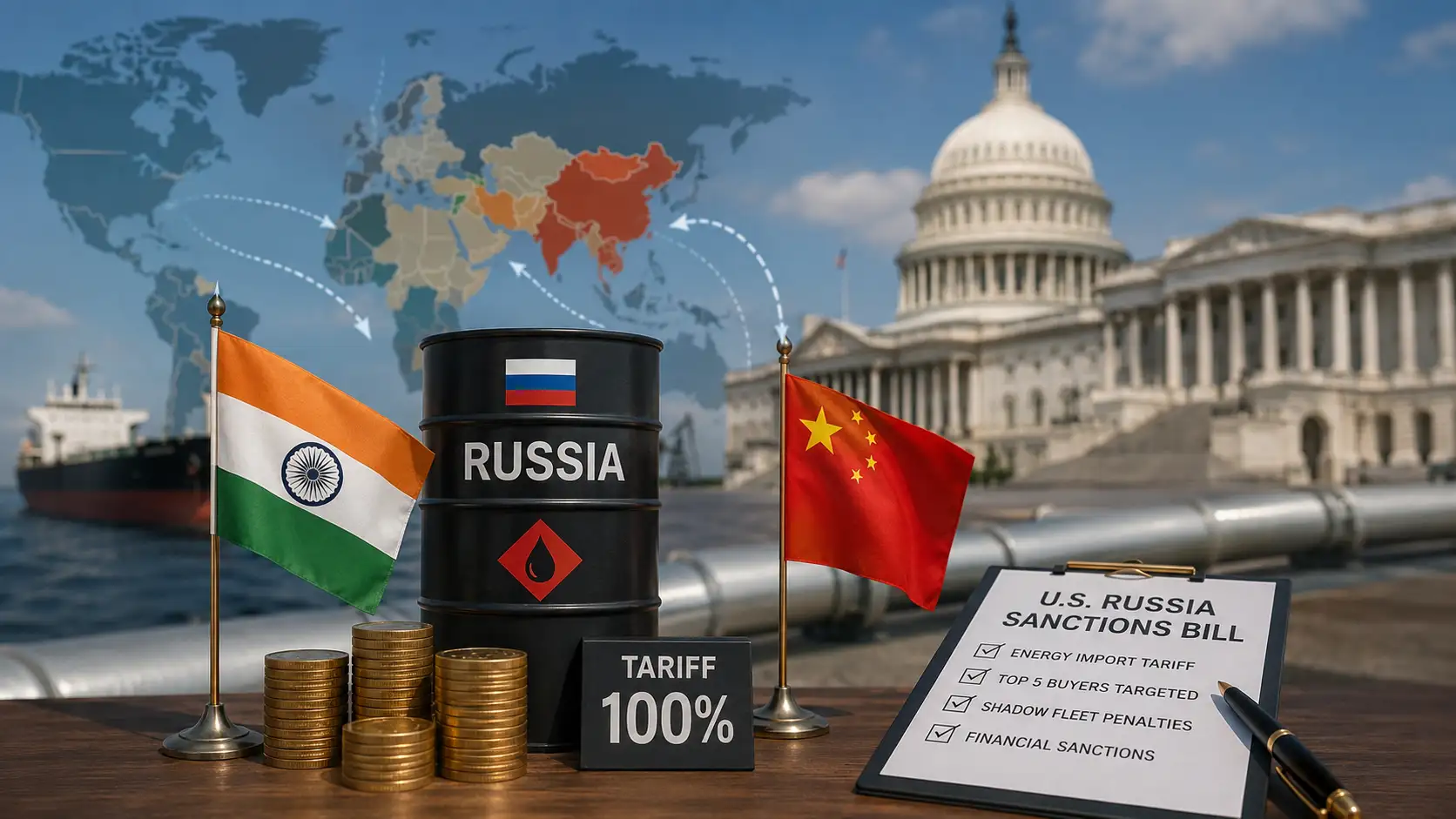
The revised bipartisan bill, aimed at cutting off the revenues funding Russia's military campaign in Ukraine, has gained strong support in the US Senate. By targeting the world's five largest buyers of Russian crude oil and natural gas, the legislation seeks to increase financial pressure on Moscow while avoiding major disruptions to global energy markets.
Why the Tariffs Were Eased
The initial version of the bill proposed a blanket 500% tariff on countries purchasing Russian energy. However, the proposal raised significant concerns among policymakers and financial experts. Critics argued that such sweeping measures could strain relations with key US allies, fuel inflation, and disrupt the global energy markets.
To make the legislation more practical and politically viable, negotiators agreed to reduce the maximum tariff to 100%, targeting only the top five importers of Russian fossil fuels. According to US Senate aides, the five largest buyers of Russian crude oil are China, India, Slovakia, Hungary, and Azerbaijan. Meanwhile, the top five importers of Russian natural gas are China, France, Japan, Hungary, and Belgium.
Additionally, the revised bill introduces a "safety valve" by allowing exemptions for countries that import less than 15% of their total gas from Russia and are actively working to reduce their dependence on Moscow. This provision is expected to protect several US allies, including France, Japan, and Belgium, from facing penalties.
A Compromise Built on Broad Support
In a crucial political move, the updated bill grants the US President the power to waive these tariffs entirely if doing so is deemed to be in the national interest of the United States. This addition was essential to secure the backing of the White House and ensure the bill could actually pass into law.
A Senate aide, speaking on the condition of anonymity, explained:
"This is the only product that currently has buy-in from everybody and is likely the only product that is going to move forward and put pressure on Russia the way we would all like."
The bill already boasts 26 co-sponsors from both the Republican and Democratic parties, indicating unusually strong bipartisan agreement in Washington.
Honouring a Political Legacy
The sudden progress of the bill is also tied to the legacy of the late Republican Senator Lindsey Graham, who passed away recently. Graham had spent over a year collaborating with Democratic Senator Richard Blumenthal on this sanctions package.
Just days before his death, during a visit to Ukraine, Graham announced that he had successfully negotiated a compromise on the bill's terms with US President Donald Trump. In light of his passing, leading politicians from both sides of the political aisle have urged Congress to pass the legislation quickly as a tribute to Graham's work.
Targeting the "Shadow Fleet"
Beyond international tariffs, the bill also takes direct aim at Russia’s "shadow fleet" - a vast, unofficial network of tankers that Moscow allegedly uses to transport oil worldwide while bypassing Western shipping regulations, insurance services, and price caps.
The legislation further proposes strict penalties on major Russian financial institutions, including the Central Bank of Russia, and seeks to curb large state-backed energy projects such as Yamal LNG and Arctic LNG.
While the bill continues to take a tough stance on Russia's energy trade, the reduction of the proposed tariff from a sweeping 500% to a more manageable 100% has been welcomed by global markets. For major developing economies such as India and China, which rely heavily on affordable energy imports to support their economic growth, the revised proposal offers much needed relief.
The revised bipartisan bill, aimed at cutting off the revenues funding Russia's military campaign in Ukraine, has gained strong support in the US Senate. By targeting the world's five largest buyers of Russian crude oil and natural gas, the legislation seeks to increase financial pressure on Moscow while avoiding major disruptions to global energy markets.
Why the Tariffs Were Eased
The initial version of the bill proposed a blanket 500% tariff on countries purchasing Russian energy. However, the proposal raised significant concerns among policymakers and financial experts. Critics argued that such sweeping measures could strain relations with key US allies, fuel inflation, and disrupt the global energy markets.
To make the legislation more practical and politically viable, negotiators agreed to reduce the maximum tariff to 100%, targeting only the top five importers of Russian fossil fuels. According to US Senate aides, the five largest buyers of Russian crude oil are China, India, Slovakia, Hungary, and Azerbaijan. Meanwhile, the top five importers of Russian natural gas are China, France, Japan, Hungary, and Belgium.
Additionally, the revised bill introduces a "safety valve" by allowing exemptions for countries that import less than 15% of their total gas from Russia and are actively working to reduce their dependence on Moscow. This provision is expected to protect several US allies, including France, Japan, and Belgium, from facing penalties.
A Compromise Built on Broad Support
In a crucial political move, the updated bill grants the US President the power to waive these tariffs entirely if doing so is deemed to be in the national interest of the United States. This addition was essential to secure the backing of the White House and ensure the bill could actually pass into law.
A Senate aide, speaking on the condition of anonymity, explained:
You may also like
- A new highway nearly killed his town. This 98-year-old 'Angel of Route 66' helped bring America's most famous highway back to life
- In Tokyo's hidden 1,100-year-old shrine, thousands of desperate fans are praying for impossible concert tickets
- Pakistan police arrests 13 Afghan doctors and one medical student in Punjab
- 'For everyone or no one': Iran threatens halting energy exports
- France to vote on assisted dying bill; critics warn of risks - all about Macron-backed end-of-life care
"This is the only product that currently has buy-in from everybody and is likely the only product that is going to move forward and put pressure on Russia the way we would all like."
The bill already boasts 26 co-sponsors from both the Republican and Democratic parties, indicating unusually strong bipartisan agreement in Washington.
Honouring a Political Legacy
The sudden progress of the bill is also tied to the legacy of the late Republican Senator Lindsey Graham, who passed away recently. Graham had spent over a year collaborating with Democratic Senator Richard Blumenthal on this sanctions package.
Just days before his death, during a visit to Ukraine, Graham announced that he had successfully negotiated a compromise on the bill's terms with US President Donald Trump. In light of his passing, leading politicians from both sides of the political aisle have urged Congress to pass the legislation quickly as a tribute to Graham's work.
Targeting the "Shadow Fleet"
Beyond international tariffs, the bill also takes direct aim at Russia’s "shadow fleet" - a vast, unofficial network of tankers that Moscow allegedly uses to transport oil worldwide while bypassing Western shipping regulations, insurance services, and price caps.
The legislation further proposes strict penalties on major Russian financial institutions, including the Central Bank of Russia, and seeks to curb large state-backed energy projects such as Yamal LNG and Arctic LNG.
While the bill continues to take a tough stance on Russia's energy trade, the reduction of the proposed tariff from a sweeping 500% to a more manageable 100% has been welcomed by global markets. For major developing economies such as India and China, which rely heavily on affordable energy imports to support their economic growth, the revised proposal offers much needed relief.






Loving Newspoint? Download the app now
