
Major Relief for India and China as US Revises 500% Russian Oil Tariff Plan

US lawmakers have unveiled a major revision to a proposed Russia sanctions bill, offering significant economic relief to India and China. The updated draft substantially lowers the maximum tariff threat on major buyers of Russian energy, reducing the previously proposed blanket tariff from 500% to a maximum of 100%.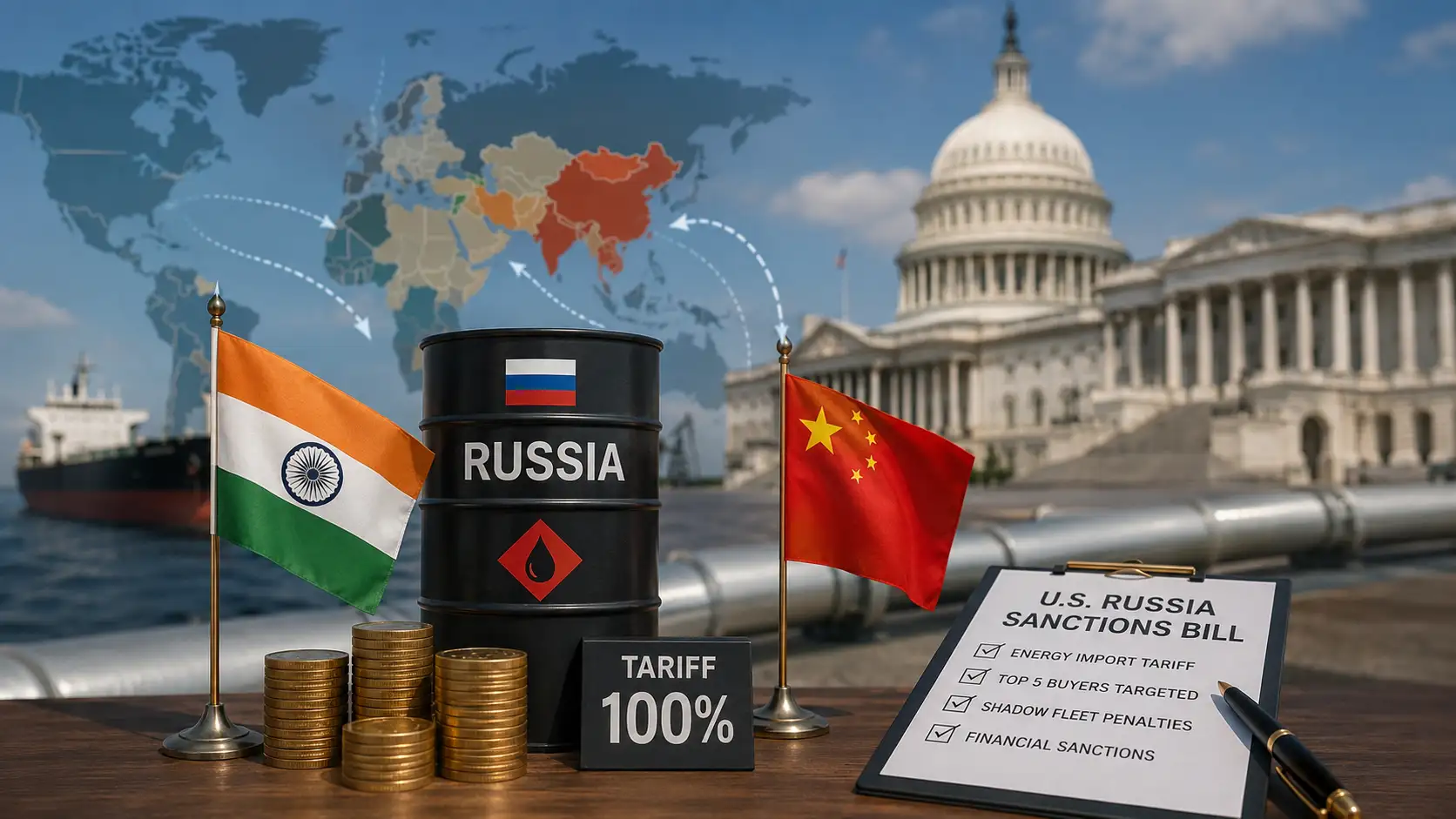
The revised bipartisan bill, aimed at cutting off the revenues funding Russia's military campaign in Ukraine, has gained strong support in the US Senate. By targeting the world's five largest buyers of Russian crude oil and natural gas, the legislation seeks to increase financial pressure on Moscow while avoiding major disruptions to global energy markets.
Why the Tariffs Were Eased
The initial version of the bill proposed a blanket 500% tariff on countries purchasing Russian energy. However, the proposal raised significant concerns among policymakers and financial experts. Critics argued that such sweeping measures could strain relations with key US allies, fuel inflation, and disrupt the global energy markets.
To make the legislation more practical and politically viable, negotiators agreed to reduce the maximum tariff to 100%, targeting only the top five importers of Russian fossil fuels. According to US Senate aides, the five largest buyers of Russian crude oil are China, India, Slovakia, Hungary, and Azerbaijan. Meanwhile, the top five importers of Russian natural gas are China, France, Japan, Hungary, and Belgium.
Additionally, the revised bill introduces a "safety valve" by allowing exemptions for countries that import less than 15% of their total gas from Russia and are actively working to reduce their dependence on Moscow. This provision is expected to protect several US allies, including France, Japan, and Belgium, from facing penalties.
A Compromise Built on Broad Support
In a crucial political move, the updated bill grants the US President the power to waive these tariffs entirely if doing so is deemed to be in the national interest of the United States. This addition was essential to secure the backing of the White House and ensure the bill could actually pass into law.
A Senate aide, speaking on the condition of anonymity, explained:
The revised bipartisan bill, aimed at cutting off the revenues funding Russia's military campaign in Ukraine, has gained strong support in the US Senate. By targeting the world's five largest buyers of Russian crude oil and natural gas, the legislation seeks to increase financial pressure on Moscow while avoiding major disruptions to global energy markets.
Why the Tariffs Were Eased
The initial version of the bill proposed a blanket 500% tariff on countries purchasing Russian energy. However, the proposal raised significant concerns among policymakers and financial experts. Critics argued that such sweeping measures could strain relations with key US allies, fuel inflation, and disrupt the global energy markets.
To make the legislation more practical and politically viable, negotiators agreed to reduce the maximum tariff to 100%, targeting only the top five importers of Russian fossil fuels. According to US Senate aides, the five largest buyers of Russian crude oil are China, India, Slovakia, Hungary, and Azerbaijan. Meanwhile, the top five importers of Russian natural gas are China, France, Japan, Hungary, and Belgium.
Additionally, the revised bill introduces a "safety valve" by allowing exemptions for countries that import less than 15% of their total gas from Russia and are actively working to reduce their dependence on Moscow. This provision is expected to protect several US allies, including France, Japan, and Belgium, from facing penalties.
A Compromise Built on Broad Support
In a crucial political move, the updated bill grants the US President the power to waive these tariffs entirely if doing so is deemed to be in the national interest of the United States. This addition was essential to secure the backing of the White House and ensure the bill could actually pass into law.
A Senate aide, speaking on the condition of anonymity, explained:
Next Story