
Why Mars Looks Red in the Night Sky

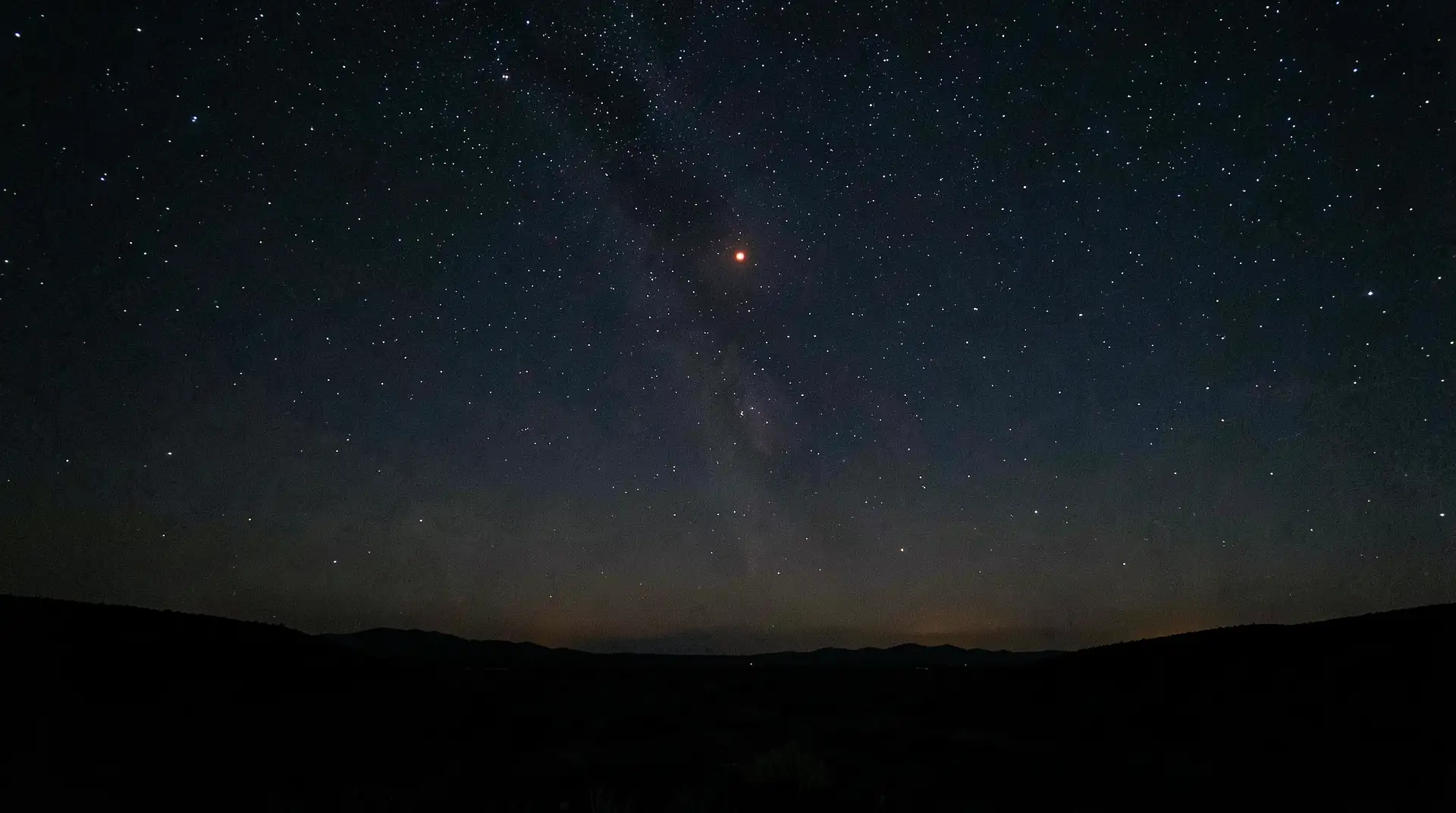
Why does Mars look red in the night sky? Unlike other planets that appear white, yellow or bluish, Mars has a distinctive reddish glow that makes it easy to recognise. Ancient sky-watchers associated its fiery appearance with blood, war and destruction, even naming it after the Roman god of war. But the real reason behind Mars' unusual colour is far more fascinating and has everything to do with the planet's surface.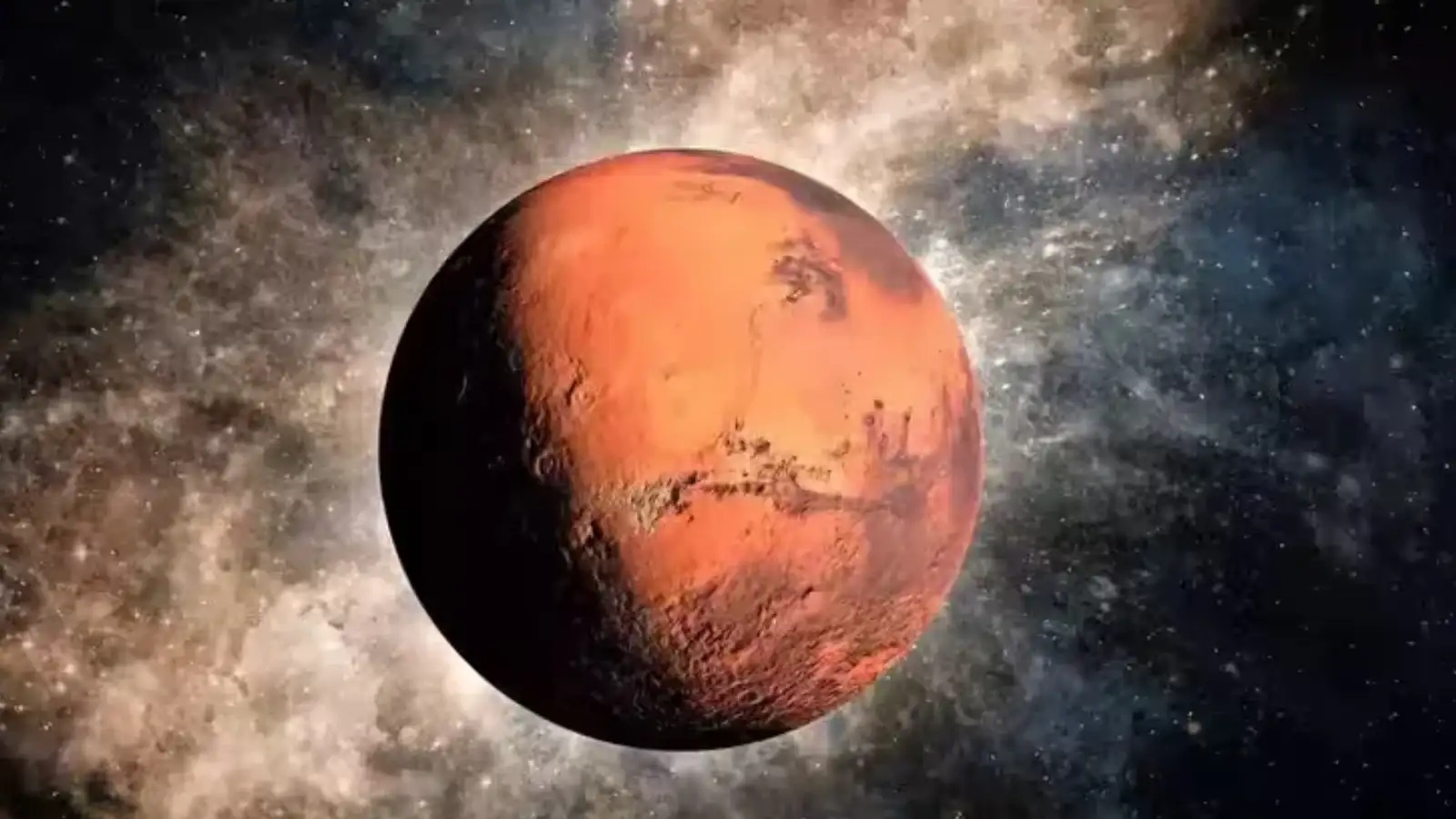
A Planet Covered in Rust
The surface of Mars is blanketed in a fine, powdery dust rich in iron oxide, the same compound that forms when iron is exposed to oxygen and moisture over time. On Earth, that process produces the familiar orange-brown crust on old metal. On Mars, it happened at a planetary scale, over billions of years, across an entire world. The rocks, the soil, and the dust that swirls in Martian storms all carry this iron oxide, giving the surface its characteristic brick-red colour. When sunlight falls on that surface, it reflects back in the red and orange part of the spectrum. That reflected light is what reaches our eyes across hundreds of millions of kilometres.How the Colour Travels to Earth
Light from the Sun hits Mars and scatters off the dust-covered ground. The iron oxide absorbs the blue and violet wavelengths and reflects the longer red and orange wavelengths back into space. Some of that reflected light travels in Earth's direction. By the time it arrives, the signal is faint, Mars is a small, distant object, but the colour signature survives the journey intact. Our eyes, adapted to pick up differences in colour even from dim sources, register it as distinctly reddish. The effect is strong enough that even a casual glance at the night sky, without any optical aid, picks it up.You may also like
- Halloween turns deadly across US as gun violence leaves at least 24 dead, 94 injured
- South Korean lawmaker denied US visa for 1991 conviction. Three days later, he was issued A-2 visa after Marco Rubio's diplomatic intervention
- High-Stakes Referendum on Donald Trump as America Decides Control of Capitol Hill on Nov 3
- Netanyahu Eyes Unity Pact with Rival Eizenkot as Fears Grow Over Arab Parties
- Can Beijing Slow Down India's Strategic Border Tunnels?
Why Mars Does Not Twinkle Like Stars
Stars twinkle because they are so far away that they appear as point sources of light. Earth's atmosphere bends that pinprick of light slightly and randomly, producing the familiar shimmer. Mars, though still enormously distant, is close enough to show a tiny disc, too small to see with the naked eye, but large enough that the atmosphere cannot scramble all of it at once. The light arriving from slightly different parts of that disc averages out, and the shimmer disappears. Mars holds its colour steady. That combination, red and non-twinkling, is one of the easiest ways to identify it without any equipment.Why the Brightness Changes
Mars does not always look the same. Sometimes it is a vivid, almost orange-red point, bright enough to draw attention immediately. Other times it fades to a dim, barely-noticeable speck. The reason is geometry. Both Earth and Mars orbit the Sun, but at different speeds and on different paths. When the two planets are on the same side of the Sun and relatively close to each other, Mars appears large and bright. When they are on opposite sides, with the Sun between them, Mars shrinks to a faint dot. The colour stays the same throughout, it is the distance that changes, not the surface.The Dust Storms That Deepen the Red
Mars experiences dust storms unlike anything on Earth. Some grow large enough to cover the entire planet for weeks, lifting fine iron-oxide particles high into the thin Martian atmosphere. During these events, the planet's disc appears even more uniformly red and slightly dimmer, because the suspended dust both scatters and absorbs incoming sunlight before it reaches the ground. Observers on Earth with telescopes notice the surface features, the dark plains, the polar ice caps, disappear behind a uniform reddish haze. The dust that causes the storms is the same dust that gives Mars its colour in the first place.Iron oxide is one of the most common compounds in the universe, and Mars simply has an abundance of it sitting loose on its surface, ready to catch light and throw it back as red. Every time Mars climbs above the horizon, it is reflecting the chemistry of its own ancient, rusted geology, a signal that has been travelling toward Earth for as long as there have been eyes to receive it.





Loving Newspoint? Download the app now
