
Which Language Has The Smallest Vocabulary In The World?

From everyday conversations to poetry and storytelling, language plays a vital role in expressing emotions, ideas, experiences and complex thoughts in countless ways. But imagine trying to communicate your thoughts and daily experiences using only around 120 words. Sounds crazy, right? There are over 7000 languages across the globe and many of them contain thousands and sometimes even hundreds of thousands of words.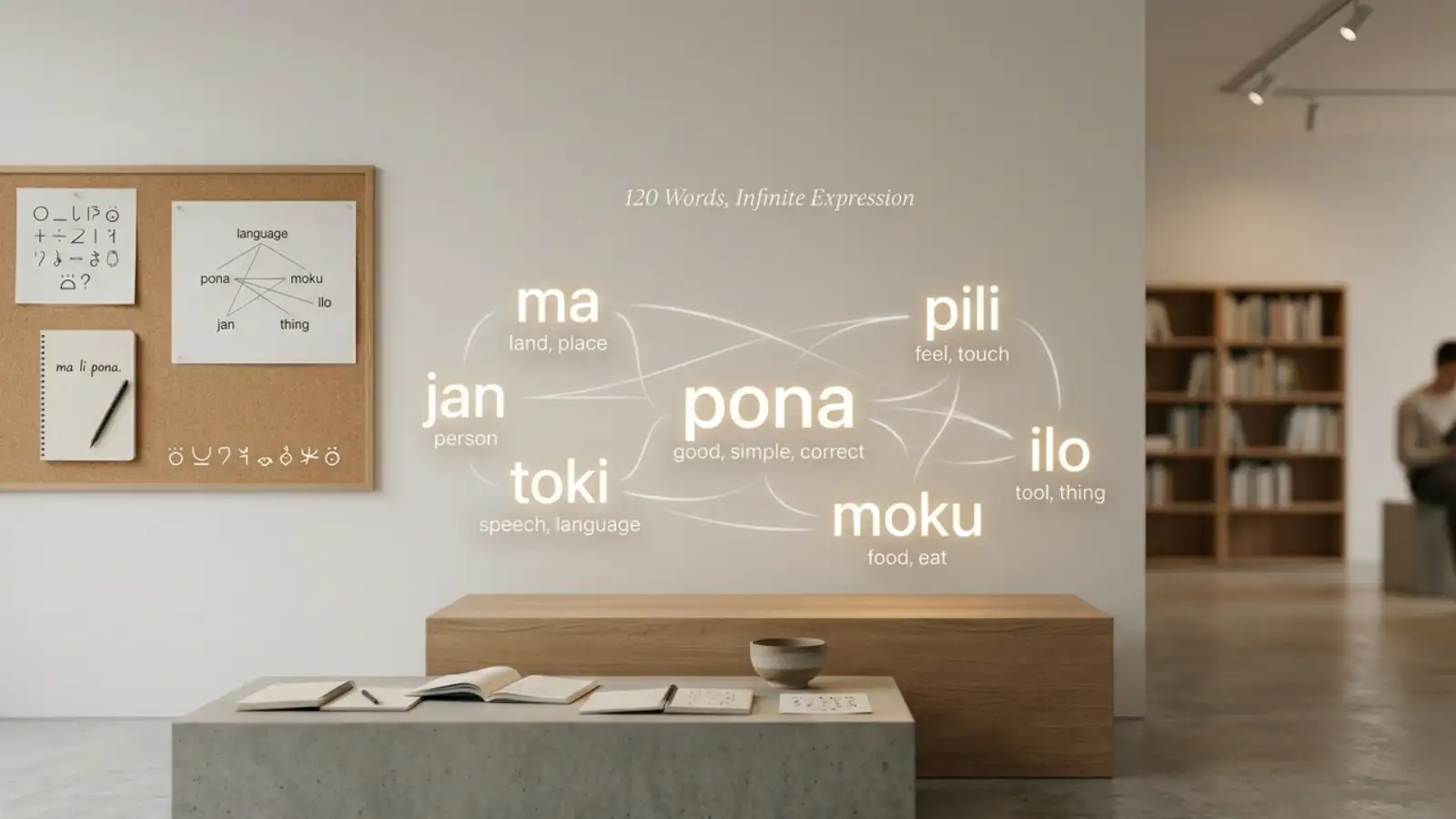
Throughout centuries, these languages have continuously evolved through culture, history, literature, and human interaction. However, not every language depends on an enormous vocabulary to function effectively. One of the most remarkable examples is Toki Pona . It is a unique language created around the idea of expressing thoughts with as few words as possible.
According to Sonja Lang, the purpose behind creating Toki Pona was to simplify thoughts and communication by encouraging a more mindful and minimalist way of thinking. Over the years, it has gained popularity in online communities, among language enthusiasts and within internet culture due to its unique philosophy and unconventional approach to communication. It was designed so that its words remain easy to pronounce for people from different linguistic backgrounds.
This minimal structure encourages speakers to think differently and simplify their thoughts before expressing them. This unusual concept is also one of the main reasons Toki Pona has gained attention in online communities and among language enthusiasts. Some speakers even believe that using Toki Pona can influence the way people think and process ideas. Despite its limitations, fluent speakers are still able to discuss emotions, storytelling, daily life, and even philosophical concepts through creative word combinations and contextual understanding.
Throughout centuries, these languages have continuously evolved through culture, history, literature, and human interaction. However, not every language depends on an enormous vocabulary to function effectively. One of the most remarkable examples is Toki Pona . It is a unique language created around the idea of expressing thoughts with as few words as possible.
What Is Toki Pona?
Toki Pona is a minimalist constructed language created by Canadian linguist and translator Sonja Lang in 2001. The phrase “Toki Pona” roughly translates to “the language of good” or “the language of simplicity”. The language uses only around 120-140 root words, allowing speakers to express through context and creative combinations rather than an extensive vocabulary.You may also like
- AIBE 21 exam on June 7: Last-minute preparation tips every law graduate should know
- How to get tech jobs with an Arts degree: Google DeepMind and Anthropic hiring humanities students for AI jobs
- PAU CET 2026 admit card to be released soon at pau-apms.in: Check date, steps to download hall ticket here
- TG PGECET 2026 Result Out: JNTU Hyderabad releases rank card at pgecet.tgche.ac.in — check how to download and next counselling steps
- Cognizant launches Ace Team Program to nurture new generation of AI talent
According to Sonja Lang, the purpose behind creating Toki Pona was to simplify thoughts and communication by encouraging a more mindful and minimalist way of thinking. Over the years, it has gained popularity in online communities, among language enthusiasts and within internet culture due to its unique philosophy and unconventional approach to communication. It was designed so that its words remain easy to pronounce for people from different linguistic backgrounds.
How Can a Language Work With So Few Words?
At first glance, communicating with only around 120 to 140 words may seem almost impossible. However, Toki Pona works very differently from most traditional languages. Instead of relying on a large vocabulary, it depends heavily on context, simplicity, and creative combinations of words to express meaning. Many words in Toki Pona have broad and flexible meanings rather than representing a single specific idea.This minimal structure encourages speakers to think differently and simplify their thoughts before expressing them. This unusual concept is also one of the main reasons Toki Pona has gained attention in online communities and among language enthusiasts. Some speakers even believe that using Toki Pona can influence the way people think and process ideas. Despite its limitations, fluent speakers are still able to discuss emotions, storytelling, daily life, and even philosophical concepts through creative word combinations and contextual understanding.






More from our partners


Loving Newspoint? Download the app now
