
Who Was Jaswant Singh Khalra, the Legacy Behind Diljit Dosanjh’s Satluj?

The intersection of mainstream entertainment and real-world political history has ignited a profound cultural conversation across India. After enduring a multi-year legal stalemate with the Central Board of Film Certification (CBFC) over more than 120 mandated cuts, director Honey Trehan’s biographical drama Satluj originally titled Punjab ’95 has made its way to streaming audiences. Starring multi-hyphenate megastar Diljit Dosanjh in the lead role, the film has instantly renewed global interest in its real-life subject: Jaswant Singh Khalra . For younger generations, the project serves as an introduction to a bank employee turned human rights defender whose dangerous investigative work permanently altered Punjab's sociopolitical history.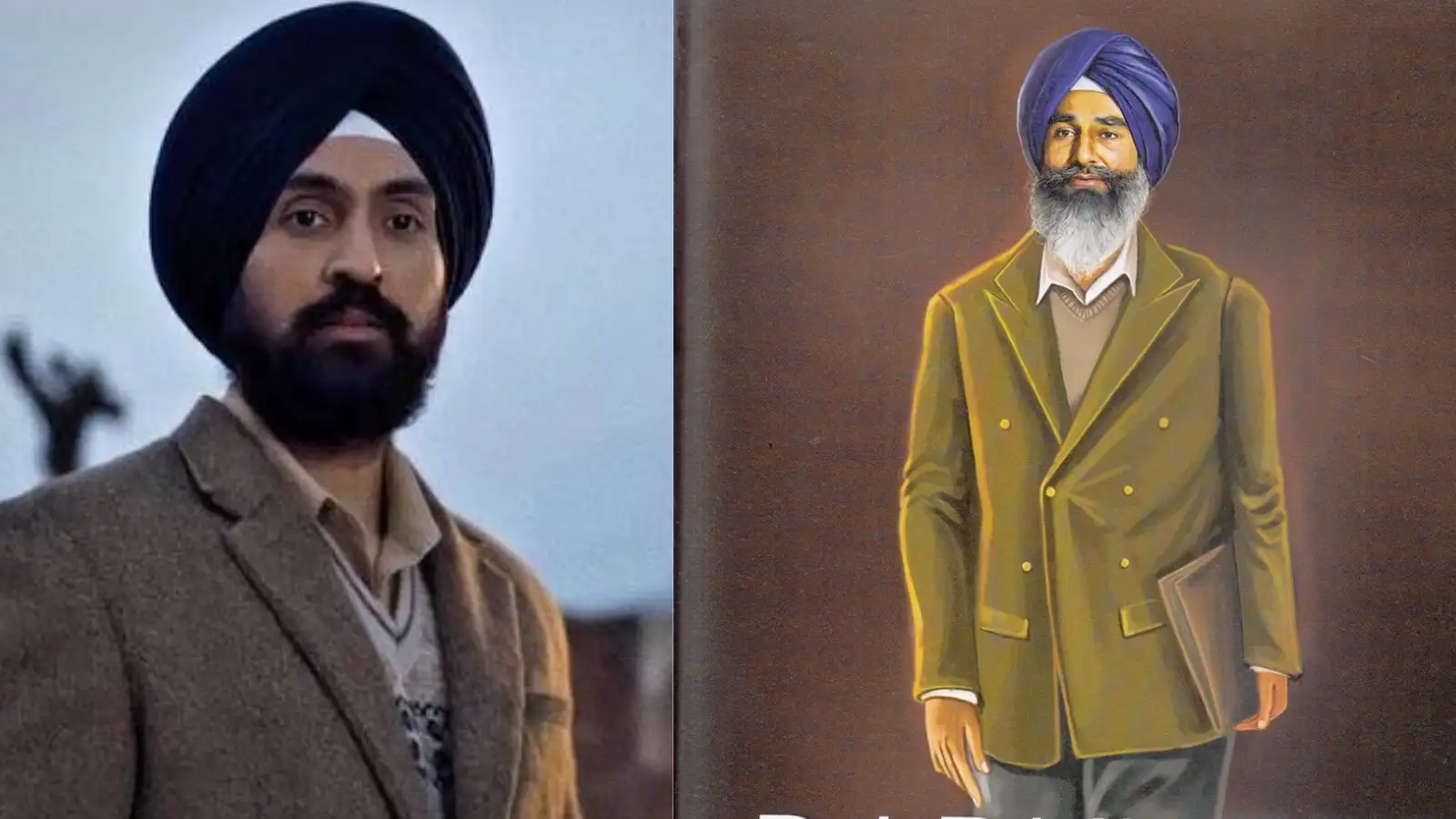
Khalra’s research meticulously pieced together the names, ages, and exact home addresses of thousands of missing citizens, leading him to estimate that more than 25,000 individuals had been extrajudicially executed and secretly cremated by security forces to bypass formal legal trials. His brave findings were subsequently presented to international human rights bodies and the Canadian Parliament, effectively dismantling the wall of institutional silence surrounding the human toll of the conflict.
A Predictable and Tragic Inevitability
Despite receiving explicit death threats from senior security officials advising him to halt his investigations, Khalra refused to compromise. On September 6, 1995, he met the exact same fate as the missing citizens he spent years trying to track. While washing his car outside his Amritsar residence, Khalra was abducted in broad daylight by plainclothes police personnel.
He was never seen alive again. It took a decade of relentless legal battles led by his wife, Paramjit Kaur Khalra, alongside an exhaustive Central Bureau of Investigation (CBI) probe, to finally bring the perpetrators to justice. In late 2005, the Indian judiciary officially convicted six Punjab Police officials for Khalra's kidnapping and subsequent murder, sentencing them to life imprisonment.
An Unlikely Crusader in a Turbulent Era
Born in 1952 in the border village of Khalra within Punjab's Amritsar district, Jaswant Singh Khalra began his adult life in the quiet sectors of the financial world, working as a director at a local cooperative bank. However, the socio-political trajectory of the state during the 1980s and early 1990s - deeply marred by violent militancy, the traumatic fallout of Operation Blue Star, and aggressive state counter-insurgency operations - reshaped his life's purpose. Disturbed by an increasing pattern of enforced disappearances, where thousands of local youth vanished after being detained by authorities on suspicion of militant ties, Khalra quietly began an independent, grass-roots investigation into municipal records.Exposing the "Liquidated" Statistics
What Khalra uncovered during his meticulous tracking of municipal crematorium logs in Amritsar, Patti, and Tarn Taran shocked international observers. He discovered official documentation proving that municipal authorities had quietly and illegally cremated thousands of unidentified bodies under the designation of "unclaimed."You may also like
- 'Kar Le Shaadi' featuring Mahesh Manjrekar and Khushali Kumar showcases playful banter between father, daughter
- Ranveer Singh may decide where Bollywood is headed next
- 'Women are flawed too, beautifully so': Parvathy Thiruvothu calls out on-screen female stereotypes ahead of 'I, Nobody' release
- Quote of the day by Heath Ledger: 'If you make decisions based upon people's reactions or judgments, then you make really boring choices,' when 'The Dark Knight' actor dropped timeless wisdom on breaking free from people's expectations
- Karisma Kapoor Stuns In Wine-Hued Gown With Pearl-Embellished Sleeves & Thigh-High Slit
Khalra’s research meticulously pieced together the names, ages, and exact home addresses of thousands of missing citizens, leading him to estimate that more than 25,000 individuals had been extrajudicially executed and secretly cremated by security forces to bypass formal legal trials. His brave findings were subsequently presented to international human rights bodies and the Canadian Parliament, effectively dismantling the wall of institutional silence surrounding the human toll of the conflict.
The Ultimate Sacrifice for Accountability
A Predictable and Tragic Inevitability
Despite receiving explicit death threats from senior security officials advising him to halt his investigations, Khalra refused to compromise. On September 6, 1995, he met the exact same fate as the missing citizens he spent years trying to track. While washing his car outside his Amritsar residence, Khalra was abducted in broad daylight by plainclothes police personnel.
He was never seen alive again. It took a decade of relentless legal battles led by his wife, Paramjit Kaur Khalra, alongside an exhaustive Central Bureau of Investigation (CBI) probe, to finally bring the perpetrators to justice. In late 2005, the Indian judiciary officially convicted six Punjab Police officials for Khalra's kidnapping and subsequent murder, sentencing them to life imprisonment.
A Haunting Artistic Portrayal
Reflecting on the psychological weight of the project, actor Diljit Dosanjh admitted that embodying Khalra was the single most emotionally draining experience of his career, requiring a prolonged period of isolation to process the heavy historical themes. By focusing strictly on documented public records and the agonizing search for truth, Satluj moves past traditional cinematic tropes. Ultimately, Khalra's real-world legacy proves that true heroism does not rely on fictional action sequences, but on the quiet, unyielding courage required to speak truth to power.





Loving Newspoint? Download the app now
