
The "Apolitical" Myth: Vir Das Challenges Silence Amid Sonam Wangchuk’s Hunger Strike

The ongoing indefinite hunger strike by Ladakh-based climate activist and innovator Sonam Wangchuk has become a major focal point for national conversations on public participation. While the protest has drawn significant attention from the public and select independent voices, a broader wave of silence from high-profile celebrities has sparked separate debates.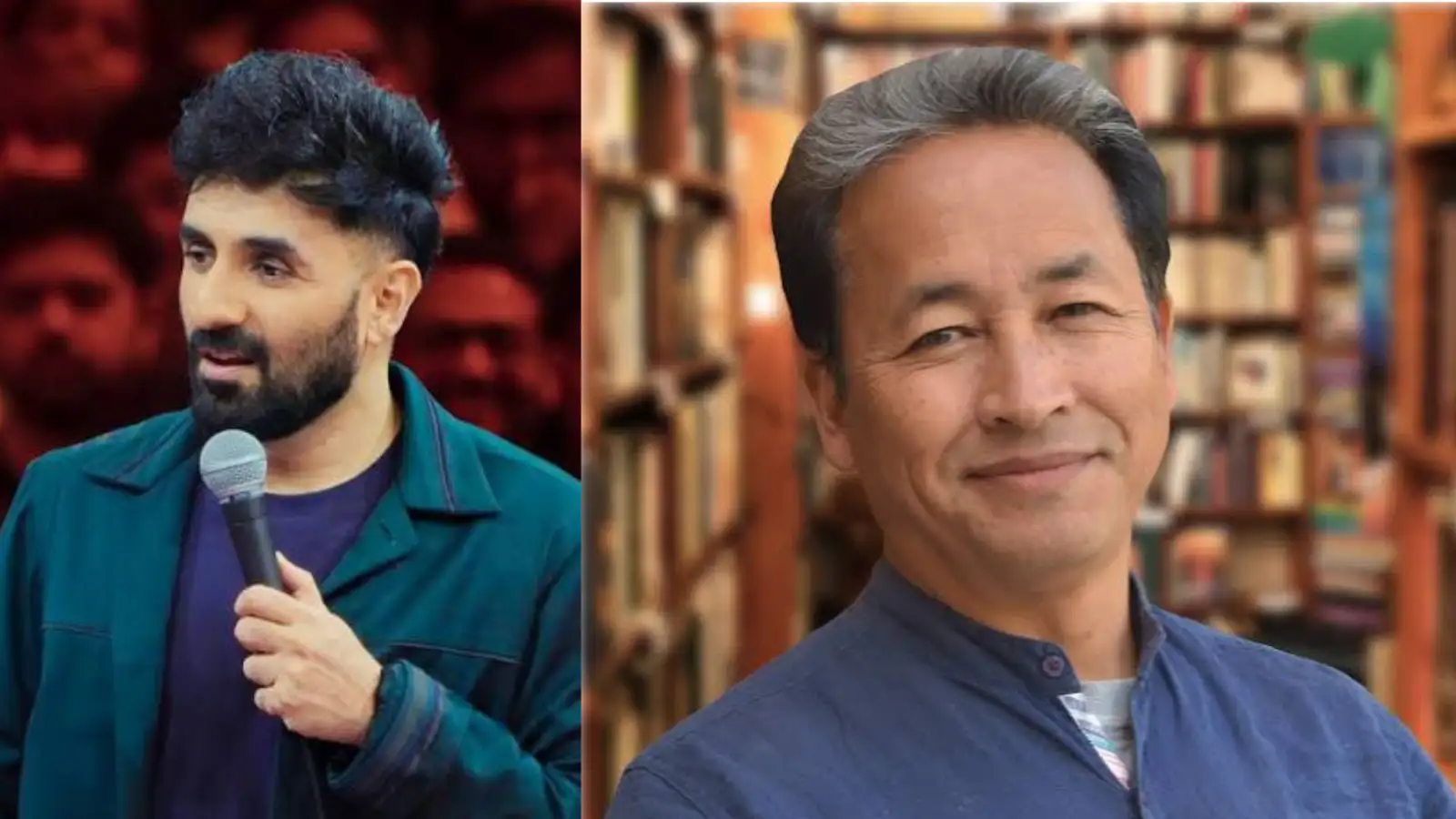
Breaking through this quiet landscape, actor-comedian Vir Das took to social media to share a sharp, direct perspective on what it means to stay out of public issues. In a viral post, Das questioned the popular practice of claiming to be "apolitical," calling out the stance as a choice rather than a genuine moral position.
In his message, Das expressed that choosing not to participate in conversations about major public issues is a form of luxury. When people claim they do not pick a side because they are simply "not into politics," they are often ignoring how public policies affect everyday lives.
The timing of Das's commentary is particularly significant given the current landscape. Activists and commentators have frequently pointed out a visible double standard in modern celebrity culture: public figures are quick to participate in commercial trends but frequently stay completely silent during complex, real-world public movements.
While a few prominent personalities like filmmaker Anurag Kashyap and actors Atul Kulkarni and Shabana Azmi have openly voiced their solidarity with Wangchuk, a massive portion of the mainstream entertainment industry has chosen not to comment. Das's post shifts the focus back onto these figures, arguing that avoiding difficult conversations does not make someone neutral; it simply means they are choosing to remain comfortable.
Vir Das’s sharp take serves as a powerful reminder about the true nature of civic duty. As the discussions around public protests continue to evolve, his message emphasizes that in a connected society, no one lives in a vacuum. True neutrality is often an illusion, and staying silent is ultimately just another way of taking a stand.
Breaking through this quiet landscape, actor-comedian Vir Das took to social media to share a sharp, direct perspective on what it means to stay out of public issues. In a viral post, Das questioned the popular practice of claiming to be "apolitical," calling out the stance as a choice rather than a genuine moral position.
The Privilege of Staying Neutral
You may also like
- Adnan Sami recalls settling the final shots for 'Kabhi Nahi' with Amitabh Bachchan through a coin flip
- Coral snakes: Size, habitat, diet and the facts behind their colourful warning bands
- Kartik Aaryan likely to return for 'Bhool Bhulaiyaa 4'
- Farah Khan shares blast from the past of choreographing Manisha Koirala for '1942: A Love Story'
- Why did Ayodhya's religious leader announce bounty on Aamir Khan?
In his message, Das expressed that choosing not to participate in conversations about major public issues is a form of luxury. When people claim they do not pick a side because they are simply "not into politics," they are often ignoring how public policies affect everyday lives.
- A Direct Action: Das highlighted that silence in the face of widespread public interest is an active decision. By deciding to look away, an individual is still making a definitive statement.
- The Standby Stance: He pointed out that treating neutrality as a badge of honor or an enlightened ideology is a myth. Instead, it simply reveals a lack of urgency or personal impact regarding the problems at hand.
Celebrity Silence and Public Expectations
The timing of Das's commentary is particularly significant given the current landscape. Activists and commentators have frequently pointed out a visible double standard in modern celebrity culture: public figures are quick to participate in commercial trends but frequently stay completely silent during complex, real-world public movements.
While a few prominent personalities like filmmaker Anurag Kashyap and actors Atul Kulkarni and Shabana Azmi have openly voiced their solidarity with Wangchuk, a massive portion of the mainstream entertainment industry has chosen not to comment. Das's post shifts the focus back onto these figures, arguing that avoiding difficult conversations does not make someone neutral; it simply means they are choosing to remain comfortable.
Vir Das’s sharp take serves as a powerful reminder about the true nature of civic duty. As the discussions around public protests continue to evolve, his message emphasizes that in a connected society, no one lives in a vacuum. True neutrality is often an illusion, and staying silent is ultimately just another way of taking a stand.






Loving Newspoint? Download the app now
