
India’s Space Sector Set for a Giant Leap: PM Modi Reveals $45 Billion Goal

India stands on the threshold of a dramatic transformation in its space ambitions. Prime Minister Narendra Modi has asserted that the nation possesses the momentum, capability, and drive to swiftly cement its position as a dominant force in the global space sector. Speaking during an interaction with founders and chief executives from twenty prominent domestic space start-ups on National Space Day, the Prime Minister highlighted the necessity of building an environment so compelling that top international talent and investors naturally gravitate towards the country.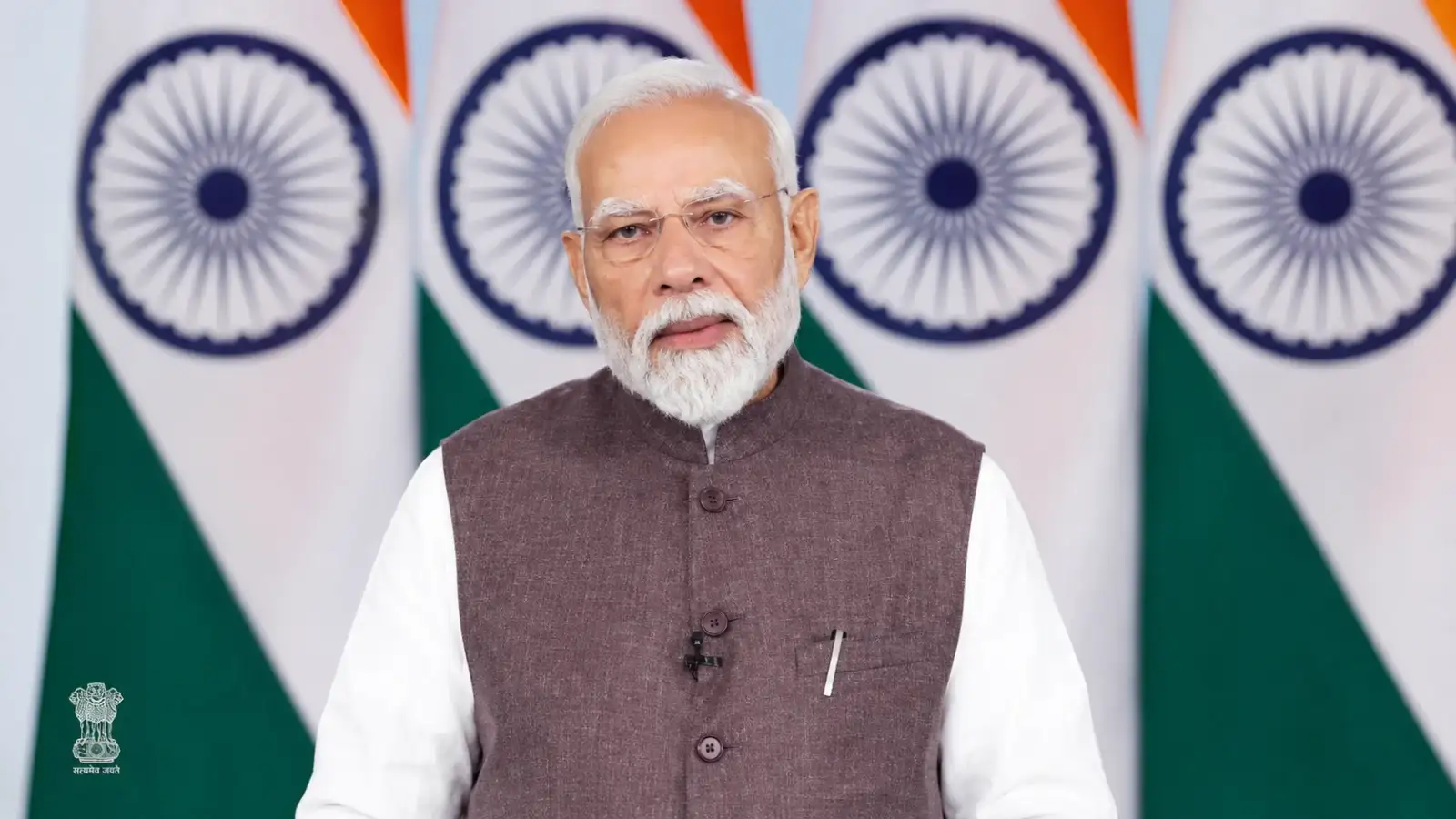
The meeting coincided with National Space Day celebrations, commemorating the historic lunar landing of the Chandrayaan-3 mission near the Moon’s south pole. Reflecting on India's rapid progress, Prime Minister Modi stressed that the country must create a distinctive aura of innovation. He noted that the goal is to make foreign professionals, overseas Indian scientists, and global investors view India as the primary destination to build their careers and launch transformative space ventures.
Private capital funding has mirrored this dramatic trajectory. Private investments in the Indian space market experienced a nearly six-fold rise over recent years, growing from roughly $100 million in 2021–22 to well over $600 million. With the overall global space economy currently valued at $600 billion, India aims to expand its current $9 billion share to an ambitious $40–45 billion over the coming decade.
With ambitious future benchmarks including the launch of the Bharatiya Antariksh Station by 2035 and human crewed lunar landings targeted by 2040 India's hybrid model of state leadership and private enterprise is set to reshape global space exploration.
The meeting coincided with National Space Day celebrations, commemorating the historic lunar landing of the Chandrayaan-3 mission near the Moon’s south pole. Reflecting on India's rapid progress, Prime Minister Modi stressed that the country must create a distinctive aura of innovation. He noted that the goal is to make foreign professionals, overseas Indian scientists, and global investors view India as the primary destination to build their careers and launch transformative space ventures.
Key Drivers of India's Space Expansion
Several structural advantages give India a clear competitive edge on the international stage:You may also like
- Amit Shah to Attend 9th National Security Strategy Conference: Focus on Emerging Challenges
- Bad weather leads to 14 flight diversions from Delhi
- J&K reopens probe into Wandhama massacre of 23 Kashmiri Pandits
- 'Where are the jobs after graduation?' Mallikarjun Kharge attacks BJP govt over unemployment
- JPSC 'irregularities': Supreme Court issues notice to Centre, state after CBI probe plea
- Unrivalled Cost-Efficiency: Indian space enterprises have consistently demonstrated the ability to execute complex, high-precision orbital missions at a fraction of global costs.
- Abundant Technical Talent: A deep pool of highly skilled engineers, researchers, and software professionals provides the core manpower required for rapid innovation.
- High Propensity for Risk: The prime minister noted that Indian entrepreneurs inherently possess a natural willingness to take bold risks, a critical trait for capital-intensive deep-tech sectors.
- Consistent Policy Frameworks: The government emphasized its commitment to long-term policy stability, assuring risk-takers that regulatory support will remain steadfast.
Expanding Private Participation and Economic Growth
Since India unlocked its space sector to private enterprise through structural reforms in 2020 and updated policies in 2023, the domestic landscape has expanded at an extraordinary pace. The number of registered space start-ups in the country has surged from a single entity in 2014 to over 400 active enterprises today.Private capital funding has mirrored this dramatic trajectory. Private investments in the Indian space market experienced a nearly six-fold rise over recent years, growing from roughly $100 million in 2021–22 to well over $600 million. With the overall global space economy currently valued at $600 billion, India aims to expand its current $9 billion share to an ambitious $40–45 billion over the coming decade.
Moving Beyond Satellite Launches
During the interaction, start-up executives outlined plans that go far beyond standard orbital launch services. Private companies are actively building specialized capabilities in areas such as in-space propulsion, orbital satellite servicing, debris management, advanced Earth observation constellations, and space-based agricultural intelligence. Prime Minister Modi urged these young space pioneers to actively collaborate with downstream industries, such as agriculture, environmental conservation, and livestock management, ensuring that space data directly improves everyday life on Earth.With ambitious future benchmarks including the launch of the Bharatiya Antariksh Station by 2035 and human crewed lunar landings targeted by 2040 India's hybrid model of state leadership and private enterprise is set to reshape global space exploration.






Loving Newspoint? Download the app now
