
Why Do India's Lakes Turn Pink? The Science Behind the Color Change

A lake that looks like diluted strawberry juice is not a trick of the camera or a pollution event gone wrong. It is biology doing something it has been doing for millions of years, and India's salt lakes give it the right conditions to become visible at scale.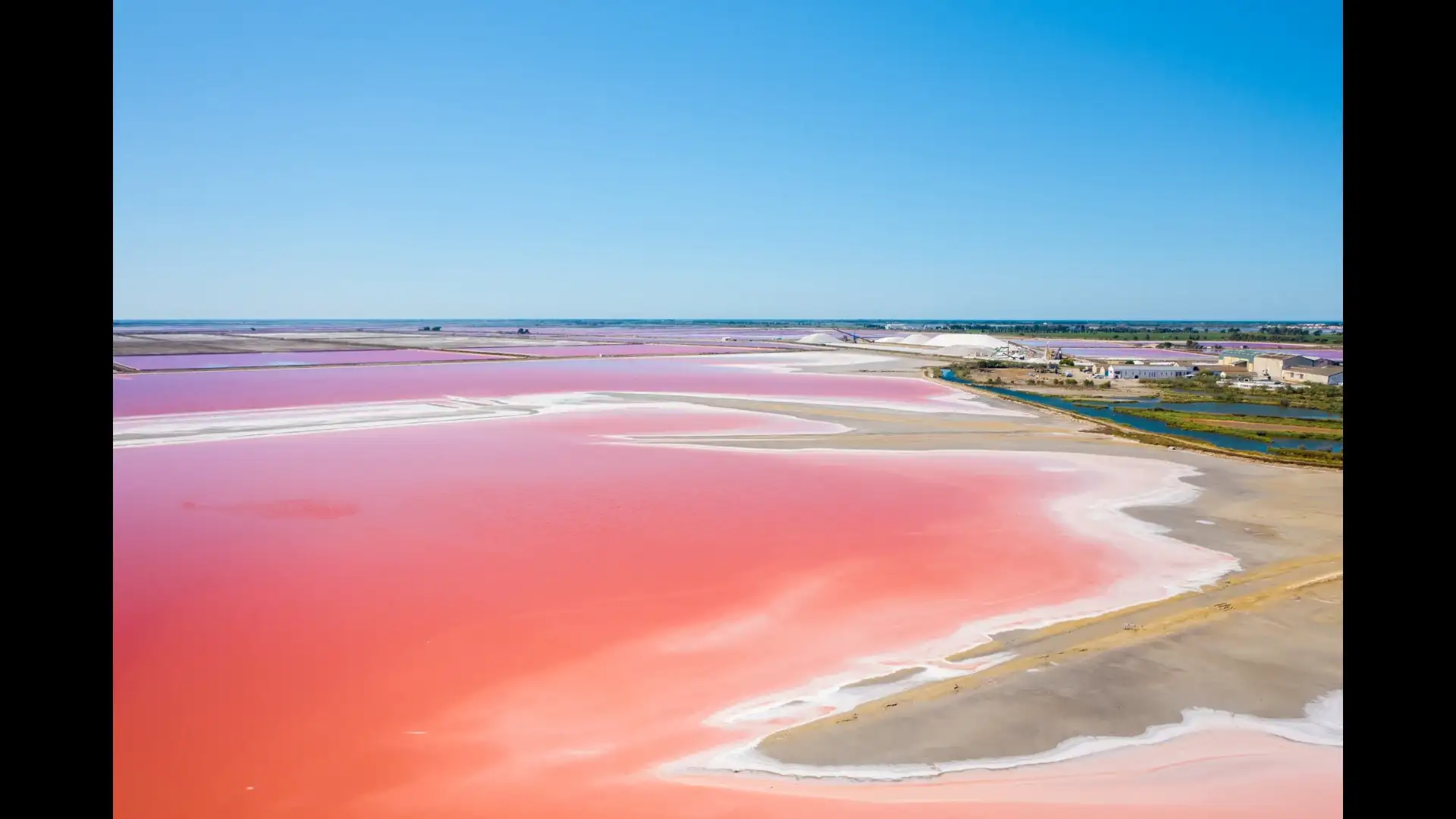
Beta-carotene is the same pigment that makes carrots orange and flamingo feathers pink. In water with enough salt and enough sunlight, the alga makes so much of it that the water itself changes color.
Alongside the algae, salt-tolerant archaea such as Halobacterium species carry a membrane pigment called bacteriorhodopsin , which is purple-red. When these archaea reach high population densities, their combined pigment adds depth to the pink. The exact shade a lake turns, blush, rose, coral, or deep magenta, depends on which organisms dominate and how concentrated the brine has become.
When salinity rises, through evaporation during dry months, or because a lake has no outflow and accumulates dissolved minerals over centuries, the halophytes take over.
India's pink lake events tend to happen at the end of a long dry period, when water levels have fallen and salt has concentrated near the surface. A sudden flush of rain can reverse the color within days by diluting the brine below the threshold the organisms need. This is why the pink is temporary and why it appears and disappears without any intervention.
Researchers from the Agharkar Research Institute attributed the color to a surge in halophile populations, likely triggered by reduced tourist activity and a drop in human disturbance alongside the right seasonal conditions.
The Sambhar Salt Lake in Rajasthan, India's largest inland saline lake, shows similar biology. It hosts flamingos precisely because the birds feed on the same halophilic algae that color the water. The Rann of Kutch in Gujarat, though not a conventional lake, creates seasonal brine flats where the same organisms appear when conditions align.
The color does carry one piece of ecological information worth noting. When a lake turns pink and stays pink for an extended period, it often means the water level has dropped significantly and salinity has spiked. That can point to reduced inflow, higher evaporation from warming temperatures, or both. The pink is not the problem, it is a visible signal of a water body under stress that would otherwise be invisible from a distance.
Salt, heat, and a particular kind of ancient microorganism have been producing this effect long before any human was around to photograph it. What changes is only how often we notice, and how far the photographs travel before anyone explains what is actually in the water.
The Organism Behind the Color
The pink comes almost entirely from a group of salt-loving microorganisms called halophytes , specifically, certain species of archaea and algae that thrive where salt concentration is high enough to kill most other life. The most studied of these is Dunaliella salina , a single-celled green alga that produces massive quantities of beta-carotene when it is stressed.Beta-carotene is the same pigment that makes carrots orange and flamingo feathers pink. In water with enough salt and enough sunlight, the alga makes so much of it that the water itself changes color.
Alongside the algae, salt-tolerant archaea such as Halobacterium species carry a membrane pigment called bacteriorhodopsin , which is purple-red. When these archaea reach high population densities, their combined pigment adds depth to the pink. The exact shade a lake turns, blush, rose, coral, or deep magenta, depends on which organisms dominate and how concentrated the brine has become.
Why Salt Is the Key
Ordinary freshwater lakes do not turn pink because the organisms responsible cannot survive in low-salinity water. They need salt concentrations several times higher than seawater to outcompete everything else. When salinity drops, other microbes return and the bloom collapses.You may also like
- Heavy Rains Disrupt Life in Chennai as Cyclone Murasu Approaches Andhra Coast
- Indian Navy to Boost Maritime Strength with Eight Advanced Warships
- Tragic Collision in Kushinagar Claims Six Lives, Including Five Family Members
- Haryana Police Investigates Attempted Assault on SDM by Dumper Driver
- Mahadev betting case: Why Chandrakar was extradited from Oman
When salinity rises, through evaporation during dry months, or because a lake has no outflow and accumulates dissolved minerals over centuries, the halophytes take over.
India's pink lake events tend to happen at the end of a long dry period, when water levels have fallen and salt has concentrated near the surface. A sudden flush of rain can reverse the color within days by diluting the brine below the threshold the organisms need. This is why the pink is temporary and why it appears and disappears without any intervention.
Where It Happens in India
The lake most associated with this phenomenon in India is Lonar in Maharashtra, a crater lake formed by a meteorite impact that is both saline and alkaline, a combination rare enough that it has attracted scientific study for decades. Lonar turned a vivid pink in 2020, drawing wide attention.Researchers from the Agharkar Research Institute attributed the color to a surge in halophile populations, likely triggered by reduced tourist activity and a drop in human disturbance alongside the right seasonal conditions.
The Sambhar Salt Lake in Rajasthan, India's largest inland saline lake, shows similar biology. It hosts flamingos precisely because the birds feed on the same halophilic algae that color the water. The Rann of Kutch in Gujarat, though not a conventional lake, creates seasonal brine flats where the same organisms appear when conditions align.
What the Color Actually Signals
A pink lake is not a sign of pollution. It is closer to the opposite, an indicator that salinity is high enough to sustain a specialized ecosystem that most organisms cannot enter. The water is not toxic to touch, though it is far too salty to drink. The organisms themselves are harmless and, in some cases, commercially interesting: Dunaliella salina is cultivated in controlled conditions as a source of natural beta-carotene used in food and cosmetics.The color does carry one piece of ecological information worth noting. When a lake turns pink and stays pink for an extended period, it often means the water level has dropped significantly and salinity has spiked. That can point to reduced inflow, higher evaporation from warming temperatures, or both. The pink is not the problem, it is a visible signal of a water body under stress that would otherwise be invisible from a distance.
Salt, heat, and a particular kind of ancient microorganism have been producing this effect long before any human was around to photograph it. What changes is only how often we notice, and how far the photographs travel before anyone explains what is actually in the water.






Loving Newspoint? Download the app now
