
7 Incredible Meteor Impact Lakes Around the World That Were Created by Space Collisions

Meteor impact lakes are among the rarest natural formations on Earth, created when massive space rocks collided with the planet's surface millions of years ago. While most lakes originate from glaciers, rivers or volcanic activity, these remarkable water bodies were born from powerful asteroid and meteor strikes. Today, they not only showcase nature's dramatic past but also help scientists study Earth's geological evolution, ancient climates and even conditions similar to those on other planets. Here are seven incredible meteor impact lakes from around the world that continue to fascinate researchers and travellers alike.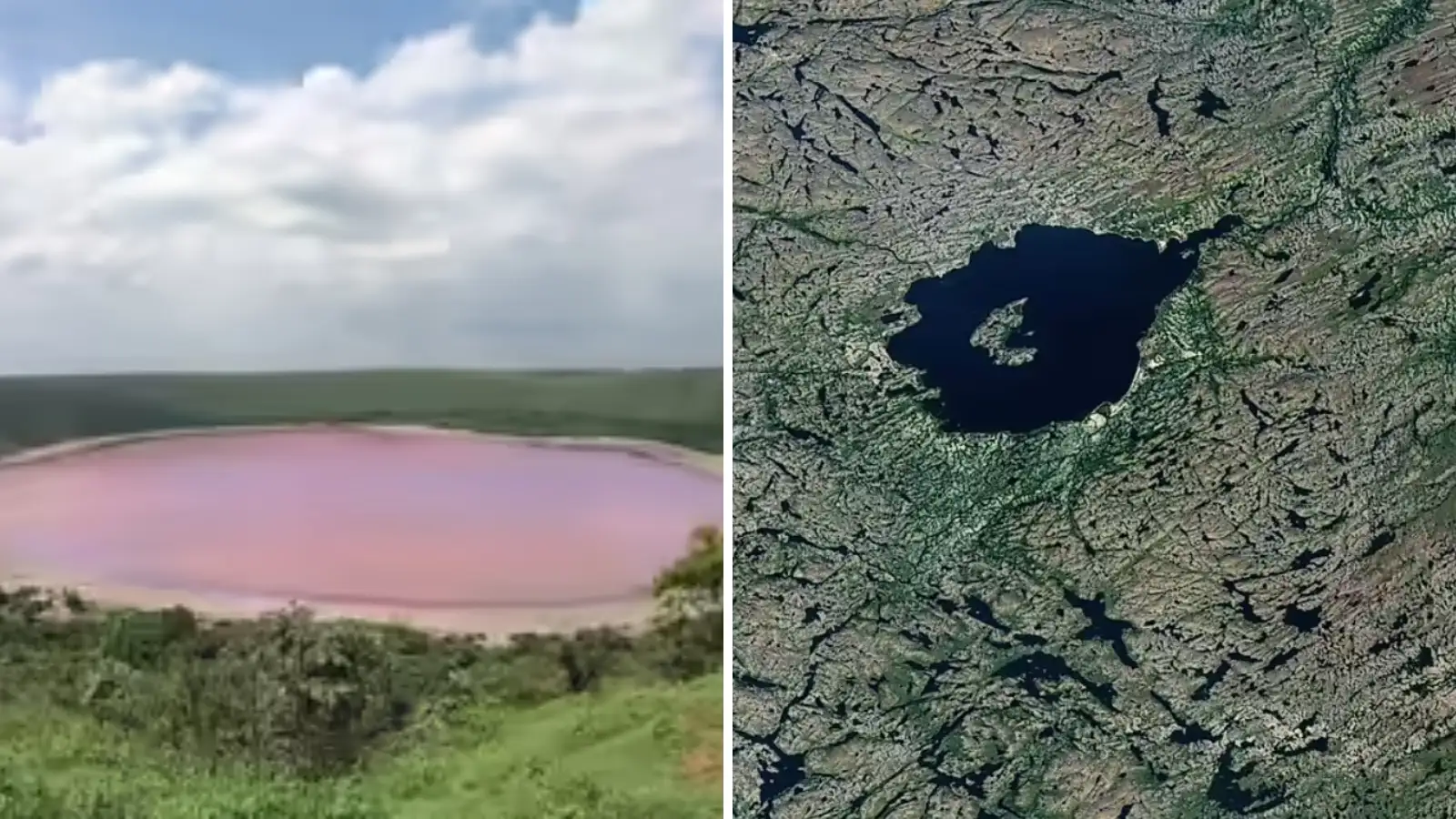
1. Lake Manicouagan , Canada – The Famous 'Eye of Quebec'
One of the most spectacular impact structures visible from space, Lake Manicouagan in Quebec is instantly recognisable for its giant ring-shaped appearance. Formed around 214 million years ago, the crater was created when an asteroid nearly five kilometres wide slammed into Earth.
The lake surrounds René-Levasseur Island, a central uplift created when the Earth's crust rebounded immediately after the impact. Spanning almost 100 kilometres in diameter, the formation remains one of the world's largest preserved impact craters and offers valuable insights into Earth's late Triassic history.
2. Lake Bosomtwe , Ghana – A Crater Lake Rich in Science and Culture
Hidden within Ghana's Ashanti Region, Lake Bosomtwe occupies a beautifully circular impact crater formed roughly one million years ago. Although smaller than many other crater lakes , its scientific value is immense.
The lake supports nearby communities through fishing and also holds deep cultural significance for local people. Beneath its calm waters lies another treasure - layers of ancient sediments that have helped researchers reconstruct thousands of years of climate history across West Africa.
3. Karakul Lake , Tajikistan – One of the World's Highest Impact Lakes
Located in the remote Pamir Mountains, Karakul Lake sits nearly 4,000 metres above sea level, making it one of the highest major meteor impact lakes on Earth.
The enormous crater is believed to have formed around 20 million years ago, though its true origin became clear only after satellite observations revealed its circular structure. Surrounded by rugged mountains and sparse vegetation, Karakul presents an unforgettable landscape shaped by both cosmic and natural forces.
4. Lonar Lake , India – A Rare Crater in Volcanic Rock
Nestled in Maharashtra's Deccan Plateau, Lonar Lake is one of the world's most unusual impact lakes because it formed in basaltic volcanic rock rather than ordinary sedimentary terrain.
Scientists now agree that a meteor created the crater somewhere between 50,000 and 500,000 years ago. The lake's highly alkaline and saline waters support unique microorganisms, making it an important site for biological and geological research. Its surroundings are equally fascinating, with centuries-old temples adding cultural charm to the dramatic crater landscape.
5. Mistastin Lake , Canada – A Natural Laboratory for Space Exploration
Located in Newfoundland and Labrador, Mistastin Lake was created by a meteor impact approximately 36 million years ago. Although glaciers have altered parts of the original crater, its circular outline and central uplift remain visible.
The site has attracted attention beyond geology. Rocks produced during the impact closely resemble lunar materials, prompting NASA to use the region as a training ground for astronauts preparing for future planetary missions.
6. Lake Elgygytgyn, Russia – An Arctic Climate Archive
Deep in northeastern Siberia lies Lake Elgygytgyn, a remarkably well-preserved crater lake formed around 3.6 million years ago.
Unlike many northern landscapes, the crater escaped major glacial erosion, allowing its structure to remain largely intact. Even more valuable are the thick layers of sediments beneath the lake, which provide one of the most complete records of Arctic climate change spanning millions of years.
7. Clearwater Lakes, Canada – Two Craters with Different Histories
Northern Quebec's Clearwater Lakes stand out because they consist of two neighbouring circular impact craters.
Scientists once believed both craters formed simultaneously from a double meteor strike. However, modern dating techniques revealed that the eastern and western craters were actually created more than 100 million years apart. Each lake contains a submerged central uplift, making the pair an exceptional site for studying how impact craters evolve over geological timescales.
How Are Meteor Impact Lakes Formed?
Meteor impact lakes begin with an incredibly powerful collision. When a large meteor or asteroid survives its journey through Earth's atmosphere and strikes the surface, the tremendous energy released instantly blasts out a massive crater. Depending on the size of the object and the surrounding geology, the impact may also create raised rims, central peaks and ring-like formations.
Over thousands or even millions of years, rainwater, groundwater and rivers gradually fill the depression, transforming it into a lake. Many impact craters disappear due to erosion, glacial movement or tectonic activity, making permanent meteor impact lakes exceptionally rare.
Why These Rare Lakes Matter
Meteor impact lakes are far more than scenic destinations. They preserve evidence of ancient cosmic events, record Earth's changing climate and help scientists better understand planetary evolution. Some even serve as natural laboratories for studying environments similar to the Moon and Mars.
From Canada's giant ring-shaped Lake Manicouagan to India's extraordinary Lonar Lake, these rare geological wonders remind us that Earth's history has been shaped not only by forces beneath the ground but also by dramatic events from outer space.
1. Lake Manicouagan , Canada – The Famous 'Eye of Quebec'
One of the most spectacular impact structures visible from space, Lake Manicouagan in Quebec is instantly recognisable for its giant ring-shaped appearance. Formed around 214 million years ago, the crater was created when an asteroid nearly five kilometres wide slammed into Earth.
The lake surrounds René-Levasseur Island, a central uplift created when the Earth's crust rebounded immediately after the impact. Spanning almost 100 kilometres in diameter, the formation remains one of the world's largest preserved impact craters and offers valuable insights into Earth's late Triassic history.
2. Lake Bosomtwe , Ghana – A Crater Lake Rich in Science and Culture
Hidden within Ghana's Ashanti Region, Lake Bosomtwe occupies a beautifully circular impact crater formed roughly one million years ago. Although smaller than many other crater lakes , its scientific value is immense.
The lake supports nearby communities through fishing and also holds deep cultural significance for local people. Beneath its calm waters lies another treasure - layers of ancient sediments that have helped researchers reconstruct thousands of years of climate history across West Africa.
3. Karakul Lake , Tajikistan – One of the World's Highest Impact Lakes
Located in the remote Pamir Mountains, Karakul Lake sits nearly 4,000 metres above sea level, making it one of the highest major meteor impact lakes on Earth.
The enormous crater is believed to have formed around 20 million years ago, though its true origin became clear only after satellite observations revealed its circular structure. Surrounded by rugged mountains and sparse vegetation, Karakul presents an unforgettable landscape shaped by both cosmic and natural forces.
4. Lonar Lake , India – A Rare Crater in Volcanic Rock
Nestled in Maharashtra's Deccan Plateau, Lonar Lake is one of the world's most unusual impact lakes because it formed in basaltic volcanic rock rather than ordinary sedimentary terrain.
Scientists now agree that a meteor created the crater somewhere between 50,000 and 500,000 years ago. The lake's highly alkaline and saline waters support unique microorganisms, making it an important site for biological and geological research. Its surroundings are equally fascinating, with centuries-old temples adding cultural charm to the dramatic crater landscape.
You may also like
- 8-year-old girl Takshvi Vaghani sets two world records for limbo skating: Little prodigy who was introduced to sports at 2 years and began coach training by 4
- Boden's 'perfect' linen jumpsuit has £89 off in unmissable 60% off sale
- Acute Pancreatitis: When Stomach Pain Becomes a Medical Emergency
- Disha Patani Surprises Fans With Emotional New Role in Awarapan 2 First Look
- Baby's First Foods: When to Start and What to Give
5. Mistastin Lake , Canada – A Natural Laboratory for Space Exploration
Located in Newfoundland and Labrador, Mistastin Lake was created by a meteor impact approximately 36 million years ago. Although glaciers have altered parts of the original crater, its circular outline and central uplift remain visible.
The site has attracted attention beyond geology. Rocks produced during the impact closely resemble lunar materials, prompting NASA to use the region as a training ground for astronauts preparing for future planetary missions.
6. Lake Elgygytgyn, Russia – An Arctic Climate Archive
Deep in northeastern Siberia lies Lake Elgygytgyn, a remarkably well-preserved crater lake formed around 3.6 million years ago.
Unlike many northern landscapes, the crater escaped major glacial erosion, allowing its structure to remain largely intact. Even more valuable are the thick layers of sediments beneath the lake, which provide one of the most complete records of Arctic climate change spanning millions of years.
7. Clearwater Lakes, Canada – Two Craters with Different Histories
Northern Quebec's Clearwater Lakes stand out because they consist of two neighbouring circular impact craters.
Scientists once believed both craters formed simultaneously from a double meteor strike. However, modern dating techniques revealed that the eastern and western craters were actually created more than 100 million years apart. Each lake contains a submerged central uplift, making the pair an exceptional site for studying how impact craters evolve over geological timescales.
How Are Meteor Impact Lakes Formed?
Meteor impact lakes begin with an incredibly powerful collision. When a large meteor or asteroid survives its journey through Earth's atmosphere and strikes the surface, the tremendous energy released instantly blasts out a massive crater. Depending on the size of the object and the surrounding geology, the impact may also create raised rims, central peaks and ring-like formations.
Over thousands or even millions of years, rainwater, groundwater and rivers gradually fill the depression, transforming it into a lake. Many impact craters disappear due to erosion, glacial movement or tectonic activity, making permanent meteor impact lakes exceptionally rare.
Why These Rare Lakes Matter
Meteor impact lakes are far more than scenic destinations. They preserve evidence of ancient cosmic events, record Earth's changing climate and help scientists better understand planetary evolution. Some even serve as natural laboratories for studying environments similar to the Moon and Mars.
From Canada's giant ring-shaped Lake Manicouagan to India's extraordinary Lonar Lake, these rare geological wonders remind us that Earth's history has been shaped not only by forces beneath the ground but also by dramatic events from outer space.






More from our partners


Loving Newspoint? Download the app now
