
How to Protect Your Skin While Travelling in Different Climates

Travelling to new destinations is one of life’s greatest joys. Whether you are flying off to a tropical beach, heading to a bustling city, or exploring a icy mountain range, escaping your routine is incredibly exciting. However, while your mind is ready for adventure, your skin often struggles to keep up.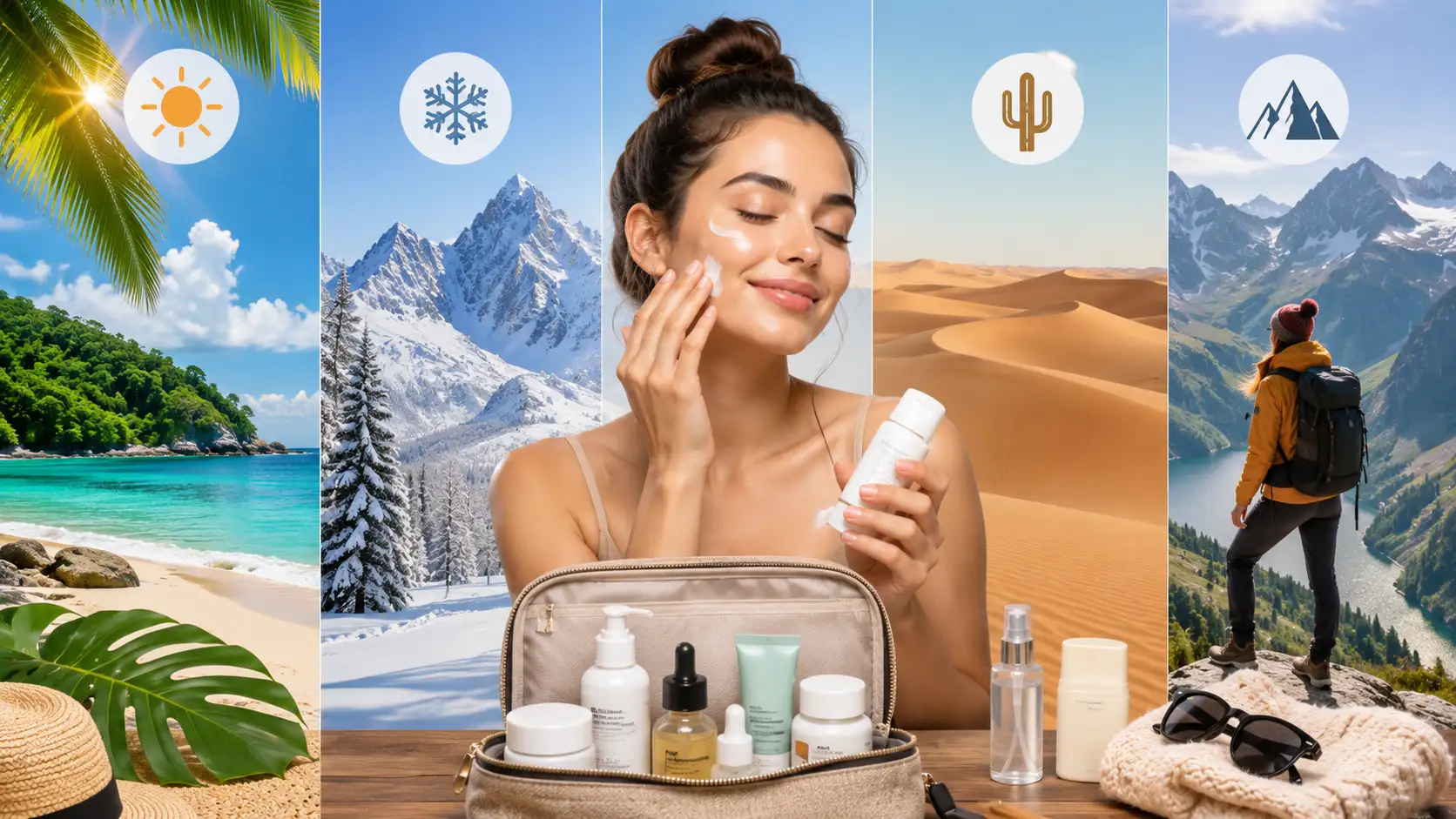
Rapid shifts in temperature, humidity, and atmospheric pressure can disrupt your skin’s natural barrier. A routine that works perfectly in a mild, damp environment can suddenly cause breakouts in a humid region or severe dryness in a cold, windy atmosphere. To keep your complexion glowing throughout your journey, here is how to protect your skin while travelling in different climates .
By adapting your daily routine to match your environment, you can easily shield your skin against climate changes and enjoy a radiant, healthy complexion wherever your travels take you.
Rapid shifts in temperature, humidity, and atmospheric pressure can disrupt your skin’s natural barrier. A routine that works perfectly in a mild, damp environment can suddenly cause breakouts in a humid region or severe dryness in a cold, windy atmosphere. To keep your complexion glowing throughout your journey, here is how to protect your skin while travelling in different climates .
1. Tropical and Humid Climates: Focus on Light Layers
When visiting hot, humid destinations, your skin faces a combination of excessive sweat, oil production, and high UV radiation. The moisture in the air keeps your skin hydrated, but heavy creams can easily clog pores and trigger unwanted breakouts.You may also like
- Batwara 1947 Dialogues: Sunny Deol's Powerful Dialogues Wins Hearts
- Lack of Sleep Can Affect Children's Health: Here's How to Build a Better Sleep Routine
- Gen-Z Slang Goes Mainstream: What Do 'Clocked It', 'Delulu', 'FOMO', and 'MIA' Mean?
- Sawan 2026: Easy Homemade Sweets to Offer Lord Shiva
- Psychology says checking your phone first thing every morning may reveal more about your mind than you realise
- Swap to lightweight gels: Replace heavy moisturisers with oil-free, gel-based formulations containing hyaluronic acid. These provide essential moisture without feeling greasy.
- Prioritise water-resistant SPF: Sun protection is non-negotiable. Choose a broad-spectrum sunscreen with SPF 30 or higher that resists water and sweat, and reapply every two hours.
- Gentle cleansing: Wash your face twice daily with a foaming cleanser to clear away built-up sweat, sand, and pollution.
2. Cold and Dry Climates: Build a Moisture Barrier
Cold winds and freezing temperatures strip moisture from the air, causing your skin’s surface to dry out quickly. Furthermore, moving between freezing outdoor conditions and blasting indoor heating causes rapid moisture loss, leading to redness, flaking, and irritation.- Switch to richer creams: Opt for nourishing moisturisers packed with ceramides, shea butter, or plant oils. These ingredients create a protective shield over the skin, locking in hydration.
- Protect sensitive lips and hands: Cold weather frequently causes chapped lips and cracked hands. Keep a rich lip balm and a compact hand cream in your day bag at all times.
- Avoid hot showers: While a scalding bath feels wonderful after a day in the snow, hot water strips away natural oils, worsening skin dryness. Stick to lukewarm water instead.
3. Arid and Desert Environments: Hydrate Constantly
Arid regions pose a unique challenge because the dry air continuously pulls moisture out of your skin. Unlike humid zones, sweat evaporates almost instantly, making it difficult to realize how dry your skin is becoming.- Layer hydrating serums: Apply a hydrating serum containing hyaluronic acid or glycerin to damp skin before applying your main moisturiser.
- Mist throughout the day: Carry a soothing facial mist containing ingredients like aloe vera or rosewater to refresh your skin during long excursions.
- Hydrate from within: Skincare products can only do so much. Drink plenty of fresh water throughout the day to support your skin’s elasticity.
4. High-Altitude Locations: Double Your Sun Protection
Whether you are skiing in the mountains or hiking high-altitude trails, remember that UV rays become significantly stronger at higher elevations. Snow also reflects up to 80 percent of sunlight, doubling your exposure.- Never skip sunscreen: Apply broad-spectrum SPF to all exposed areas, including under your nose and chin, where sunlight reflects off snow or rocks.
- Wear protective eyewear: UV-blocking sunglasses protect the delicate skin around your eyes from premature aging and sun damage.
General Travel Skincare Tips for Flying
Airplanes are infamous for having exceptionally dry cabin air, with humidity levels often dropping below 20 percent. Before boarding long-distance flights, remove heavy makeup and apply a generous layer of hydrating moisturiser or an overnight sleeping mask. Avoid drinking excessive alcohol or caffeine during your flight, as these contribute to systemic dehydration.By adapting your daily routine to match your environment, you can easily shield your skin against climate changes and enjoy a radiant, healthy complexion wherever your travels take you.






Loving Newspoint? Download the app now
