
Beyond Absolute Honesty: 5 Crucial Safety Untruths Every Parent Should Teach Their Child

From early childhood, the phrase "honesty is the best policy" is deeply ingrained in young minds. Parents continuously reinforce the value of truthfulness, treating it as a cornerstone of moral development and character building. However, while honesty serves a vital purpose in healthy social interactions, absolute transparency can become a major vulnerability when a child is confronted by an individual with poor intentions. In high stakes situations involving safety, knowing how to deploy a strategic untruth can act as a crucial shield. Teaching children that protecting their physical well-being is infinitely more important than maintaining polite manners empowers them to handle real world dangers with confidence.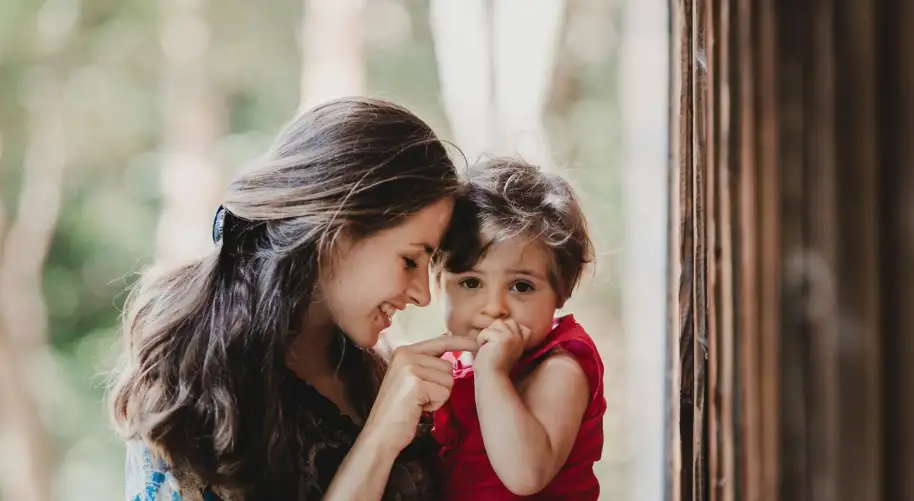
Here are five safety untruths every parent should teach their child:
If a stranger approaches the front door or calls the household phone asking if the mother or father is available, an unsupervised child must never reveal that they are home alone. Even if the house is entirely empty, the child should firmly respond that their parents are inside and simply unavailable at that exact moment. Sharing details about a lack of adult supervision removes a major barrier for bad actors and immediately heightens domestic risk.
Individuals looking to exploit children often try to create a false sense of intimacy or exclusivity by uttering phrases like, "This is our little secret," or "Make sure you don't tell your mom and dad." Arguing or creating a visible scene in that exact moment might trigger a volatile reaction from the adult. Instead, the child should simply agree by saying, "Yes, I won't tell them," to safely defuse the immediate tension. Once they are back in a secure environment, they must immediately report the entire encounter to their parents.
A classic tactic used to build false rapport involves asking a child seemingly innocent, detailed questions about their personal life, such as their full name, home address, school location, or parents' phone numbers. Children must understand that personal data functions as a security key that should never be handed out to unfamiliar faces. When pressed for these details, the simplest and safest blanket response for a child to deploy is a direct, uncomplicated "I don't remember."
Instilling these specific communication strategies is not about inducing constant panic or teaching children to fear every single person they meet. Rather, it is about providing clear, practical boundaries and giving them the functional tools to trust their internal alarm systems. By explicitly giving children permission to use strategic untruths in uncomfortable situations, parents help them understand that personal safety always overrides the societal pressure to be accommodating, quiet, or polite.
Here are five safety untruths every parent should teach their child:
1. "Yes, my parents are at home."
If a stranger approaches the front door or calls the household phone asking if the mother or father is available, an unsupervised child must never reveal that they are home alone. Even if the house is entirely empty, the child should firmly respond that their parents are inside and simply unavailable at that exact moment. Sharing details about a lack of adult supervision removes a major barrier for bad actors and immediately heightens domestic risk. 2. "My parents are coming to pick me up."
When a child is waiting outside a school, park, or public venue and a stranger offers a lift or asks them to walk somewhere together, the child must create immediate emotional and physical distance. Along with moving toward a crowded area, they should state loudly and clearly, "No thank you, my parents are already on their way to pick me up." This response signals to the stranger that an adult is actively expected at any second, destroying the illusion of an isolated target.You may also like
- Shigella cases reported across Kerala; 55 hospitalised, situation under control, says minister
- Quote of the day for children by Amelia Earhart: "The most difficult thing is the decision to act, the rest is..."
- Radhika Ambani's Return to India: A Journey of Purpose and Growth
- Half of India doesn't know: Why is the LPG pipe always orange
- How is land on the Moon purchased, and who owns it? Sushant Singh Rajput was also a buyer—here are the rules.
3. "No, I already have it."
It is common practice for predatory individuals to use incentives like candies, chocolates, or trendy toys to lure a child closer. Parents must firmly teach their children that it is completely acceptable to drop standard social politeness in these moments. Instead of accepting the item out of courtesy, the child should decline by stating they already possess the item, effectively closing down the interaction without opening a window for further negotiation.
4. "Yes, I won't tell my parents."
Individuals looking to exploit children often try to create a false sense of intimacy or exclusivity by uttering phrases like, "This is our little secret," or "Make sure you don't tell your mom and dad." Arguing or creating a visible scene in that exact moment might trigger a volatile reaction from the adult. Instead, the child should simply agree by saying, "Yes, I won't tell them," to safely defuse the immediate tension. Once they are back in a secure environment, they must immediately report the entire encounter to their parents.
5. "I don't remember."
A classic tactic used to build false rapport involves asking a child seemingly innocent, detailed questions about their personal life, such as their full name, home address, school location, or parents' phone numbers. Children must understand that personal data functions as a security key that should never be handed out to unfamiliar faces. When pressed for these details, the simplest and safest blanket response for a child to deploy is a direct, uncomplicated "I don't remember." Prioritizing Instincts Over Social Expectations
Instilling these specific communication strategies is not about inducing constant panic or teaching children to fear every single person they meet. Rather, it is about providing clear, practical boundaries and giving them the functional tools to trust their internal alarm systems. By explicitly giving children permission to use strategic untruths in uncomfortable situations, parents help them understand that personal safety always overrides the societal pressure to be accommodating, quiet, or polite.






More from our partners


Loving Newspoint? Download the app now
