
Glass or Plastic Containers: Which Is Better for Storing Food in Your Kitchen?

Choosing the right food storage container can make a big difference in keeping your meals fresh, safe, and organised. While glass jars have been a kitchen favourite for generations, plastic containers are loved for their convenience. But when it comes to safety, durability, and everyday use, which one is the better option?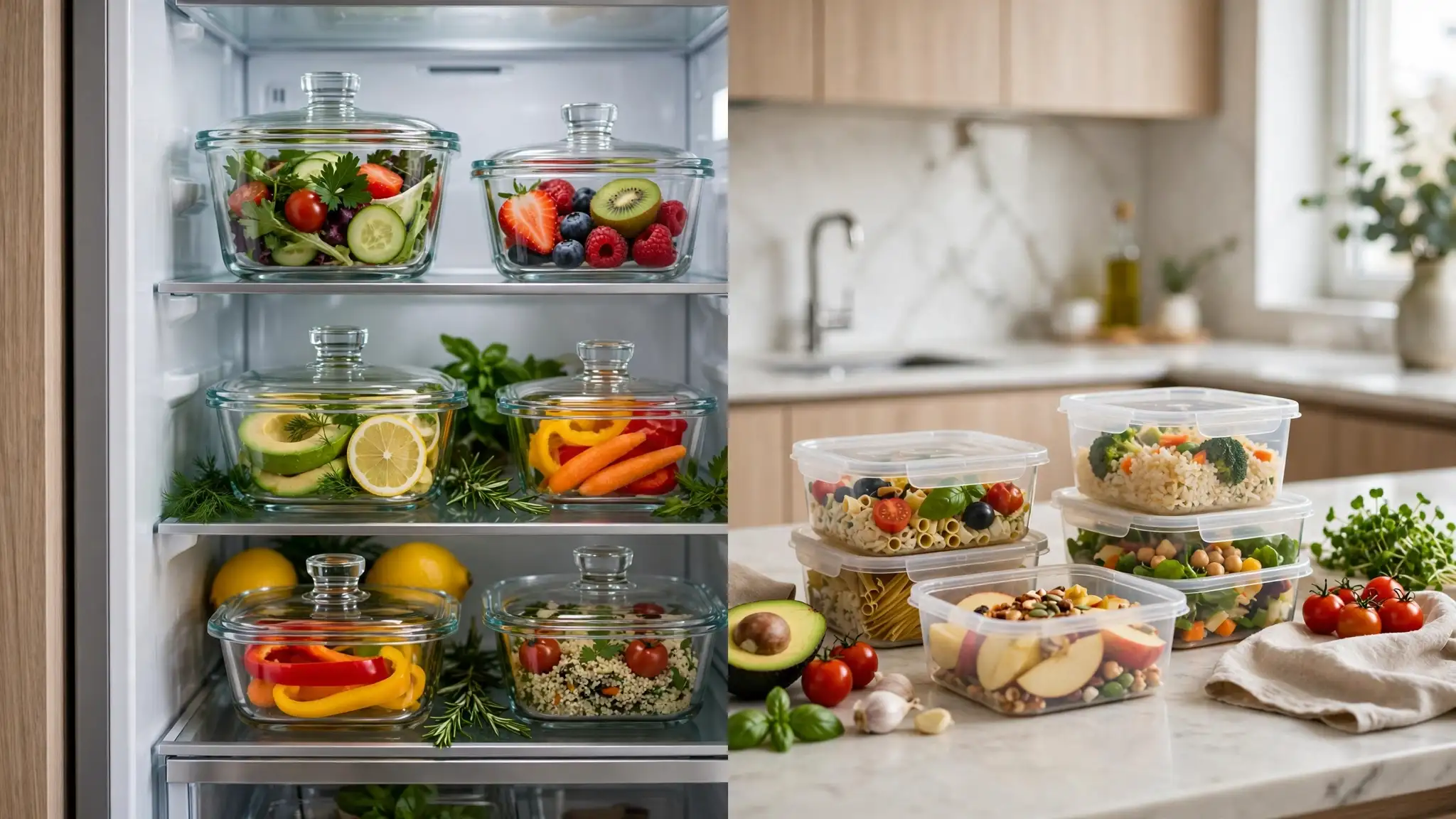
Glass Containers: Safe, Hygienic and Long-Lasting
Glass jars are widely used in Indian kitchens for storing everything from spices to homemade pickles. One of their biggest advantages is that glass does not absorb food smells, colours, or flavours. This makes them ideal for storing items like masalas, tea, coffee, pulses, chutneys, and pickles.
Glass containers are also easy to clean and maintain. Since they are transparent, it is easier to identify ingredients without opening multiple jars. They are a great choice for long-term storage as they help maintain the original quality of food.
However, glass containers do have some drawbacks. They are heavier than plastic and can break easily if dropped. Handling them carefully is important, especially in busy kitchens.
Plastic Containers: Lightweight and Convenient
Plastic dabbas are popular because they are practical for everyday use. They are easy to carry, take up less space, and are available in different sizes and designs. From office lunch boxes to storing leftovers in the refrigerator, plastic containers offer great convenience.
However, quality matters when choosing plastic containers. Always opt for food-grade, BPA-free plastic and avoid using containers that are cracked, scratched, or damaged. Old or poor-quality plastic may not be safe for storing food. Also, check whether a container is microwave-safe before heating food in it.
Which Container Is Best for Different Foods?
The choice between glass and plastic depends on what you are storing.
Glass containers are better for: Pickles, spices, dry fruits, pulses, tea, coffee, and foods that need to be stored for a longer period.
Plastic containers are better for: Daily meals, leftovers, fruits, vegetables, and carrying food while travelling or going to work.
For foods with strong smells or long shelf life, glass is usually the better option as it prevents odour absorption. For quick storage and daily convenience, plastic containers are easier to handle.
Glass vs Plastic: Which One Should You Choose?
There is no single winner because both glass and plastic containers have their own benefits. Glass offers better hygiene, durability, and long-term storage, while plastic provides flexibility and convenience for everyday needs.
The best approach is to use a combination of both. Choose glass jars for pantry essentials and long-lasting foods, and keep good-quality plastic containers for daily cooking and travel needs. With the right container and proper care, you can keep your kitchen organised and your food fresh for longer.
Glass Containers: Safe, Hygienic and Long-Lasting
Glass jars are widely used in Indian kitchens for storing everything from spices to homemade pickles. One of their biggest advantages is that glass does not absorb food smells, colours, or flavours. This makes them ideal for storing items like masalas, tea, coffee, pulses, chutneys, and pickles. Glass containers are also easy to clean and maintain. Since they are transparent, it is easier to identify ingredients without opening multiple jars. They are a great choice for long-term storage as they help maintain the original quality of food.
However, glass containers do have some drawbacks. They are heavier than plastic and can break easily if dropped. Handling them carefully is important, especially in busy kitchens.
Plastic Containers: Lightweight and Convenient
Plastic dabbas are popular because they are practical for everyday use. They are easy to carry, take up less space, and are available in different sizes and designs. From office lunch boxes to storing leftovers in the refrigerator, plastic containers offer great convenience.You may also like
- Three health checkups a year can reduce hospital costs, reveals report.
- Robotic Valve Replacement: Safdarjung sets world record, performs unique heart surgery with robot
- Ram Kapoor Opens Up About His Struggles on Lock Upp: A Journey Through Depression and Redemption
- Vastu Shastra: Remove these things from your house during the month of Shravan, they bring negativity. Click here to know more
- Flipkart follows in Zomato and Swiggy's footsteps! May launch food delivery service from August 15..
However, quality matters when choosing plastic containers. Always opt for food-grade, BPA-free plastic and avoid using containers that are cracked, scratched, or damaged. Old or poor-quality plastic may not be safe for storing food. Also, check whether a container is microwave-safe before heating food in it.
Which Container Is Best for Different Foods?
The choice between glass and plastic depends on what you are storing. Glass containers are better for: Pickles, spices, dry fruits, pulses, tea, coffee, and foods that need to be stored for a longer period.
Plastic containers are better for: Daily meals, leftovers, fruits, vegetables, and carrying food while travelling or going to work.
For foods with strong smells or long shelf life, glass is usually the better option as it prevents odour absorption. For quick storage and daily convenience, plastic containers are easier to handle.
Glass vs Plastic: Which One Should You Choose?
There is no single winner because both glass and plastic containers have their own benefits. Glass offers better hygiene, durability, and long-term storage, while plastic provides flexibility and convenience for everyday needs. The best approach is to use a combination of both. Choose glass jars for pantry essentials and long-lasting foods, and keep good-quality plastic containers for daily cooking and travel needs. With the right container and proper care, you can keep your kitchen organised and your food fresh for longer.






Loving Newspoint? Download the app now
