
How Birds Protect Their Eggs During Heavy Rain

A bird sitting quietly on a nest during a heavy downpour may look vulnerable, but there is usually much more going on than meets the eye. For birds, eggs are precious and fragile, and exposure to cold, water and strong winds can threaten their survival. Yet birds have developed remarkably practical ways to protect their nests. Some choose sheltered locations, while others build roofs, deep cups or waterproof structures using materials available in their surroundings. Parent birds may also use their own bodies to shield eggs from rain and maintain the temperature needed for development. Their nesting behaviour is a fascinating example of how animals adapt to unpredictable weather.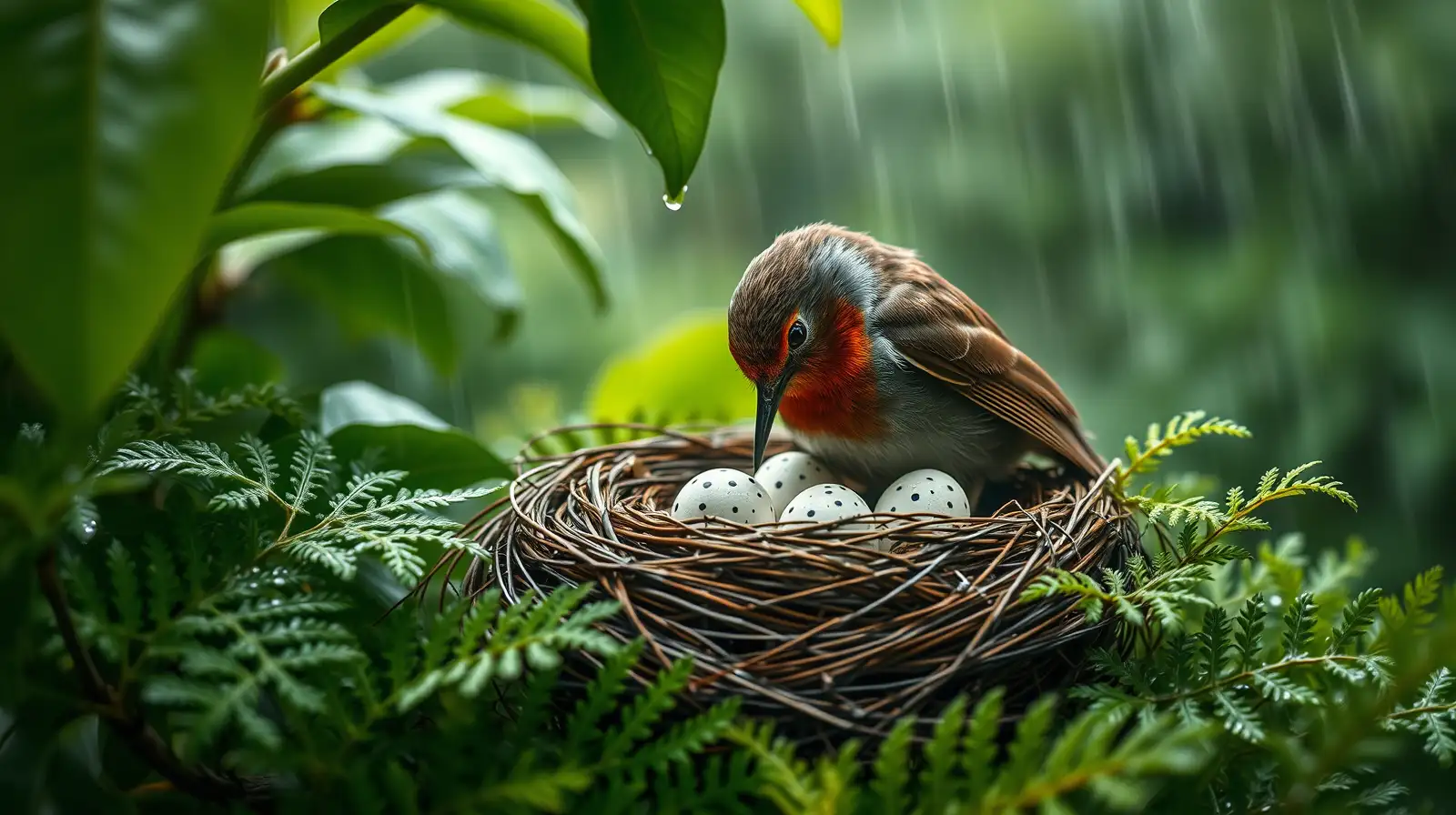
Nest location can make a huge difference. Birds may choose branches beneath dense foliage, cavities inside trees, rock ledges or sheltered corners of buildings. These locations can reduce direct exposure to rainfall and strong winds.
Some species deliberately place nests where surrounding leaves act like a natural umbrella. Others use tree hollows, which provide protection from both rain and sudden temperature changes.
This means that a bird's choice of nesting site is not random. It can be an important survival decision.
Many species construct nests with layers of twigs, grass, fibres, feathers and other materials. The arrangement can help rainwater move away from the eggs rather than collecting around them.
Certain birds build particularly elaborate structures. Weaver birds, for example, create tightly woven nests that can provide considerable protection from weather and predators.
The shape of a nest can also influence how quickly water drains away. A well-built nest is not simply a place to lay eggs. It is a small protective structure designed around the needs of the species.
Birds can sit over their eggs, spreading their bodies and feathers to reduce direct exposure to rainfall. Their feathers are naturally designed to resist water to some extent, particularly on the outer surface.
Birds also carefully arrange their bodies according to the weather. During cold or wet conditions, maintaining warmth becomes especially important because developing embryos need a relatively stable temperature.
Birds regularly maintain their feathers using oils produced by specialised glands. During preening, these oils are distributed across the feathers, helping them resist moisture.
This protection is particularly useful when a parent bird must remain on or near a nest during rain.
However, prolonged heavy rain can still create problems. Wet feathers can lose insulating efficiency, and strong winds can make conditions more difficult.
Flooding can wash away nests built close to the ground or near water. Strong winds can break branches, while prolonged cold and wet conditions can expose eggs or young chicks to dangerous temperatures.
This is why nesting behaviour often combines several strategies rather than relying on one.
From choosing sheltered locations to arranging nesting materials and using their own bodies as protection, birds have evolved a remarkable response to bad weather.
The next time you see a bird sitting quietly in a storm, it may not simply be waiting for the rain to stop. It could be protecting one of the most important things it has: the next generation.
Choosing the Right Place Is the First Defence
For many birds, protection from rain begins before the first egg is laid.Nest location can make a huge difference. Birds may choose branches beneath dense foliage, cavities inside trees, rock ledges or sheltered corners of buildings. These locations can reduce direct exposure to rainfall and strong winds.
Some species deliberately place nests where surrounding leaves act like a natural umbrella. Others use tree hollows, which provide protection from both rain and sudden temperature changes.
This means that a bird's choice of nesting site is not random. It can be an important survival decision.
Nest Design Can Help Keep Eggs Dry
Birds are surprisingly skilled builders.Many species construct nests with layers of twigs, grass, fibres, feathers and other materials. The arrangement can help rainwater move away from the eggs rather than collecting around them.
Certain birds build particularly elaborate structures. Weaver birds, for example, create tightly woven nests that can provide considerable protection from weather and predators.
The shape of a nest can also influence how quickly water drains away. A well-built nest is not simply a place to lay eggs. It is a small protective structure designed around the needs of the species.
Parent Birds Become Living Umbrellas
When heavy rain arrives, the parent bird may provide another layer of protection.Birds can sit over their eggs, spreading their bodies and feathers to reduce direct exposure to rainfall. Their feathers are naturally designed to resist water to some extent, particularly on the outer surface.
Birds also carefully arrange their bodies according to the weather. During cold or wet conditions, maintaining warmth becomes especially important because developing embryos need a relatively stable temperature.
Feathers Are More Important Than They Look
A bird's feathers provide insulation and water resistance, but they are not completely waterproof.Birds regularly maintain their feathers using oils produced by specialised glands. During preening, these oils are distributed across the feathers, helping them resist moisture.
You may also like
- Indian man talks about the 'harsh reality' of moving to the US: 'Be prepared to put your photo on the wall if you work at a gas station'
- Delhi Prepares Drone Policy; Over 1,000 New Jobs Expected
- Income Tax Refund: Haven't received your income tax refund yet? These 5 reasons could be responsible..
- Isha Koppikar's powerful parenting lesson on raising children and what new-age parents can learn from it
- DU UG Third Merit List Released: Key Dates to Remember After Seat Allotment
This protection is particularly useful when a parent bird must remain on or near a nest during rain.
However, prolonged heavy rain can still create problems. Wet feathers can lose insulating efficiency, and strong winds can make conditions more difficult.
Heavy Rain Can Still Be Dangerous
Even the best nest cannot completely eliminate weather risks.Flooding can wash away nests built close to the ground or near water. Strong winds can break branches, while prolonged cold and wet conditions can expose eggs or young chicks to dangerous temperatures.
This is why nesting behaviour often combines several strategies rather than relying on one.
Nature's Small Weather Engineers
A bird nest may appear simple when viewed from the ground, but it can represent hours of instinctive construction and careful site selection.From choosing sheltered locations to arranging nesting materials and using their own bodies as protection, birds have evolved a remarkable response to bad weather.
The next time you see a bird sitting quietly in a storm, it may not simply be waiting for the rain to stop. It could be protecting one of the most important things it has: the next generation.






Loving Newspoint? Download the app now
