
Why Does Santorini Look Like a Postcard? The Story Behind Its White and Blue Houses

Few destinations are as instantly recognizable as the Greek island of Santorini. Perched on dramatic volcanic cliffs and overlooking the sparkling Aegean Sea, the island is famous for its dazzling white buildings and striking blue domes. While the colors seem perfectly matched to the sea and sky, their origin has far more practical roots than most visitors realize.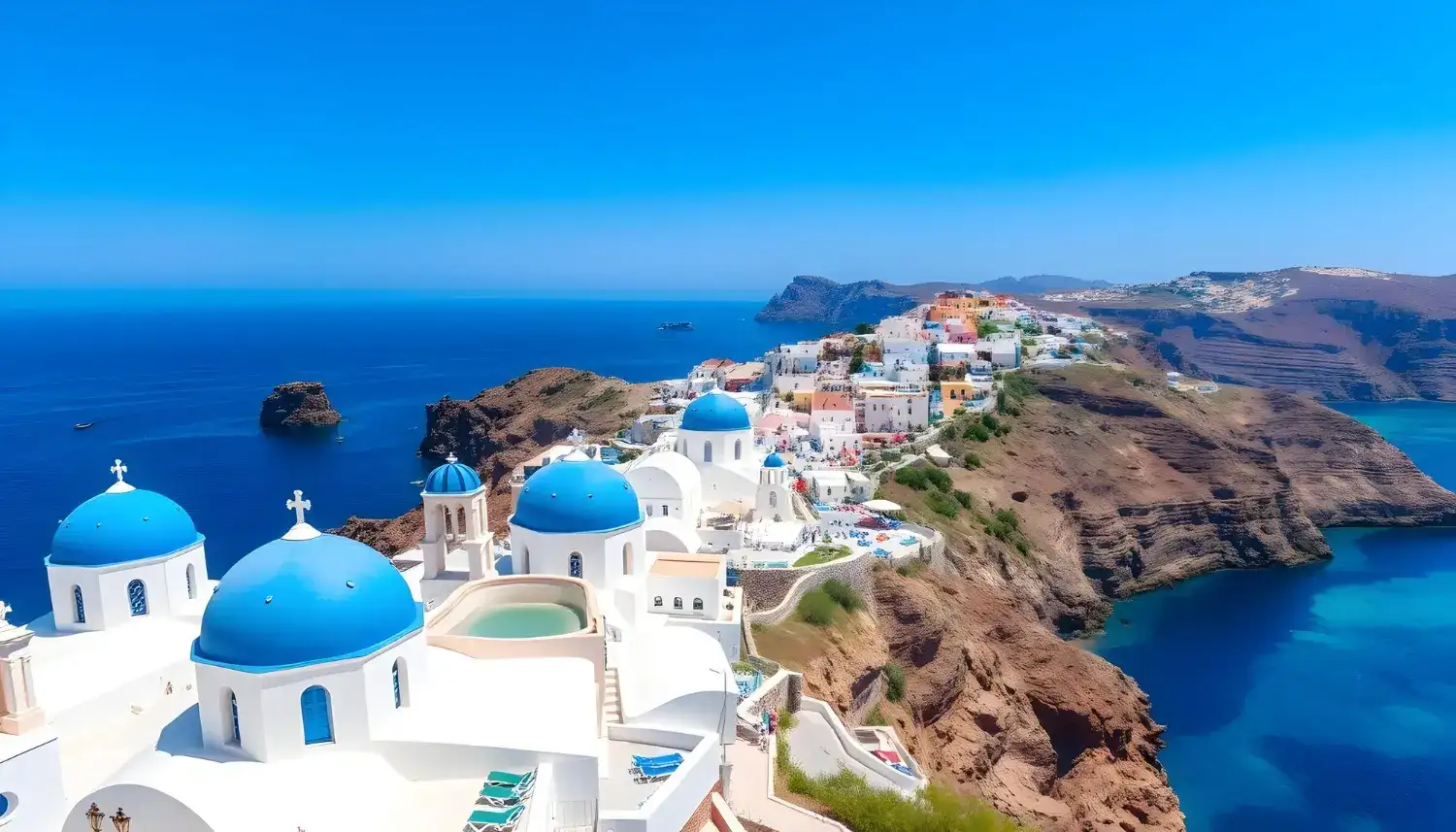
A Color Scheme Born From Necessity
Long before Santorini became a dream vacation destination, islanders faced a much simpler challenge: surviving the intense Mediterranean summers. With temperatures regularly soaring above 30°C and no air conditioning in sight, keeping homes cool was essential.
The solution was whitewashed walls. White surfaces reflect sunlight instead of absorbing it, helping homes stay noticeably cooler throughout the day. Limewash, a common and affordable material, became the go-to choice for covering houses across the island.
More Than Just a Cool Look
The famous white walls served another important purpose. Limewash contains natural antibacterial properties, making it useful in maintaining hygiene before modern sanitation systems existed.
During disease outbreaks in the early 20th century, residents frequently reapplied limewash to their homes. As a result, whitewashing became associated not only with comfort but also with cleanliness and public health.
How Blue Became Part of the Picture
The story of Santorini’s blue accents is tied closely to the island’s maritime culture. Fishermen and sailors often painted their boats blue, and since paint was expensive, leftover supplies were commonly used on doors, shutters, fences, and rooftops.
Over time, the color became a familiar feature of island architecture.
Blue also carried cultural significance. In Greek tradition, the color is believed to protect against bad luck and ward off evil. Its presence in churches, artwork, and local customs helped cement its place alongside the whitewashed walls.
The Link to Greece’s National Identity
Many people assume Santorini’s colors were chosen to mirror the Greek flag. While the resemblance is undeniable, the white-and-blue tradition actually predates the modern flag.
However, during Greece’s military dictatorship in the late 1960s and 1970s, authorities strongly promoted the use of national colors. Homeowners were encouraged—and sometimes required—to paint their properties blue and white, reinforcing the connection between architecture and national identity.
From Practical Homes to Global Icon
Centuries ago, many island homes featured natural earth tones, and colorful paint was often a luxury reserved for wealthier families. As tourism grew and Santorini became an international attraction, villages such as Oia and Fira embraced a more uniform appearance.
Today, local regulations help preserve the island’s iconic aesthetic, ensuring the famous white walls and blue domes remain a defining feature of Santorini’s landscape.
Beauty With a Purpose
What makes Santorini special is that its most famous feature wasn't originally designed for beauty alone. The white walls cooled homes and improved hygiene, while the blue accents reflected both seafaring traditions and cultural beliefs.
The result is an architectural style that tells a story of adaptation, practicality, and identity. Behind every postcard-perfect view lies a centuries-old solution to everyday challenges.
Santorini may symbolize romance, summer, and the Mediterranean dream today, but its iconic colors are a reminder that some of the world's most beautiful traditions began simply because they worked.
A Color Scheme Born From Necessity
Long before Santorini became a dream vacation destination, islanders faced a much simpler challenge: surviving the intense Mediterranean summers. With temperatures regularly soaring above 30°C and no air conditioning in sight, keeping homes cool was essential. The solution was whitewashed walls. White surfaces reflect sunlight instead of absorbing it, helping homes stay noticeably cooler throughout the day. Limewash, a common and affordable material, became the go-to choice for covering houses across the island.
More Than Just a Cool Look
The famous white walls served another important purpose. Limewash contains natural antibacterial properties, making it useful in maintaining hygiene before modern sanitation systems existed. During disease outbreaks in the early 20th century, residents frequently reapplied limewash to their homes. As a result, whitewashing became associated not only with comfort but also with cleanliness and public health.
How Blue Became Part of the Picture
The story of Santorini’s blue accents is tied closely to the island’s maritime culture. Fishermen and sailors often painted their boats blue, and since paint was expensive, leftover supplies were commonly used on doors, shutters, fences, and rooftops. Over time, the color became a familiar feature of island architecture.
Blue also carried cultural significance. In Greek tradition, the color is believed to protect against bad luck and ward off evil. Its presence in churches, artwork, and local customs helped cement its place alongside the whitewashed walls.
The Link to Greece’s National Identity
Many people assume Santorini’s colors were chosen to mirror the Greek flag. While the resemblance is undeniable, the white-and-blue tradition actually predates the modern flag.You may also like
- Unveiling the Teaser of 'Batwara 1947': A Journey Through Partition
- Passport Service Update: No appointment needed! Residents can now visit the RPO directly for passport-related issues in this UP district.
- PAN Card Rule: PAN is now mandatory for transactions above ₹2 lakh; non-compliance may lead to penalties.
- Know these 5 smart tips before taking a salary-based personal loan; otherwise, the EMI could become a headache..
- Sending money to the government from abroad is set to become easier! The Finance Ministry has issued new rules; find out what has changed..
However, during Greece’s military dictatorship in the late 1960s and 1970s, authorities strongly promoted the use of national colors. Homeowners were encouraged—and sometimes required—to paint their properties blue and white, reinforcing the connection between architecture and national identity.
From Practical Homes to Global Icon
Centuries ago, many island homes featured natural earth tones, and colorful paint was often a luxury reserved for wealthier families. As tourism grew and Santorini became an international attraction, villages such as Oia and Fira embraced a more uniform appearance. Today, local regulations help preserve the island’s iconic aesthetic, ensuring the famous white walls and blue domes remain a defining feature of Santorini’s landscape.
Beauty With a Purpose
What makes Santorini special is that its most famous feature wasn't originally designed for beauty alone. The white walls cooled homes and improved hygiene, while the blue accents reflected both seafaring traditions and cultural beliefs. The result is an architectural style that tells a story of adaptation, practicality, and identity. Behind every postcard-perfect view lies a centuries-old solution to everyday challenges.
Santorini may symbolize romance, summer, and the Mediterranean dream today, but its iconic colors are a reminder that some of the world's most beautiful traditions began simply because they worked.






More from our partners


Loving Newspoint? Download the app now
