
Why Do Mountain Roads Have So Many Sharp Turns Instead of Going Straight Up?

Look at a road winding up a mountain and one question seems obvious: why not build it straight towards the top? From a distance, a direct line appears shorter and perhaps quicker. But roads must work for vehicles, not just look simple on a map.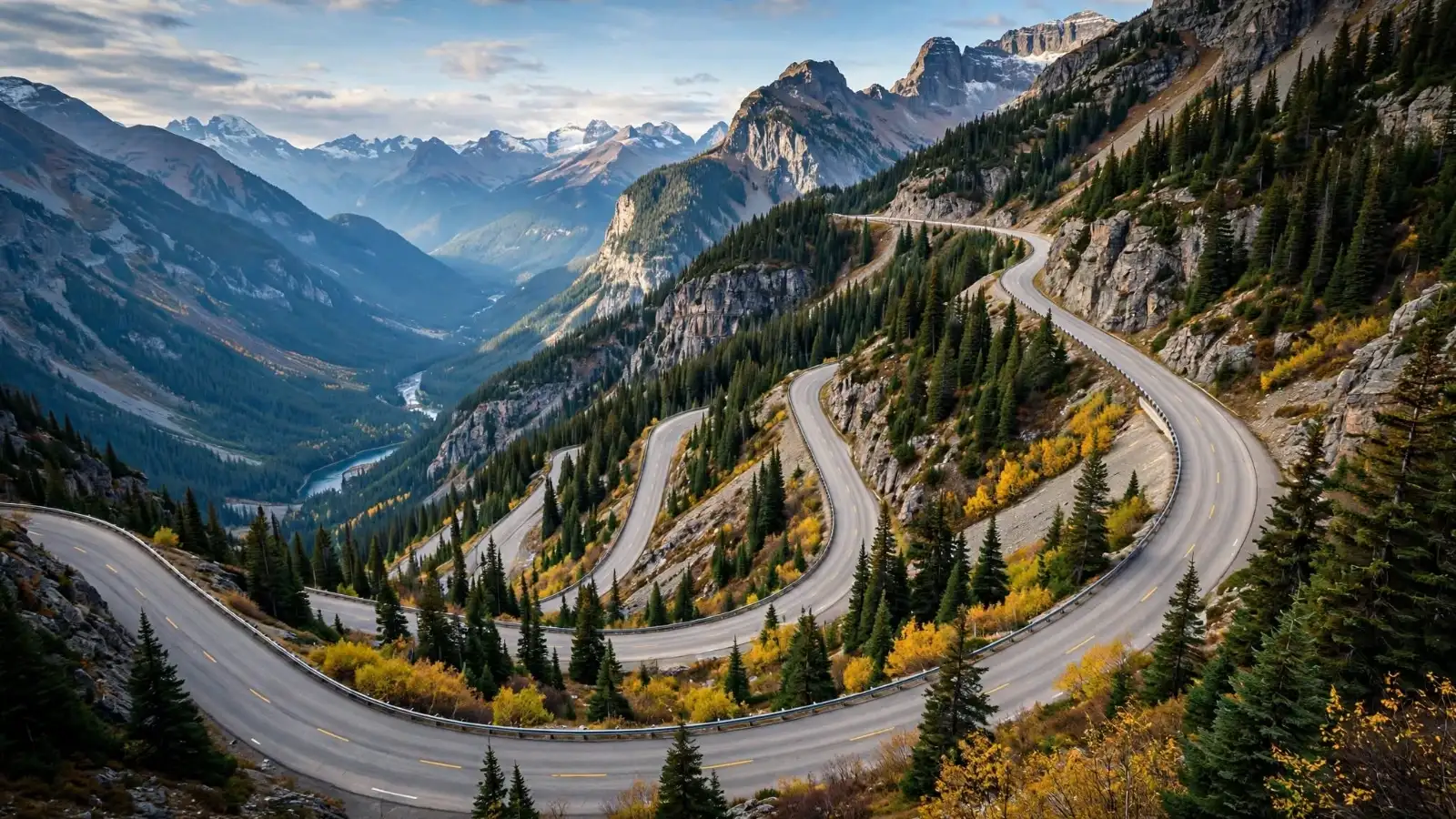
A mountain slope can rise sharply over a short horizontal distance. If a road followed that slope directly, the gradient could become too steep for many vehicles to climb comfortably or descend safely. Trucks and buses would face particular challenges, while braking and traction could become serious concerns.
Instead, mountain roads often take a longer route across the hillside. The extra distance allows the road to gain height more gradually.
Imagine walking up a steep hill. Going straight towards the top may be exhausting, while following a zigzag path makes the climb more manageable. Mountain roads apply a similar principle, although their exact design depends on vehicle requirements, terrain and safety standards.
The gradient is the steepness of the road. By extending the route and introducing curves, engineers can often keep the gradient within a range suitable for the vehicles expected to use it. The turns do not remove the mountain's height; they make the climb more achievable.
A road that follows the contours of a hillside can sometimes reduce the need to cut a deep, straight channel through the mountain. However, it may also require retaining walls, drainage structures, protective barriers and careful management of slopes.
The right design depends on the location. Some roads use tunnels, bridges or a combination of structures to avoid particularly difficult sections. Others rely on a series of bends because that is the most practical route through the terrain.
On steep descents, controlling speed is especially important because continuous braking can cause brakes to overheat. Drivers should follow road signs, use suitable gears and avoid sudden manoeuvres. Rain, loose gravel, fog and ice, where present, can make a bend more hazardous.
Ultimately, mountain roads have sharp turns because the safest practical route is often longer than the most direct one. The bends help manage elevation, adapt to the landscape and make difficult terrain accessible. What looks like unnecessary zigzagging is often the result of careful engineering, not poor planning.
A mountain slope can rise sharply over a short horizontal distance. If a road followed that slope directly, the gradient could become too steep for many vehicles to climb comfortably or descend safely. Trucks and buses would face particular challenges, while braking and traction could become serious concerns.
Instead, mountain roads often take a longer route across the hillside. The extra distance allows the road to gain height more gradually.
The Engineering Behind Hairpin Bends
A hairpin bend is a tight turn that changes the direction of a road, often by almost 180 degrees. These bends allow a road to continue climbing while using the available hillside to spread the rise over a greater distance.Imagine walking up a steep hill. Going straight towards the top may be exhausting, while following a zigzag path makes the climb more manageable. Mountain roads apply a similar principle, although their exact design depends on vehicle requirements, terrain and safety standards.
You may also like
- 5 Akbar-Birbal Lessons on Testing Any Claim Before You Pay for It
- Does the Baby Open Its Eyes in the Womb?
- The African Catfish Is Banned in India. It's Still Spreading Through Our Rivers.
- Silver Price Today: Silver continues to get cheaper; price slips below ₹1.95 lakh..
- How Lantana Camara Is Quietly Destroying India's Tiger Reserves
The gradient is the steepness of the road. By extending the route and introducing curves, engineers can often keep the gradient within a range suitable for the vehicles expected to use it. The turns do not remove the mountain's height; they make the climb more achievable.
The Mountain Itself Sets the Limits
Road construction in mountainous areas involves more than choosing a route. Engineers must consider rock strength, soil stability, rainfall, drainage, landslides and the risk of falling debris. A seemingly direct route might pass through unstable ground or require extensive excavation.A road that follows the contours of a hillside can sometimes reduce the need to cut a deep, straight channel through the mountain. However, it may also require retaining walls, drainage structures, protective barriers and careful management of slopes.
The right design depends on the location. Some roads use tunnels, bridges or a combination of structures to avoid particularly difficult sections. Others rely on a series of bends because that is the most practical route through the terrain.
Why Drivers Must Treat These Turns Carefully
Hairpin bends are not simply scenic features. They can limit visibility, reduce the space available for larger vehicles and make overtaking dangerous. Drivers may not be able to see oncoming traffic around a tight curve, so speed and lane discipline matter.On steep descents, controlling speed is especially important because continuous braking can cause brakes to overheat. Drivers should follow road signs, use suitable gears and avoid sudden manoeuvres. Rain, loose gravel, fog and ice, where present, can make a bend more hazardous.
Ultimately, mountain roads have sharp turns because the safest practical route is often longer than the most direct one. The bends help manage elevation, adapt to the landscape and make difficult terrain accessible. What looks like unnecessary zigzagging is often the result of careful engineering, not poor planning.






Loving Newspoint? Download the app now
