
Navratri Colours 2026: Complete Day-Wise List From October 11 to 19

Navratri Colours 2026 will add a vibrant festive touch to the nine-day celebration of Sharad Navratri, which begins on October 11 and ends on October 19. Each day is linked with a specific colour and one of the nine forms of Goddess Durga. From orange and white to red, royal blue, yellow, green, grey, purple and peacock green, these colours are widely followed for festive outfits, puja and Garba-Dandiya celebrations.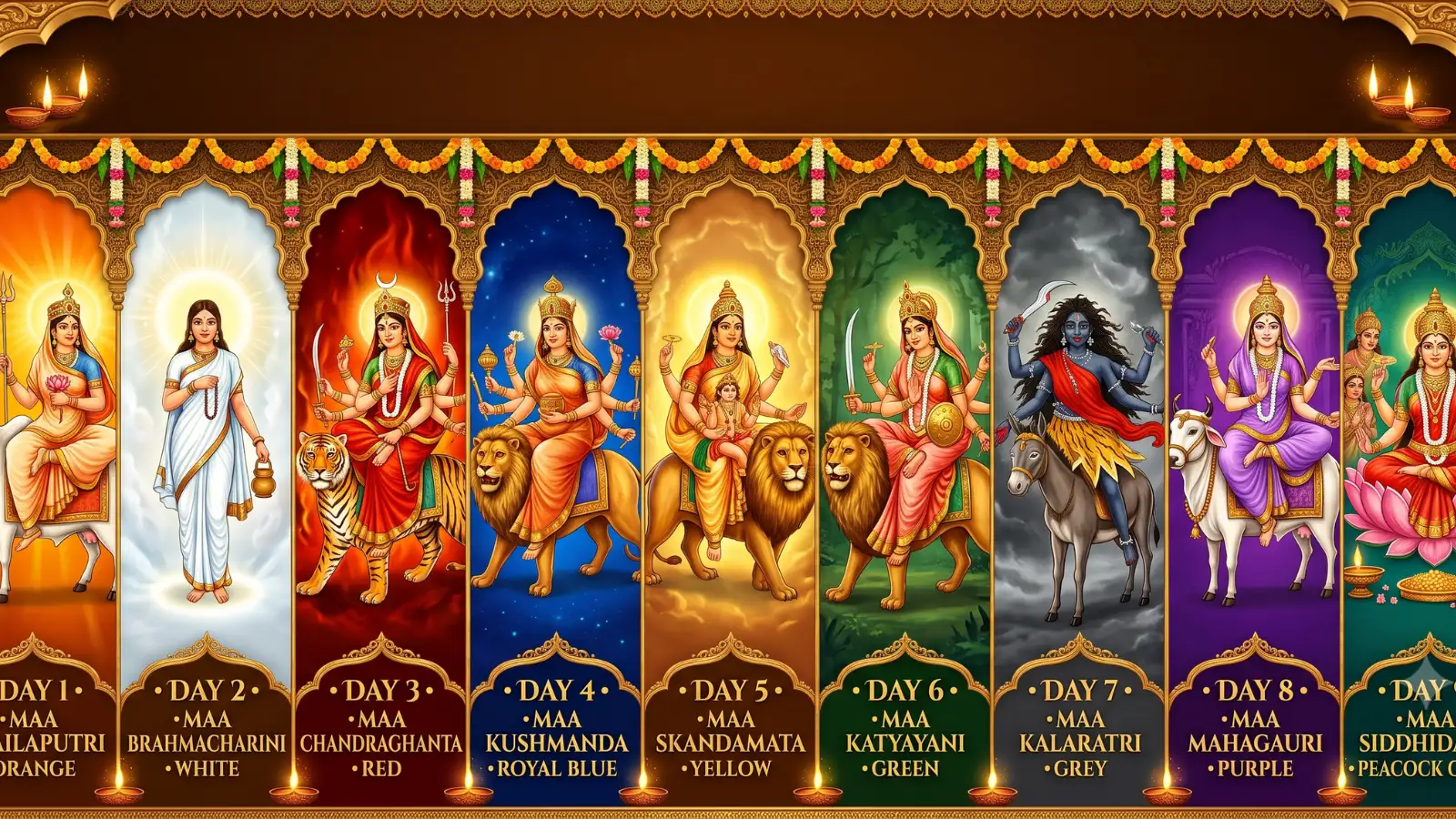
Sharad Navratri is dedicated to the worship of Navdurga, the nine manifestations of Goddess Durga. Vijayadashami or Dussehra will be celebrated on October 20, the day after Navratri concludes.
Orange represents energy, warmth and enthusiasm, making it a bright choice for the beginning of the festival. Devotees can wear orange sarees, kurtas, lehengas, dupattas or accessories. The first day also marks Ghatasthapana, an important ritual that formally begins Navratri worship.
White is associated with peace, purity and calmness. Traditional white outfits such as sarees, kurtas, salwar suits and festive accessories can be chosen for the day's celebrations.
Red is among the most prominent colours associated with Goddess Durga and Devi worship. Devotees can include the shade in their clothing, chunris, jewellery or other festive offerings.
Royal blue brings a rich and striking look to festive celebrations. Sarees, lehengas, kurtas, dupattas and accessories in this shade can be used to follow the day's Navratri colour theme.
Yellow is often associated with happiness, brightness and optimism. It is a natural choice for festive celebrations, with yellow sarees, salwar suits, kurtas and traditional accessories fitting easily into the day's theme.
Green is associated with nature, growth and freshness. It is also a popular colour during Navratri celebrations. Devotees can choose green ethnic wear, jewellery or accessories for the day's festivities.
Grey is the designated colour for Day 7 in the 2026 Navratri colour sequence. The understated shade can be paired with colourful embroidery, jewellery or festive accessories to create a more vibrant look.
Purple gives the celebrations a rich and festive appearance. Devotees can incorporate the colour into sarees, lehengas, kurtas, dupattas or accessories while observing Ashtami.
The colour for October 19 is Peacock Green, a distinctive blue-green shade inspired by the colours seen in peacock feathers. It marks the completion of the nine-day Navratri colour cycle.
The celebrations will be followed by Vijayadashami or Dussehra on October 20, which marks the end of the festive period.
The colours are often connected to the weekday on which Navratri begins and follow a recurring sequence. Over the years, the practice has become particularly popular in states such as Maharashtra and Gujarat, where people often coordinate their outfits and celebrations according to the day's colour.
The colour list can also make festive planning easier, whether you are selecting a traditional outfit for puja, preparing for an office celebration, attending a Garba event or simply looking for a festive theme for each day.
With nine colours representing nine days of worship, the Navratri Colours 2026 tradition brings an additional visual and cultural element to the celebrations.
Sharad Navratri is dedicated to the worship of Navdurga, the nine manifestations of Goddess Durga. Vijayadashami or Dussehra will be celebrated on October 20, the day after Navratri concludes.
Navratri Colours 2026: Day-Wise List
Here is the complete Navratri 2026 colour list, including the date, tithi, colour and Goddess worshipped on each day.| Day | Date | Tithi | Goddess | Navratri Colour |
|---|---|---|---|---|
| Day 1 | October 11, 2026 | Pratipada | Maa Shailputri | Orange |
| Day 2 | October 12, 2026 | Dwitiya | Maa Brahmacharini | White |
| Day 3 | October 13, 2026 | Tritiya | Maa Chandraghanta | Red |
| Day 4 | October 14, 2026 | Chaturthi | Maa Kushmanda | Royal Blue |
| Day 5 | October 15, 2026 | Panchami | Maa Skandamata | Yellow |
| Day 6 | October 16, 2026 | Shashti | Maa Katyayani | Green |
| Day 7 | October 17, 2026 | Saptami | Maa Kalaratri | Grey |
| Day 8 | October 18, 2026 | Ashtami | Maa Mahagauri | Purple |
| Day 9 | October 19, 2026 | Navami | Maa Siddhidatri | Peacock Green |
Day 1 – October 11
- Goddess: Maa Shailputri
- Tithi: Pratipada
- Colour: Orange
Orange represents energy, warmth and enthusiasm, making it a bright choice for the beginning of the festival. Devotees can wear orange sarees, kurtas, lehengas, dupattas or accessories. The first day also marks Ghatasthapana, an important ritual that formally begins Navratri worship.
Day 2 – October 12
- Goddess: Maa Brahmacharini
- Tithi: Dwitiya
- Colour: White
White is associated with peace, purity and calmness. Traditional white outfits such as sarees, kurtas, salwar suits and festive accessories can be chosen for the day's celebrations.
Day 3 – October 13
- Goddess: Maa Chandraghanta
- Tithi: Tritiya
- Colour: Red
Red is among the most prominent colours associated with Goddess Durga and Devi worship. Devotees can include the shade in their clothing, chunris, jewellery or other festive offerings.
Day 4 – October 14
- Goddess: Maa Kushmanda
- Tithi: Chaturthi
- Colour: Royal Blue
Royal blue brings a rich and striking look to festive celebrations. Sarees, lehengas, kurtas, dupattas and accessories in this shade can be used to follow the day's Navratri colour theme.
Day 5 – October 15
- Goddess: Maa Skandamata
- Tithi: Panchami
- Colour: Yellow
Yellow is often associated with happiness, brightness and optimism. It is a natural choice for festive celebrations, with yellow sarees, salwar suits, kurtas and traditional accessories fitting easily into the day's theme.
Day 6 – October 16
- Goddess: Maa Katyayani
- Tithi: Shashti
- Colour: Green
Green is associated with nature, growth and freshness. It is also a popular colour during Navratri celebrations. Devotees can choose green ethnic wear, jewellery or accessories for the day's festivities.
Day 7 – October 17
- Goddess: Maa Kalaratri
- Tithi: Saptami
- Colour: Grey
Grey is the designated colour for Day 7 in the 2026 Navratri colour sequence. The understated shade can be paired with colourful embroidery, jewellery or festive accessories to create a more vibrant look.
Day 8 – October 18
- Goddess: Maa Mahagauri
- Tithi: Ashtami
- Colour: Purple
Purple gives the celebrations a rich and festive appearance. Devotees can incorporate the colour into sarees, lehengas, kurtas, dupattas or accessories while observing Ashtami.
Day 9 – October 19
- Goddess: Maa Siddhidatri
- Tithi: Navami
- Colour: Peacock Green
The colour for October 19 is Peacock Green, a distinctive blue-green shade inspired by the colours seen in peacock feathers. It marks the completion of the nine-day Navratri colour cycle.
The celebrations will be followed by Vijayadashami or Dussehra on October 20, which marks the end of the festive period.
Why Are Different Colours Worn During Navratri?
Wearing a particular colour on each day of Navratri is a widely followed cultural tradition. It is not a universal scriptural requirement, and the exact colour sequence can vary by region and tradition.The colours are often connected to the weekday on which Navratri begins and follow a recurring sequence. Over the years, the practice has become particularly popular in states such as Maharashtra and Gujarat, where people often coordinate their outfits and celebrations according to the day's colour.
Navratri Colours 2026 for Garba, Dandiya and Festive Events
The day-wise colour tradition is especially popular during Garba and Dandiya nights. Groups, families and even workplaces often choose outfits based on the designated colour of the day.The colour list can also make festive planning easier, whether you are selecting a traditional outfit for puja, preparing for an office celebration, attending a Garba event or simply looking for a festive theme for each day.
With nine colours representing nine days of worship, the Navratri Colours 2026 tradition brings an additional visual and cultural element to the celebrations.
Next Story