
Will India Extradite Sheikh Hasina? MEA Reacts to Reports of Her Bangladesh Return

In a dramatic twist that threatens to upend the political landscape of South Asia, Bangladesh’s ousted Prime Minister, Sheikh Hasina, has announced plans to end her exile in India. The 78-year-old political veteran revealed her intention to return to Dhaka by December this year, along with other senior members of her now-outlawed Awami League party, to voluntarily surrender before the courts.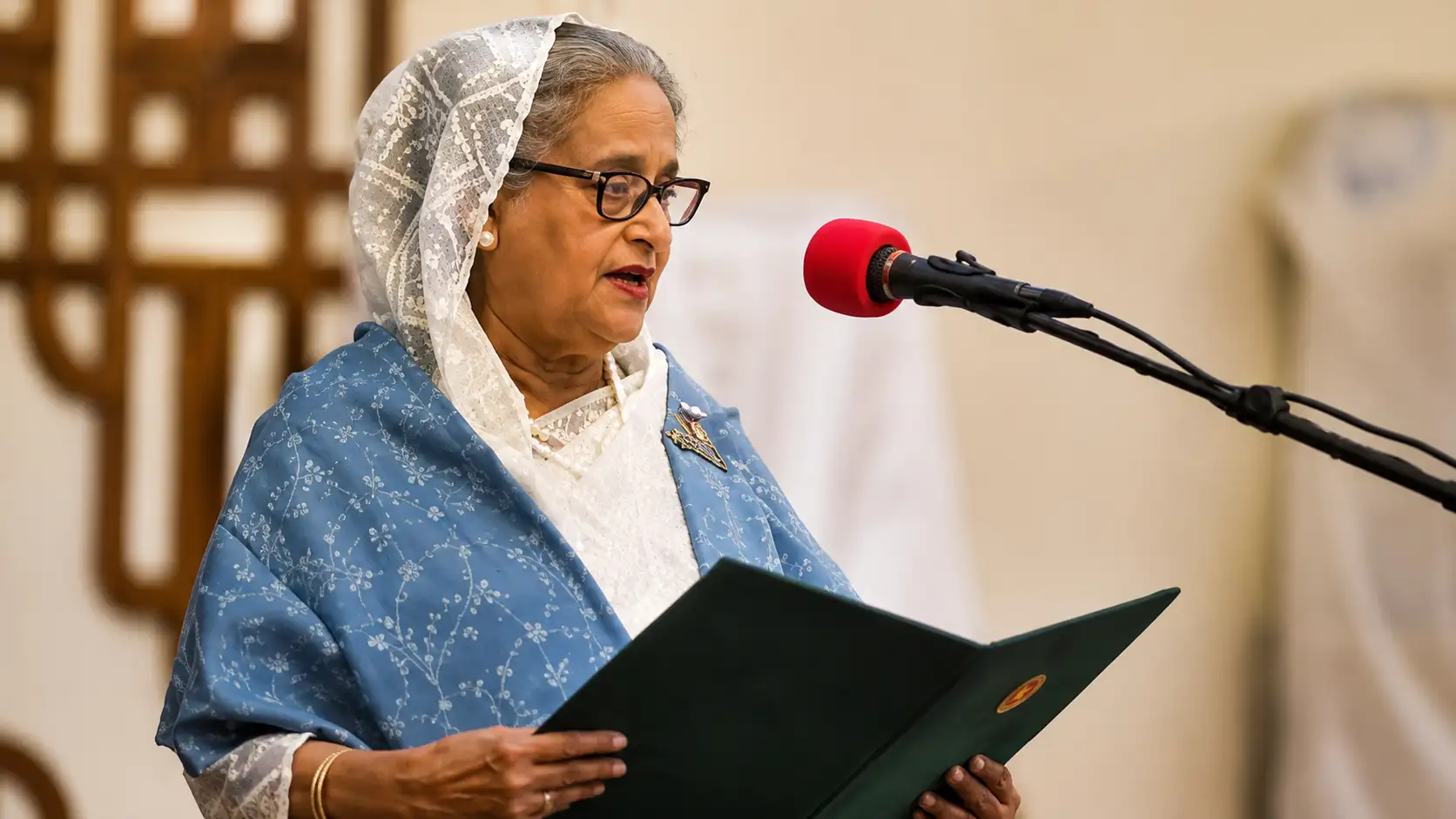
The announcement has triggered an immediate and sharp response from the newly established Bangladesh Nationalist Party (BNP) government in Dhaka. Authorities have firmly rejected any notion of a lenient homecoming, warning that the former leader will be sent directly to prison the moment she sets foot on Bangladeshi soil.
Meanwhile, New Delhi finds itself caught in a delicate diplomatic bind, carefully balancing its historical relationship with Hasina against its desire to build strong ties with the newly elected administration in Dhaka.
A High-Stakes Legal Battle Awaits
Sheikh Hasina fled Bangladesh in August 2024 following a violent, student-led mass uprising that abruptly ended her fifteen-year, iron-fisted rule. Since her dramatic escape, she has been living in a secure, undisclosed location in India under the protection of the Indian government.
Her absence did not halt the legal machinery in Dhaka. In a landmark ruling, Bangladesh’s International Crimes Tribunal (ICT) sentenced Hasina to death in absentia for crimes against humanity, specifically citing her government’s aggressive and fatal crackdown on anti-government protesters.
In her first extensive media interview since entering exile, Hasina remained characteristically defiant, dismissing her conviction as a politically motivated farce.
"They may arrest me on my return, they may even kill me," Hasina stated. "Still, I have to go. My party leaders and workers are being subjected to tremendous repression. If death comes, I want it to come on my own soil."
Dhaka Rejects "Political Stunt"
The response from official channels in Bangladesh was swift and uncompromising. Government spokespersons and legal authorities have branded her announcement a calculated political stunt designed to revitalise her fractured party base and trigger national chaos.
Responding to her proposed timeline, the Chief Prosecutor of the International Crimes Tribunal, Md Aminul Islam, delivered a stern message:
"Whether you come in December or January is your decision, but we want you tomorrow."
The prosecutor clarified that under the terms of the existing extradition treaty between the two nations, Hasina would not be given the opportunity to make a theatrical appearance in court. Instead, she would be taken directly into police custody.
State Minister for Foreign Affairs, Shama Obaed Islam, echoed this hardline stance, stating that the law would take its natural course and that a convicted individual would receive no special considerations from the state.
New Delhi’s Delicate Diplomatic Tightrope
The situation places India in an incredibly complex geopolitical position. The official relationship between New Delhi and Dhaka had cooled significantly after India granted asylum to Hasina. However, ties have steadily improved since the new government, led by Prime Minister Tarique Rahman, took office following a landslide election victory.
When questioned about Hasina’s public declarations, India’s Ministry of External Affairs adopted a highly cautious tone. The official spokesperson, Randhir Jaiswal, refused to comment directly on her personal interview but emphasised that New Delhi’s official stance had not changed.
"Any extradition matter is a legal issue, and it will be dealt with accordingly," Jaiswal stated during a weekly press briefing.
While India continues to review Dhaka’s formal extradition letters through its internal judicial processes, Indian diplomats are working behind the scenes to ensure that ongoing cross-border development projects remain unaffected by the political storm.
Whether Hasina successfully executes her December return or remains in New Delhi, her next move is certain to test the stability of Bangladesh’s new government and reshape the future of India-Bangladesh relations.
The announcement has triggered an immediate and sharp response from the newly established Bangladesh Nationalist Party (BNP) government in Dhaka. Authorities have firmly rejected any notion of a lenient homecoming, warning that the former leader will be sent directly to prison the moment she sets foot on Bangladeshi soil.
Meanwhile, New Delhi finds itself caught in a delicate diplomatic bind, carefully balancing its historical relationship with Hasina against its desire to build strong ties with the newly elected administration in Dhaka.
A High-Stakes Legal Battle Awaits
Sheikh Hasina fled Bangladesh in August 2024 following a violent, student-led mass uprising that abruptly ended her fifteen-year, iron-fisted rule. Since her dramatic escape, she has been living in a secure, undisclosed location in India under the protection of the Indian government.
Her absence did not halt the legal machinery in Dhaka. In a landmark ruling, Bangladesh’s International Crimes Tribunal (ICT) sentenced Hasina to death in absentia for crimes against humanity, specifically citing her government’s aggressive and fatal crackdown on anti-government protesters.
In her first extensive media interview since entering exile, Hasina remained characteristically defiant, dismissing her conviction as a politically motivated farce.
"They may arrest me on my return, they may even kill me," Hasina stated. "Still, I have to go. My party leaders and workers are being subjected to tremendous repression. If death comes, I want it to come on my own soil."
Dhaka Rejects "Political Stunt"
The response from official channels in Bangladesh was swift and uncompromising. Government spokespersons and legal authorities have branded her announcement a calculated political stunt designed to revitalise her fractured party base and trigger national chaos.
You may also like
- Why China can't break away from US dollar
- Uranium deal with Australia lifts fuel hurdle for India's nuclear power projects: Report
- 11 people killed in roof collapse in Pakistan's Khyber Pakhtunkhwa
- Andy Burnham condemns alleged right-wing terror plot at Islamic gathering, says 'hatred against Muslims has no place in UK'
- Ukraine deploys combat robot via sea drone in unprecedented assault on Russian-held Kinburn Spit
Responding to her proposed timeline, the Chief Prosecutor of the International Crimes Tribunal, Md Aminul Islam, delivered a stern message:
"Whether you come in December or January is your decision, but we want you tomorrow."
The prosecutor clarified that under the terms of the existing extradition treaty between the two nations, Hasina would not be given the opportunity to make a theatrical appearance in court. Instead, she would be taken directly into police custody.
State Minister for Foreign Affairs, Shama Obaed Islam, echoed this hardline stance, stating that the law would take its natural course and that a convicted individual would receive no special considerations from the state.
New Delhi’s Delicate Diplomatic Tightrope
The situation places India in an incredibly complex geopolitical position. The official relationship between New Delhi and Dhaka had cooled significantly after India granted asylum to Hasina. However, ties have steadily improved since the new government, led by Prime Minister Tarique Rahman, took office following a landslide election victory.
When questioned about Hasina’s public declarations, India’s Ministry of External Affairs adopted a highly cautious tone. The official spokesperson, Randhir Jaiswal, refused to comment directly on her personal interview but emphasised that New Delhi’s official stance had not changed.
"Any extradition matter is a legal issue, and it will be dealt with accordingly," Jaiswal stated during a weekly press briefing.
While India continues to review Dhaka’s formal extradition letters through its internal judicial processes, Indian diplomats are working behind the scenes to ensure that ongoing cross-border development projects remain unaffected by the political storm.
Whether Hasina successfully executes her December return or remains in New Delhi, her next move is certain to test the stability of Bangladesh’s new government and reshape the future of India-Bangladesh relations.






Loving Newspoint? Download the app now
