
Word Of The Day: Pragmatic - Meaning, Usage And Examples

Do you know someone who always focuses on finding solutions instead of dwelling on problems? People have different ways of approaching situations. Some prefer to think about ideal possibilities and long-term visions, while others focus on logical and practical ways to solve challenges. They are more concerned with what works in reality than what sounds perfect in theory. Such individuals can be described as ‘pragmatic’.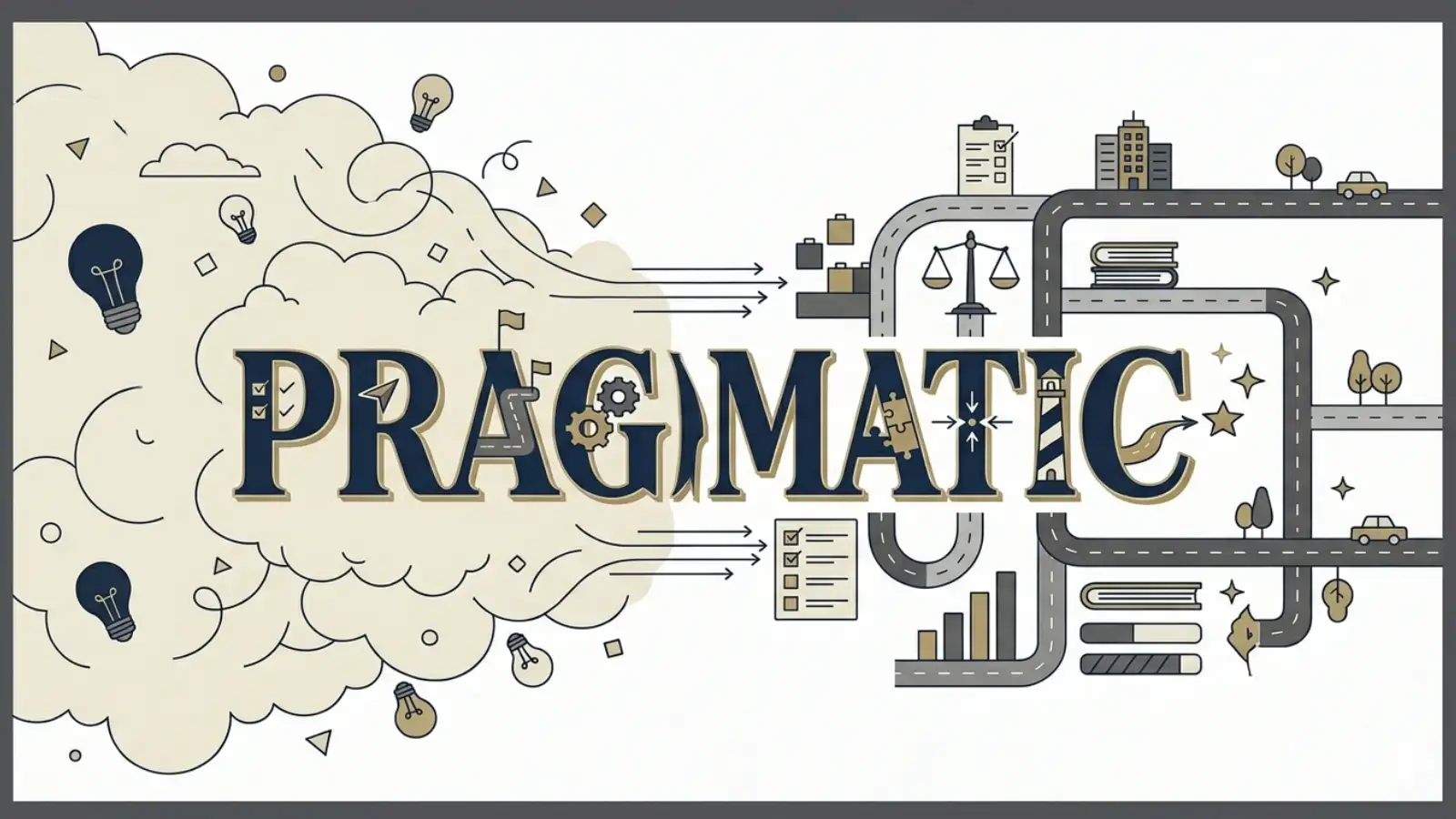
A pragmatic person deals with situations in a sensible and realistic manner, making decisions based on practical considerations rather than emotions or ideals. They tend to focus on effective and achievable outcomes, prioritising results over unrealistic expectations. This word is commonly used in everyday conversations, workplaces, and professional settings to describe a practical, realistic, and solution-oriented approach to life.
From its earliest usage, the word has been closely associated with practical thinking and dealing with real-world situations. Over time, it came to describe people who focus on what is realistic, achievable, and effective rather than being guided solely by theories, ideals, or emotions. Today, pragmatic is widely used to describe a sensible, practical, and solution-oriented approach to decision-making and problem-solving.
The phonetic spelling is /præɡˈmæt.ɪk/.
Synonyms of Pragmatic
Avoid These Mistakes
While using this word, avoid some common mistakes, such as treating pragmatic as a synonym for cold or emotionless. A pragmatic person does not ignore emotions; instead, they focus on practical solutions when making decisions. Another common mistake is confusing pragmatic with opportunistic. While a pragmatic individual is realistic and sensible, an opportunistic person may act primarily for personal gain. Lastly, avoid using this word to describe someone who lacks ambition or imagination. Being pragmatic does not mean a person cannot dream big; it simply means they take realistic and practical steps to achieve their goals.
A pragmatic person deals with situations in a sensible and realistic manner, making decisions based on practical considerations rather than emotions or ideals. They tend to focus on effective and achievable outcomes, prioritising results over unrealistic expectations. This word is commonly used in everyday conversations, workplaces, and professional settings to describe a practical, realistic, and solution-oriented approach to life.
Origin
The word pragmatic has its roots in the Greek word pragma, meaning “deed,” “action,” or “thing done.” It later evolved into the Greek term pragmatikos, which referred to something practical or concerned with action. The term was subsequently adopted into Late Latin as pragmaticus before entering the English language in the late 16th century.You may also like
- UAE visa expiring soon? Here's how to check online
- UPSSSC Pharmacist admit card 2026 expected to be released soon at upsssc.gov.in: Check steps to download hall tickets
- When will the NEET UG 2026 results be declared? NTA Director General Abhishek Singh himself provided a major update..
- Parliamentary panel reviews central government vacancies, examines CSAT and recruitment progress
- Air India to operate direct flights from Guwahati to Dubai, Abu Dhabi from August 4
From its earliest usage, the word has been closely associated with practical thinking and dealing with real-world situations. Over time, it came to describe people who focus on what is realistic, achievable, and effective rather than being guided solely by theories, ideals, or emotions. Today, pragmatic is widely used to describe a sensible, practical, and solution-oriented approach to decision-making and problem-solving.
Pronunciation Of Pragmatic
It is pronounced as prag-MAT-ik.The phonetic spelling is /præɡˈmæt.ɪk/.
Synonyms of Pragmatic
- Practical
- Realistic
- Sensible
- Rational
- Down-to-earth
Antonyms Of Pragmatic
- Idealistic
- Impractical
- Unrealistic
- Theoretical
- Dreamy
How Can You Use 'Pragmatic' In A Sentence
- She took a pragmatic approach to the problem and focused on finding a solution that would work in the real world.
- Rather than getting caught up in theory, the team made a pragmatic decision based on the resources available.
- His pragmatic attitude helped the company navigate difficult challenges during a period of uncertainty.
- Being pragmatic, she chose a career path that balanced both her interests and financial stability.
- The government adopted a pragmatic strategy to address the issue, prioritising immediate results over long-term debates.
Avoid These Mistakes
While using this word, avoid some common mistakes, such as treating pragmatic as a synonym for cold or emotionless. A pragmatic person does not ignore emotions; instead, they focus on practical solutions when making decisions. Another common mistake is confusing pragmatic with opportunistic. While a pragmatic individual is realistic and sensible, an opportunistic person may act primarily for personal gain. Lastly, avoid using this word to describe someone who lacks ambition or imagination. Being pragmatic does not mean a person cannot dream big; it simply means they take realistic and practical steps to achieve their goals. 





More from our partners


Loving Newspoint? Download the app now
